26 August 2024
Liam Hendriks still feels connected to Australia after two decades away from home
story by Eric Balnar, interview by Michael Ibbotson
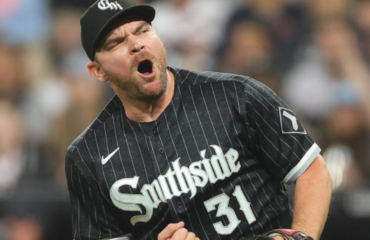
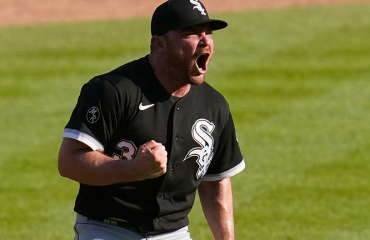
If you ever question if three-time Major League Baseball All-Star pitcher Liam Hendriks still feels connected to his home country of Australia, all you need to do is look at what he’s wearing.
Before a big-league game at Fenway Park, Hendriks emerged to the Boston Red Sox dugout for an interview wearing an Australian Olympic Team jersey just to let everyone know where he’s from and who he barracks for.
“I think every Aussie has that vibe to them: It’s Aussies vs the World,” says Hendriks. “I don’t think I have to [fly the Australian flag], it’s just part of me. I’m proud to be an Australian and always proud to give back whenever I go.”
Long before Travis Bazzana sent Australian media into a frenzy after being selected first overall in the MLB draft, Liam Hendriks was grabbing headlines of his own.
He has been Australia’s marquee player in the majors for over a decade. Hendriks has played a big role in keeping baseball at its highest level relevant in the mainstream Australian media.
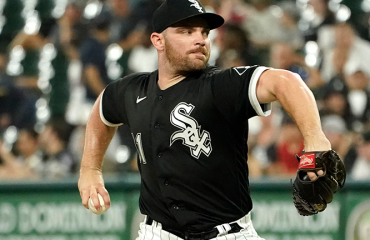
The Western Australian, and proud Wanneroo Giant, is closing in a return to the major leagues after he had Tommy John surgery to fix his elbow on August 2, 2023.
He told reporters he is targeting a September 6 MLB return. Hendriks is already making professional appearances in the minor leagues as part of his rehab process.
His first appearance of 2004, the first Hendriks action in 14 months, on August 18 went as well as it could. A perfect 1-2-3 inning with a fastball topping out at 95.6 miles per hour with the Worcester Red Sox in Triple-A.
He’s pitched twice more since then in Double-A with Portland and has yet to concede an earned run.
When he does pitch later this season for the Boston Red Sox, it will be his fourteenth MLB season.
Aussie trailblazers like Dave Nilsson, Graeme LLoyd, Craig Shipley and Grant Balfour had long careers, but no Australian has ventured into in as many seasons in the modern-day Majors as Hendriks.
He’s a three-time All-Star. The other 37 Major League Aussies have two combined.
He’s earned over 80 million AUD over his career making him one of this country’s highest ever paid sportsmen.
He may have spent 18-years playing baseball in the USA, but Hendriks says he still feels a connection to home.
He even logs in to Baseball+ to follow the ABL.
“I try to watch as much as I can,” says Hendriks of Australian Baseball. “I stream Perth Heat games online which is great. Every time I go back, I head to Wanneroo and see them [too].”
Hendriks admits he’s been known to check in on local WA league box scores and stats.

“I have lasting friends I still talk to from there. I loved [playing there], it was a great time. Boy, I miss club ball,” he says.
But more than that, Liam tries to show Australians his world as much as he can. He likes to give Australian visitors a chance to share in the big league life he’s created stateside.
Even though he hasn’t been in Australia as much as he wants – a pandemic, a cancer battle and a green card application has hindered that – anytime a fellow Aussie is in the USA he rolls out the red carpet.
Constantly on social media you see photos of Hendriks with former Australian teammates, with junior Australians on US tours, or with fans from Down Under coming to watch their country’s baseball idol and biggest star play ball.
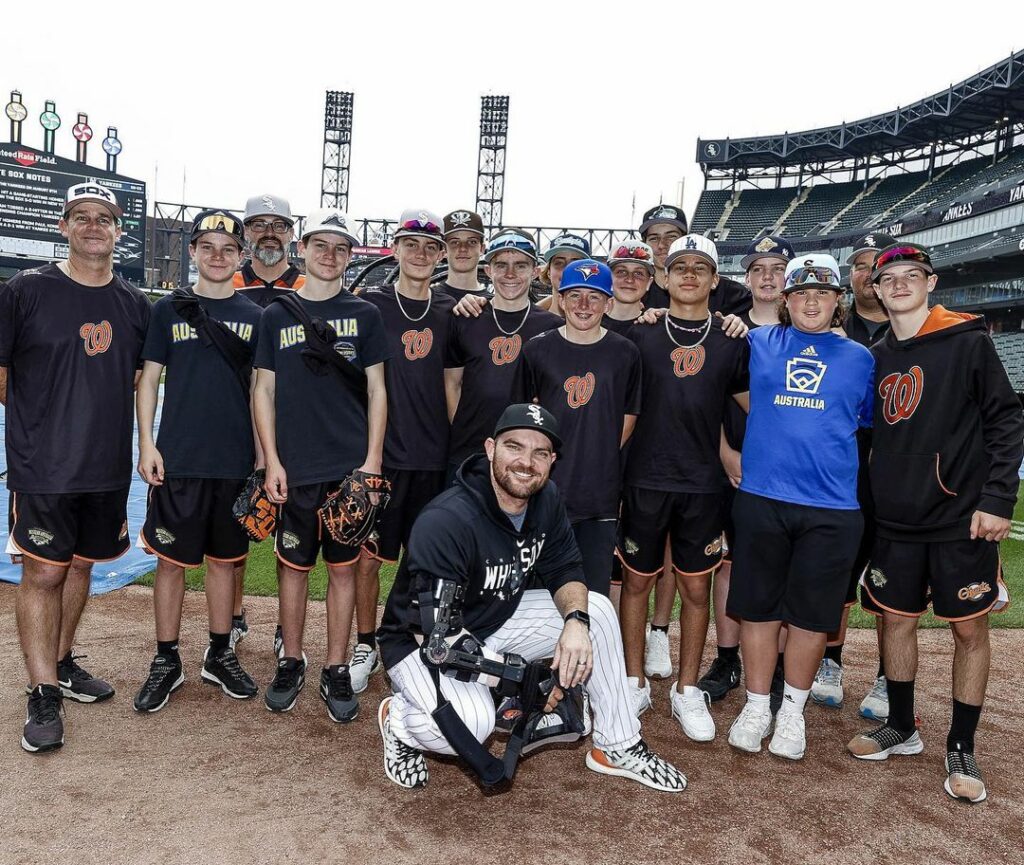

He saw Western Australian and Heat legend Jason Hewitt early in August, he hosted Little League coach Adam Dobb and his three sons before a game in June, he hosted a travel ball group of Aussies in July, last year he gave VIP treatment to the Wanneroo Giants when they were representing Australia at the Junior League World Series, he frequently converses with fellow Aussie Ryan Rowland-Smith at his academies.
“Any chance I get, if there’s any Aussies who come over – especially as part of a [junior] baseball team – please don’t hesitate to reach out, we’ll try to help out, get on the field, meet some of the guys over here and just sort of hang out,” he says.
It’s something Liam never got to do as a kid.
“I never got a chance to come [to the USA],” he says. “My first big league game was my big league debut.”
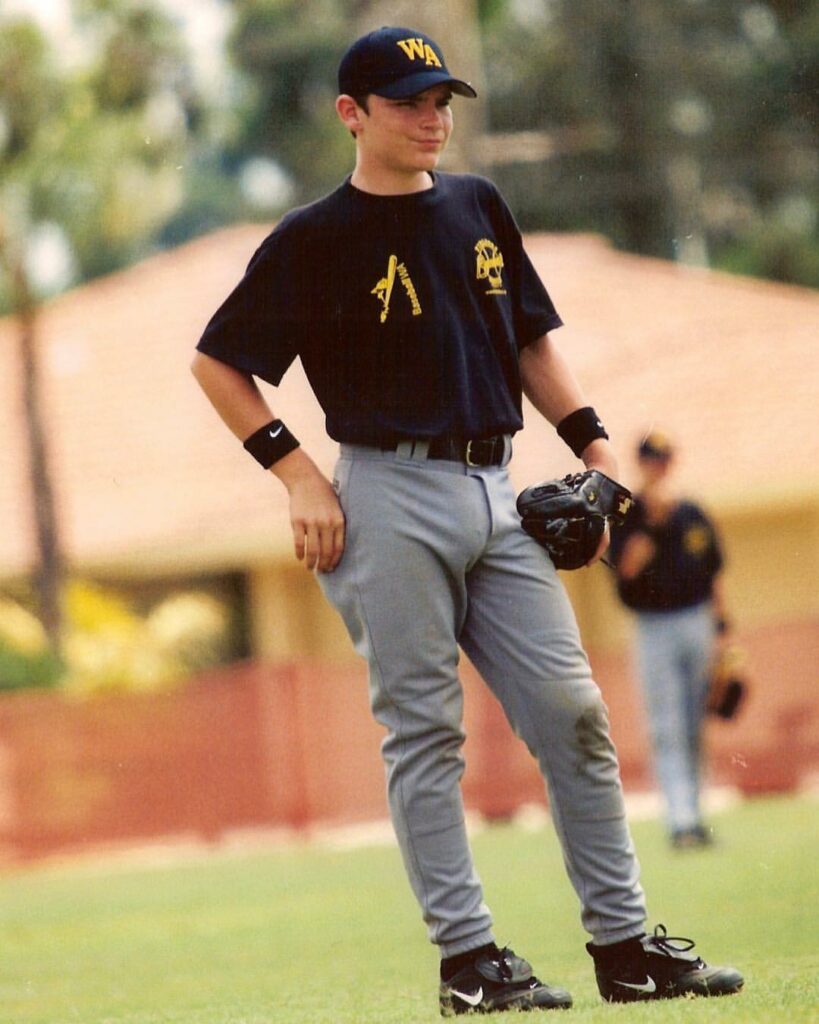
Above: Liam Hendriks as a junior with WA state team
Hendriks also notes he tries to cast a support network for the 30+ Australians who are playing minor league baseball in the USA.
He says he wants to keep the Australian group as close together as possible.
“If they’re going through a tough time they can reach out, we’ve all been there,” he says. “We’ve all gone through stuff. I got lucky with the fact that when I came over with the Twins there were ten Aussies on the team so that made things a lot easier of a transition. Some guys don’t have that luxury.
“So, if I can give them a slice of home or find them a decent place to find a pie that’s the way to go.”
That in itself is very much part of the Australian ethos. After all, the indigenous emblem the national team uniform tells a story of information and sharing and passing on stories.
It’s something Hendriks has experienced himself.
“I was lucky enough to learn from guys like Grant Balfour, and Ryan Rowland-Smith, Peter Moylan, Luke Hughes, Trent Oeltjen,” he says. “All these guys were ahead of me as far as paving the way. There were so many guys around that [I was] able to learn from and reach out to if I needed advice which is kind of cool.”
His involvement with the national team isn’t done yet, either. He’s already pitched in World Baseball Classics and World Cups but he wants more.
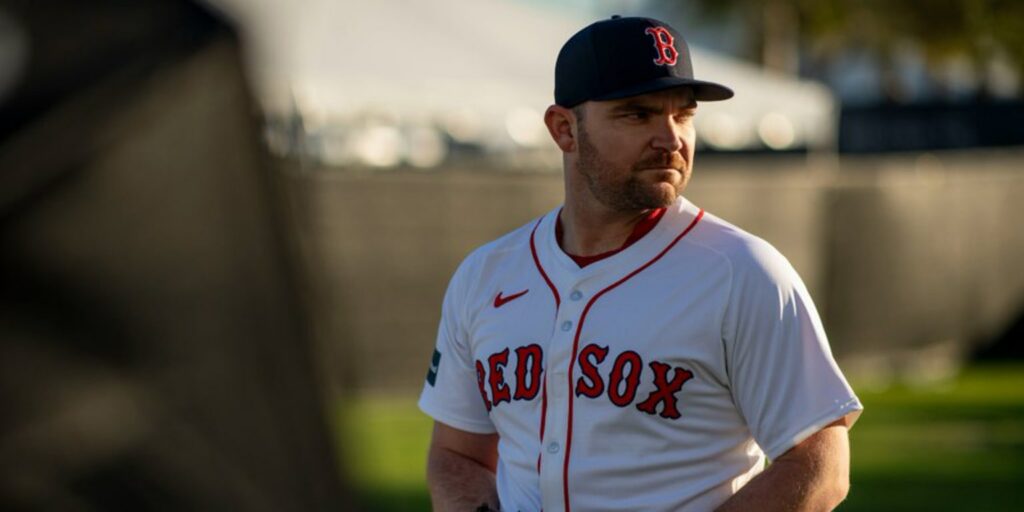
He says he has his eyes on the next World Baseball Classic, and was going to be part of the 2023 squad before his cancer battle.
He says he is hoping to share his experiences with the next generation of Australian players.
“Everyone goes through something,” he says. “Now I get a chance to give back. I was lucky to learn from guys ahead of me who paved the way – I was lucky enough to learn from them.”
As for future plans, Hendriks says he’s living in the moment and excited to get back pitching in the Major Leagues.
“I am in for whatever they want me to do,” he says. “My goal is to get people out. If that’s in the first inning, if that’s in the eighth inning, if that’s in the ninth inning. The inning, the role, it does not matter. My job is to get people out.”