28 February 2023
What the Indigenous representation symbol on Team Australia's World Baseball Classic jersey represents
An Aces Sporting Club report by Eric Balnar, Fuchu City, Japan. Photos by SMP Images. Video by Hugh Whittle.
Tim Atherton has worn many versions of a Team Australia jersey over his decade-long journey with the national baseball team.
He says he is extremely proud to wear this particular design.
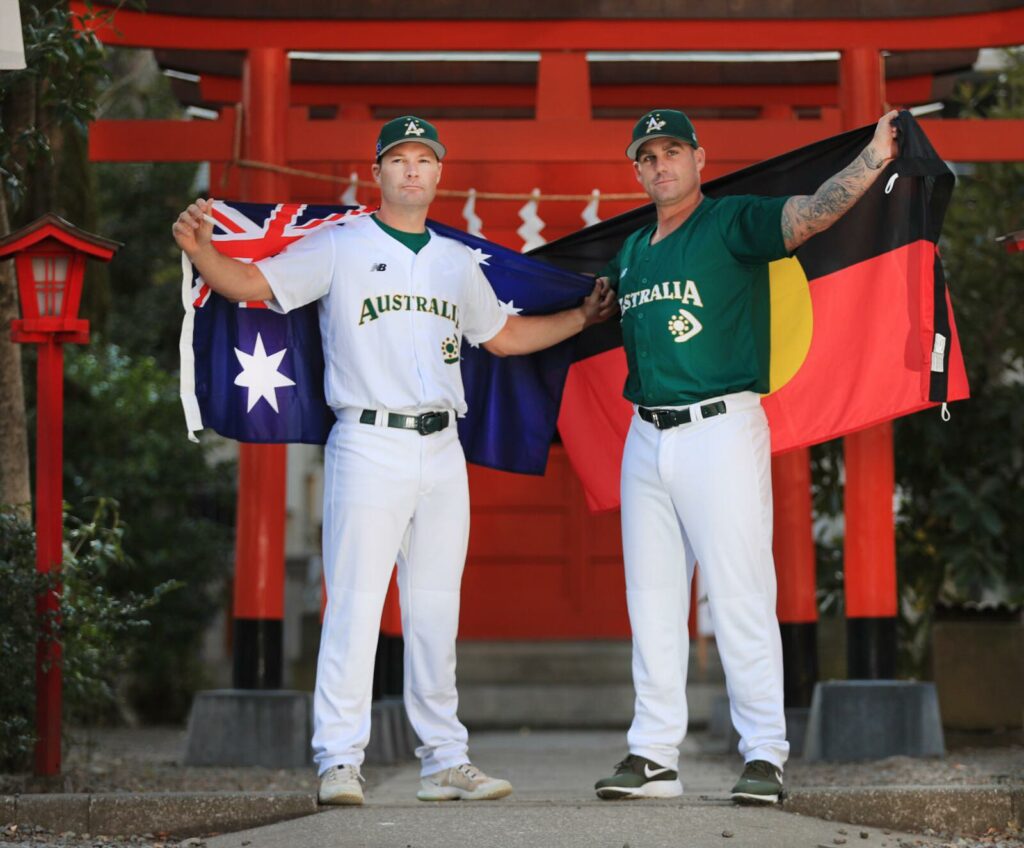
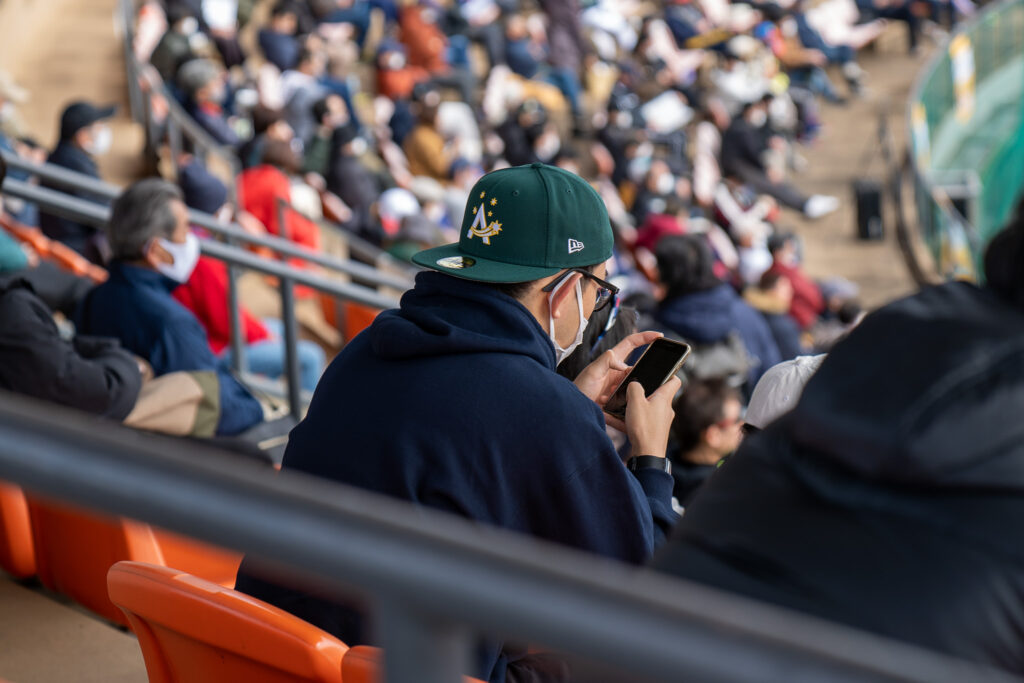
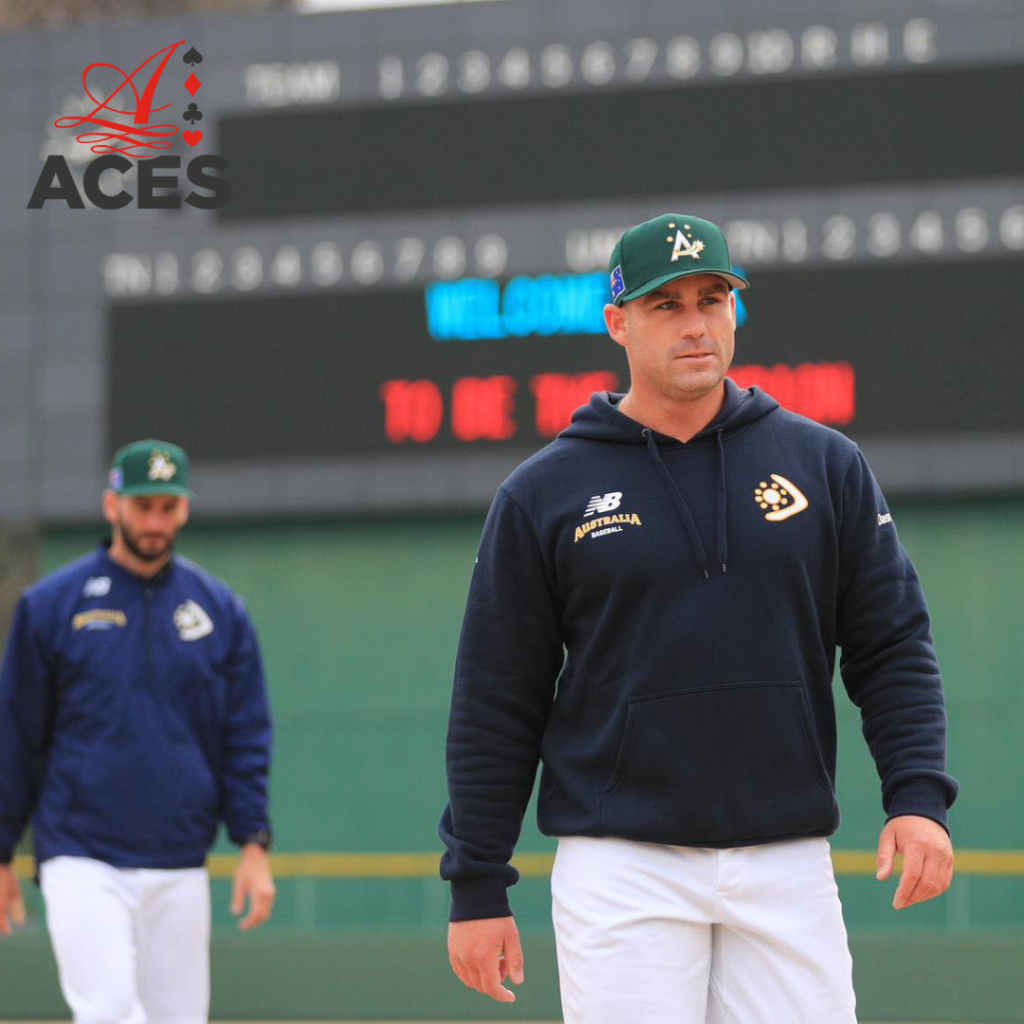
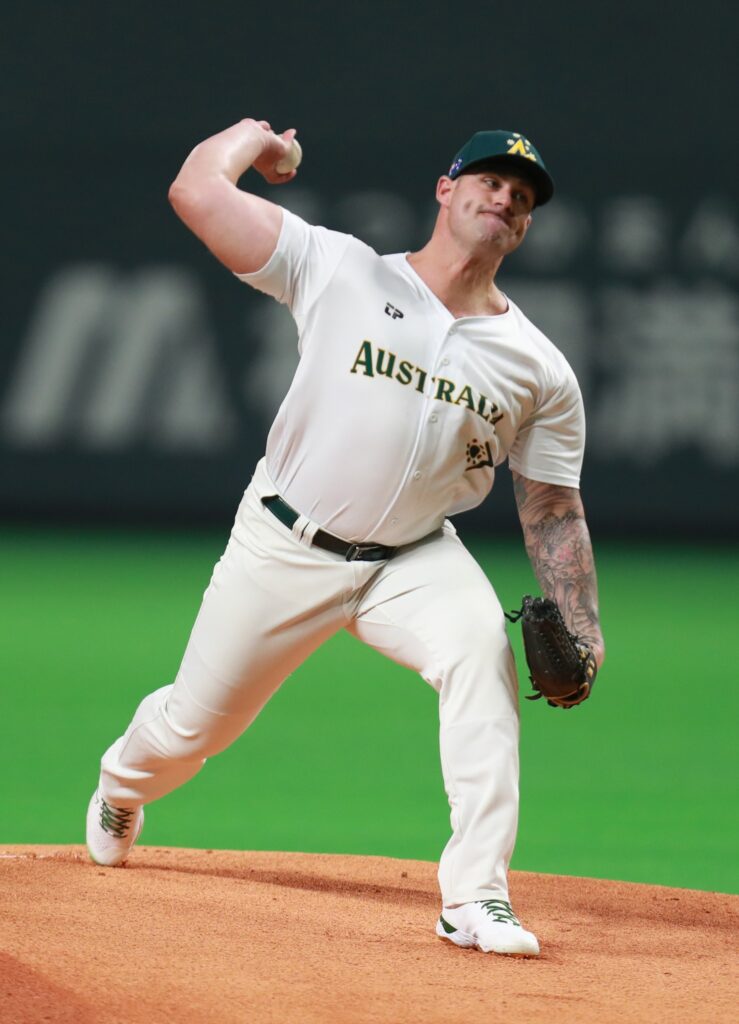
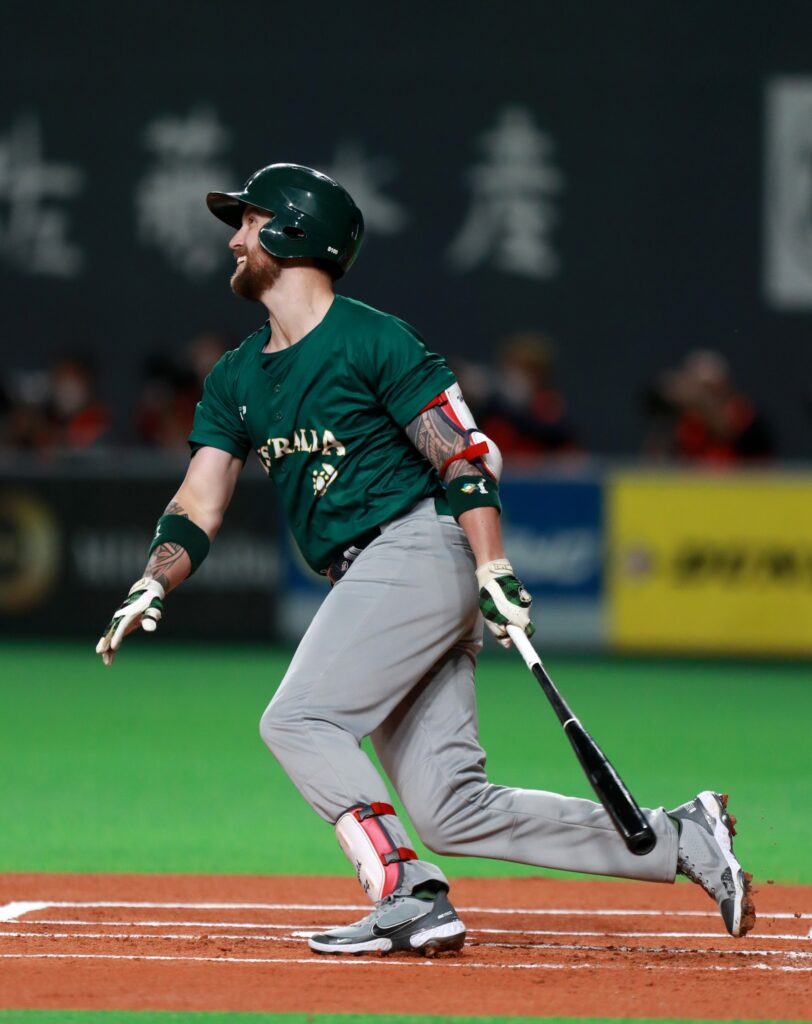
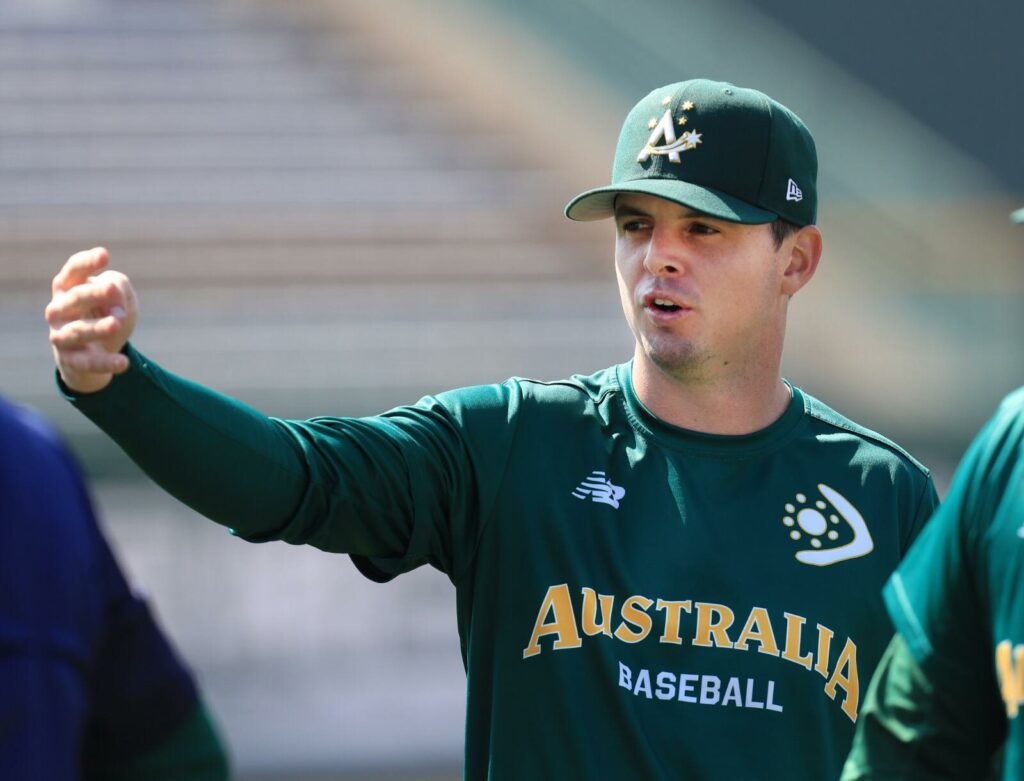
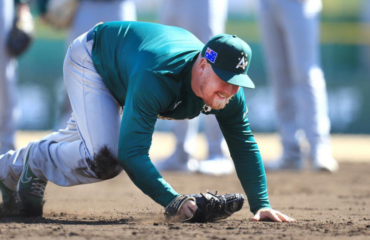
Atherton, Australia’s co-captain and a Gundangara man, proudly points to an Indigenous recognition symbol on the chest of his official World Baseball Classic jersey.
“This has representation, this has meaning. It gives an identity that is true to Australia in recognising First Nations people,” he says. “It is country encompassing in the Indigenous form and it’s country encompassing Team Australia.”
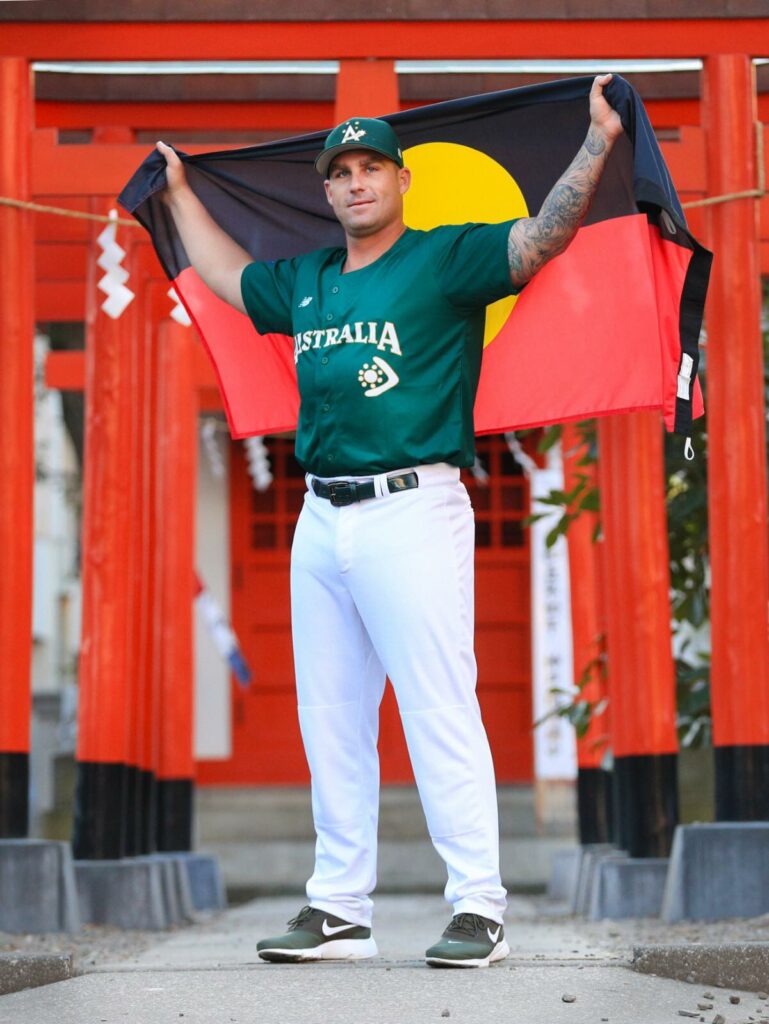
Tim Atherton sporting the WBC jersey (Photo: SMP Images / Scott Powick)
While this design has been used in international competition before, this is the first senior men’s tournament it will get a run in.
The jersey tells an excellent story. Now it gets to be shown to a massive international audience at the world’s biggest international baseball tournament.
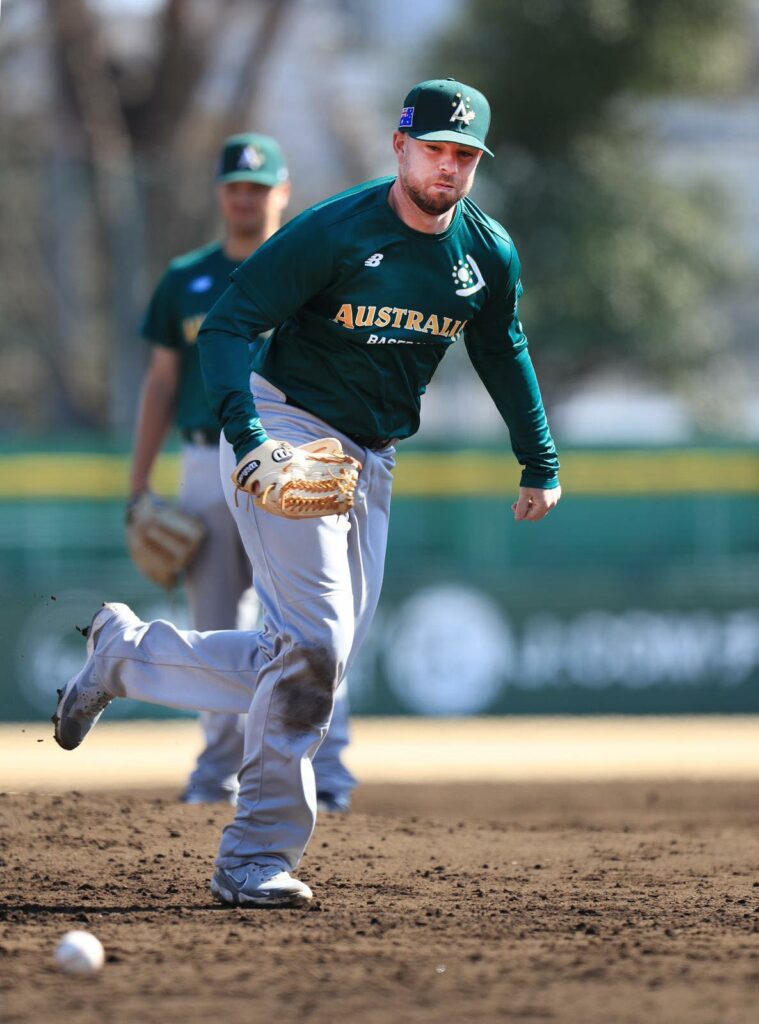
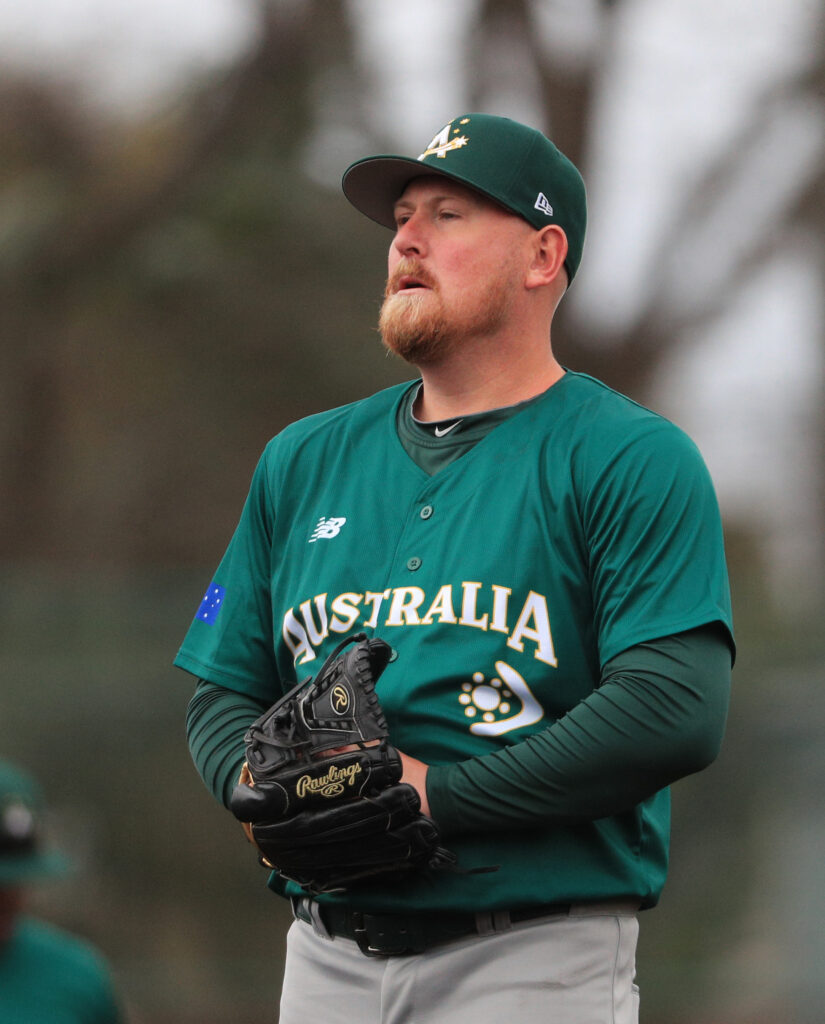
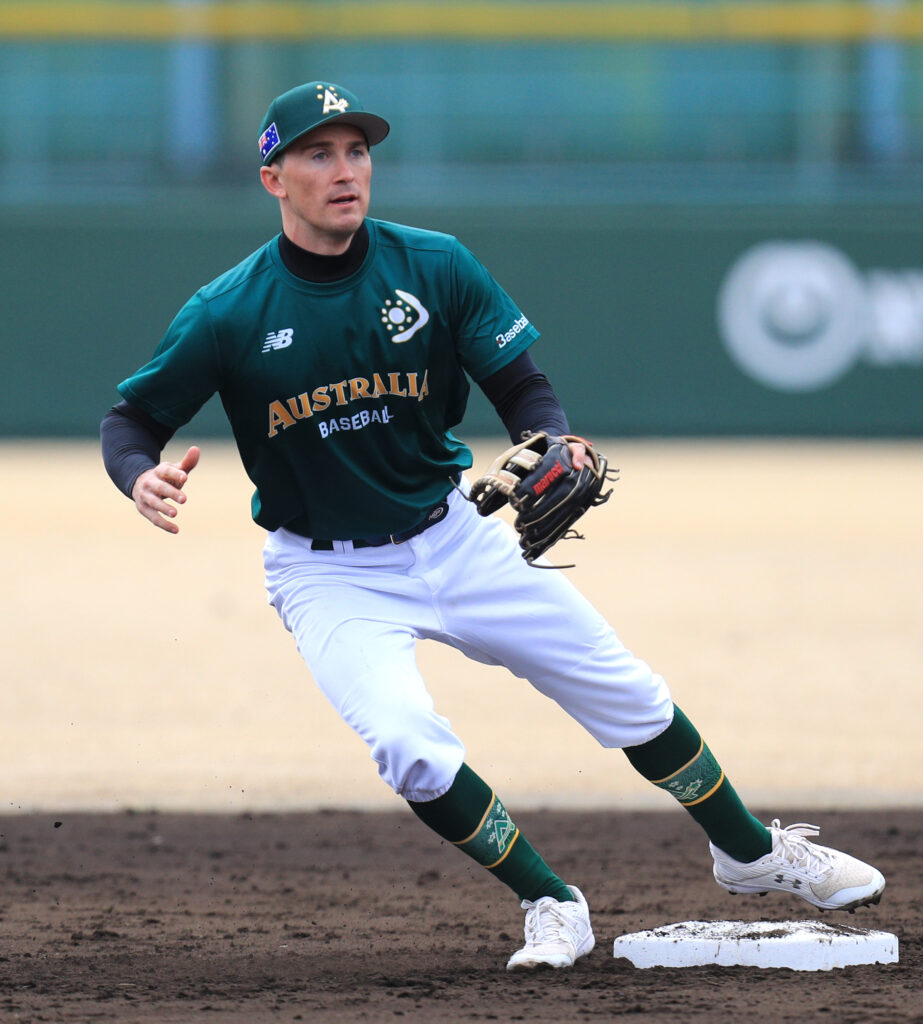
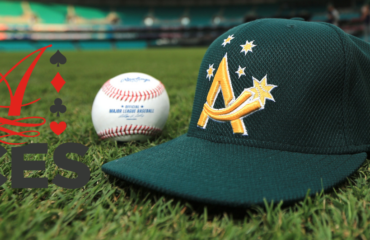
The emblem acknowledges the rich history and culture of the country’s First Nations people through an Indigenous symbol designed by proud Whadjuk Noongar woman and Perth artist Jarni McGuire in 2021. It took 18-months to design.
McGuire says the symbol is a visual representation of the champions of Australian baseball.
“To the right, you’ll see a diamond shape which represents the pitch. The circles around the big circle is a symbol for a star. It represents the champions of baseball,” she says.
Atherton says he likes the fact that the meaning within the symbol is encompassing of past baseball players.
“That’s very important,” he says. “In terms of the Indigenous community, the teachings and learnings all are passed down from elders. I like the fact that the star in the middle partly represents the baseball stars we are following in the footsteps of by wearing this jersey.”
GET MORE STORIES AT OUR WBC HUB: Click here.
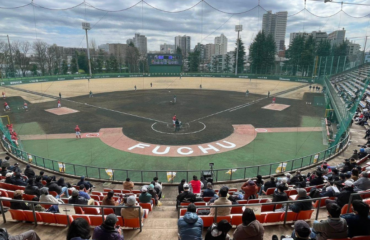
That sense of pride in Australian baseball is something instilled right away. On the first night of Team Australia’s 10-day training camp in Fuchu City, head coach Dave Nilsson suggested players reach out to people who came before them and those who helped them get to the national team to say thanks.
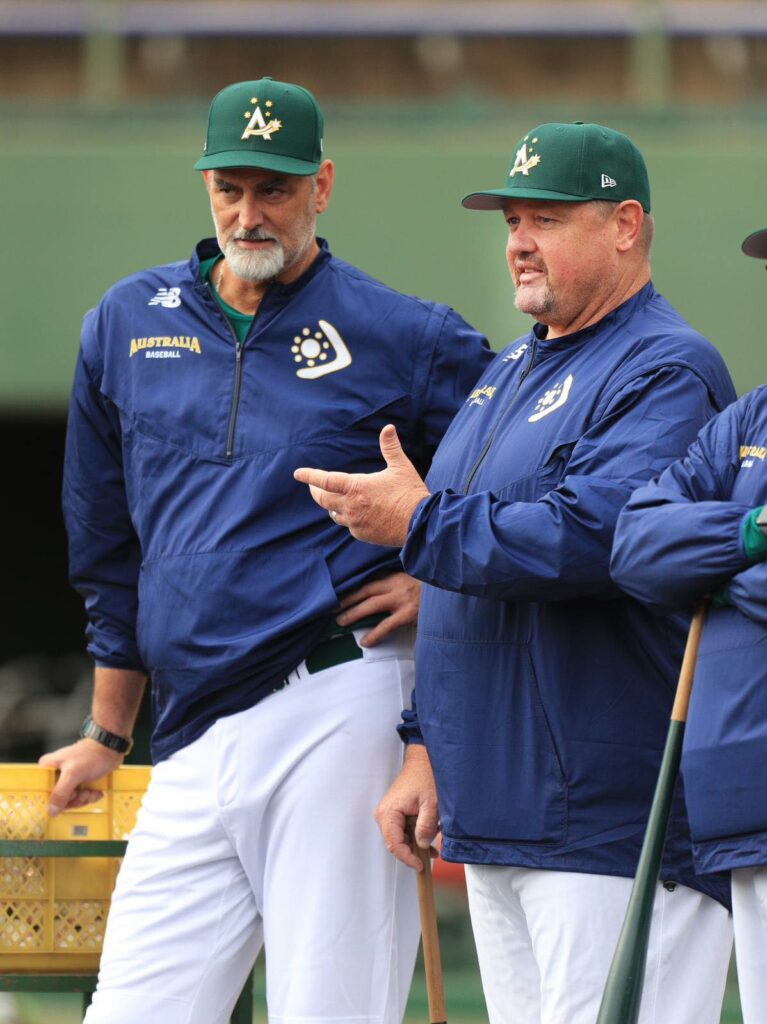
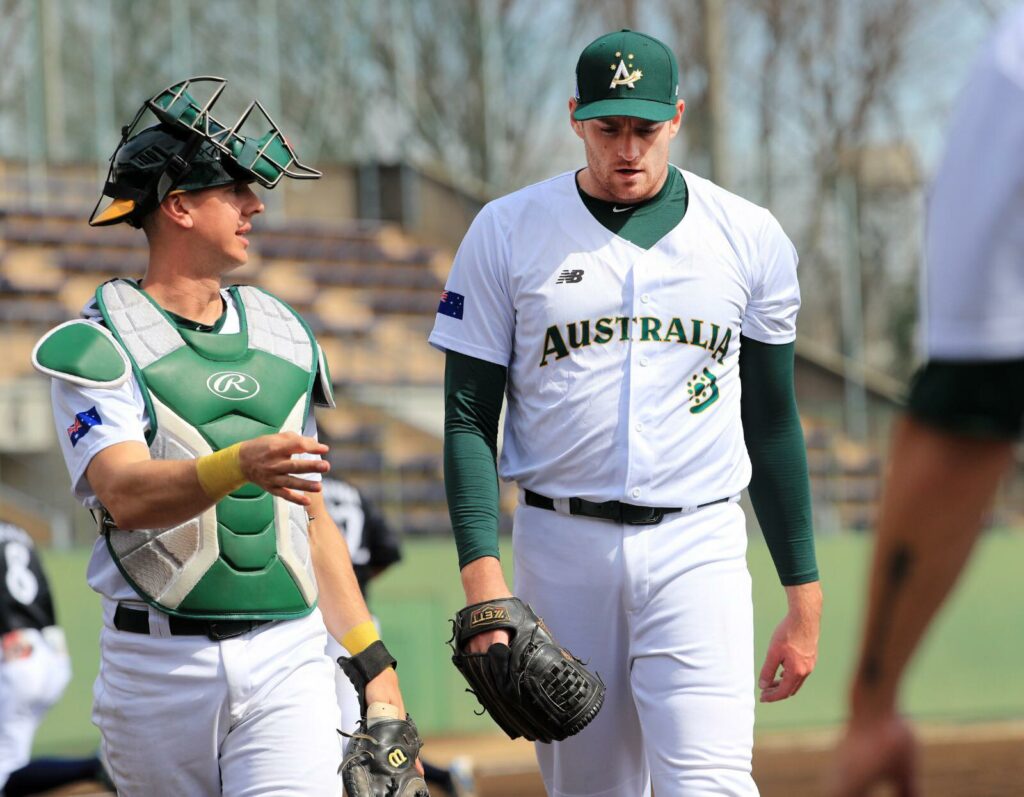
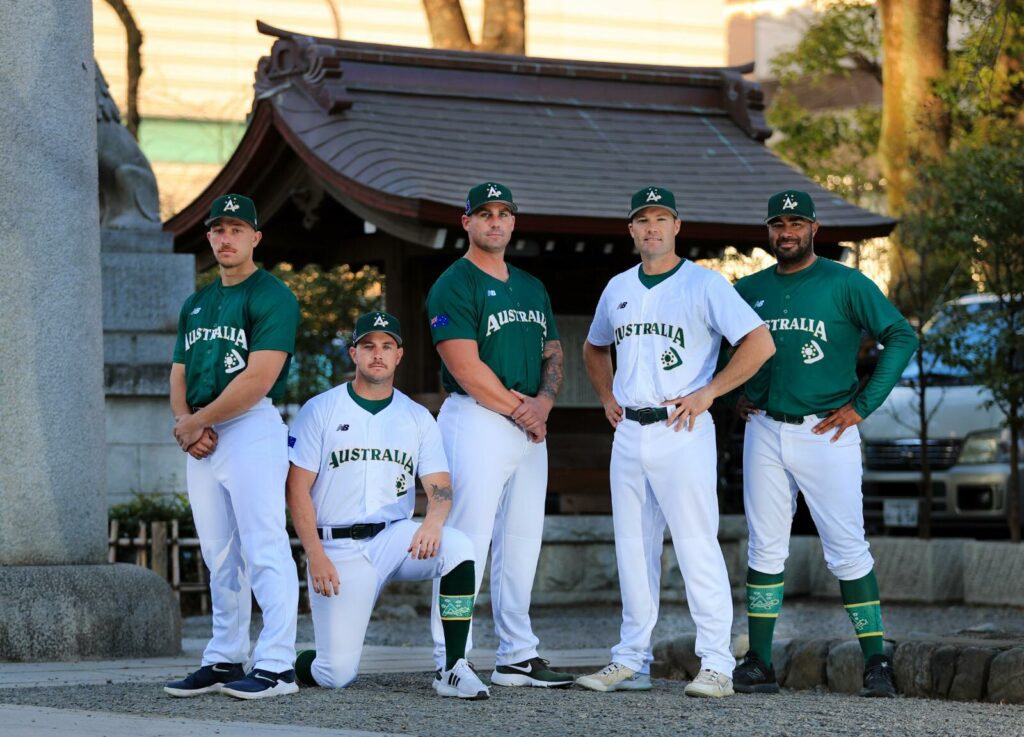 Left-to-right: Alex Hall, Andrew Campbell, Tim Atherton, Tim Kennelly and Darryl George (PHOTO: SMP Images)
Learning from the past, showing appreciation, sharing stories, and helping the future are all characteristics that co-captain Tim Kennelly says is evident in Australian baseball, especially on the national team.
“Anyone that’s worn this jersey and represented Australia has meaning to the team,” he says. “There’s been a few past players [who have helped me]. One in particular is Luke Hughes. He was on the national team a few years before I made it, and he made it easy. The information, the stories of the team, makes it easy to settle in.”
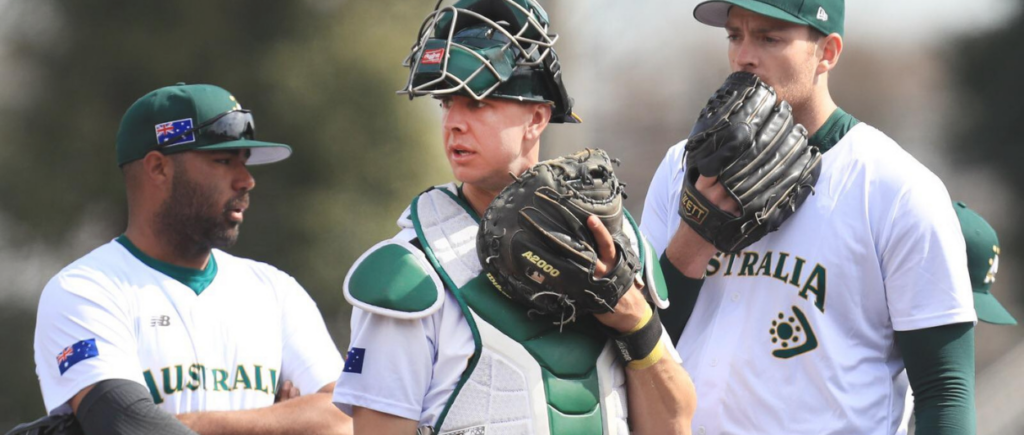
Darryl George and Robbie Perkins both say former Team Australia catcher Allan De San Miguel was that person who helped them transition into the national team.
“He is very encouraging. He always instils a lot of belief in us. He made sure we weren’t afraid to be ourselves” says George of De San Miguel. “That’s something we’re carrying on and passing to the next generation of players as well. I think the Indigenous symbol [on our chest] is a great representation of us.”
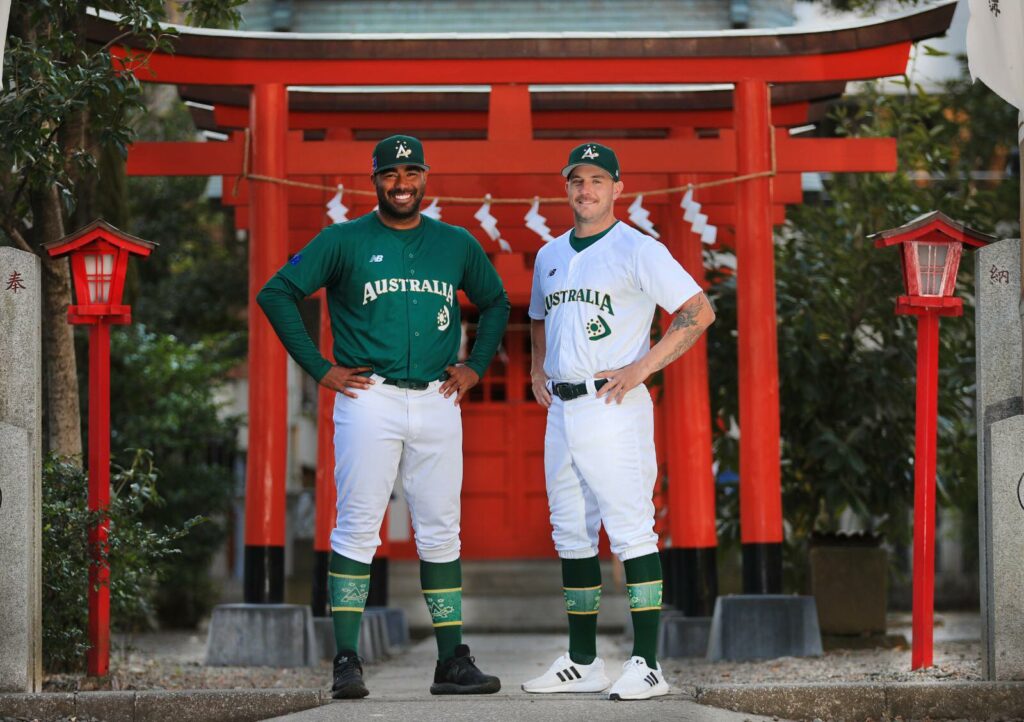
Atherton adds that it’s “highly important” that Australian national teams include culture of the First Nations people.
“I would be hard-pressed to find an [Australian national] team that doesn’t have an Indigenous player on their squad,” he says.
Atherton says he hopes he can continue to be a meaningful part of Australian baseball. He says the jersey perfectly encompasses everyone’s journey on this national team.
“It’s a flow of energies between players past, present and future,” says Atherton, the co-captain of Team Australia. “The representation of past, present and future right here, shows indigenous culture going back to the dreamtime, to the youth of today. As a player on this team for many years, I’ve been a learner and a listener and now I’m doing the teaching.”