24 February 2023
Why Team Australia is training at "high pace" to prepare for World Baseball Classic
– Fuchu City, Japan | Training Camp Report, Day 2
by Eric Balnar
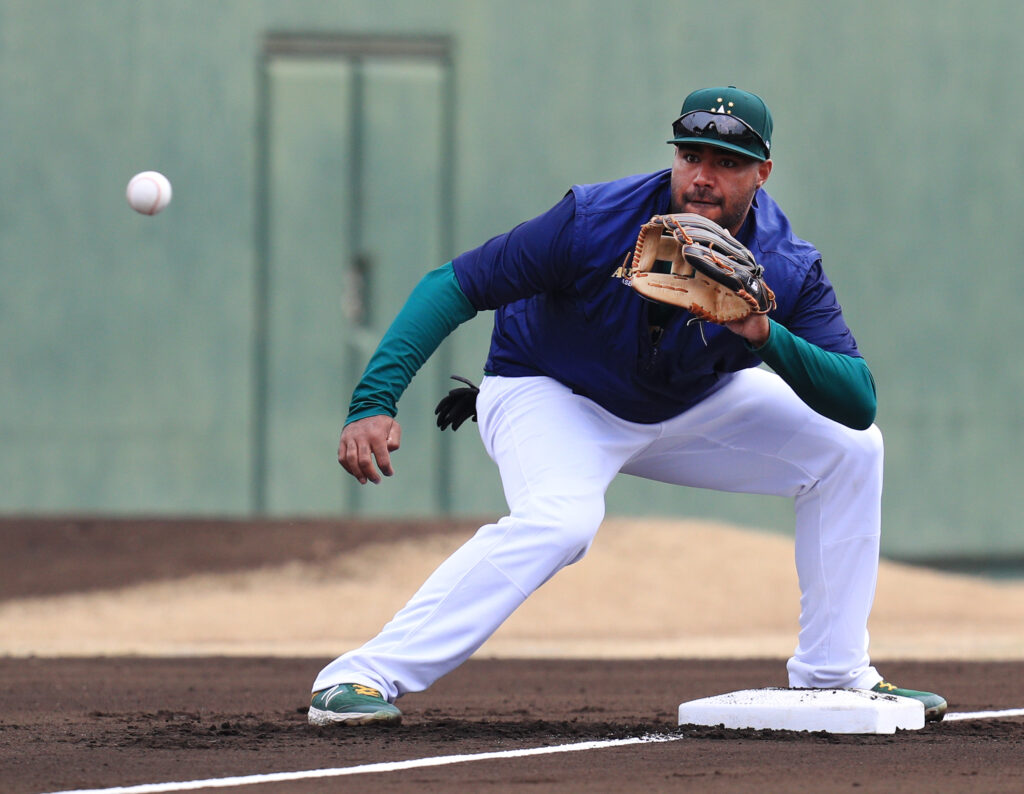
At 10:30AM, in six-degree temperatures at a city field in the Tokyo suburbs, first baseman Rixon Wingrove charged down the line at a slow rolling bunt dribbling towards him.
Wingrove hustled, handled and fired the ball across to third base with urgency, gave a fist pump and got a big reception from his teammates standing nearby after he made the play.
That’s the kind of effort Team Australia General Manager Russell Teichmann loves to see right from the start of their 10-day World Baseball Classic training camp in Fuchu City. He says it helps set the tone for what’s to come.
“We are not easing into this experience. This is the speed we go at. This is how tournament baseball works – everything happens so much faster. Let’s do it from the get-go,” he says.
Team Australia’s first training as a group was littered with these moments. Coaching staff constantly pushed the players defensively, tested them, had them moving quickly in the outfield, and drove home a message of “pace” in a four-and-a-half hour practice session.
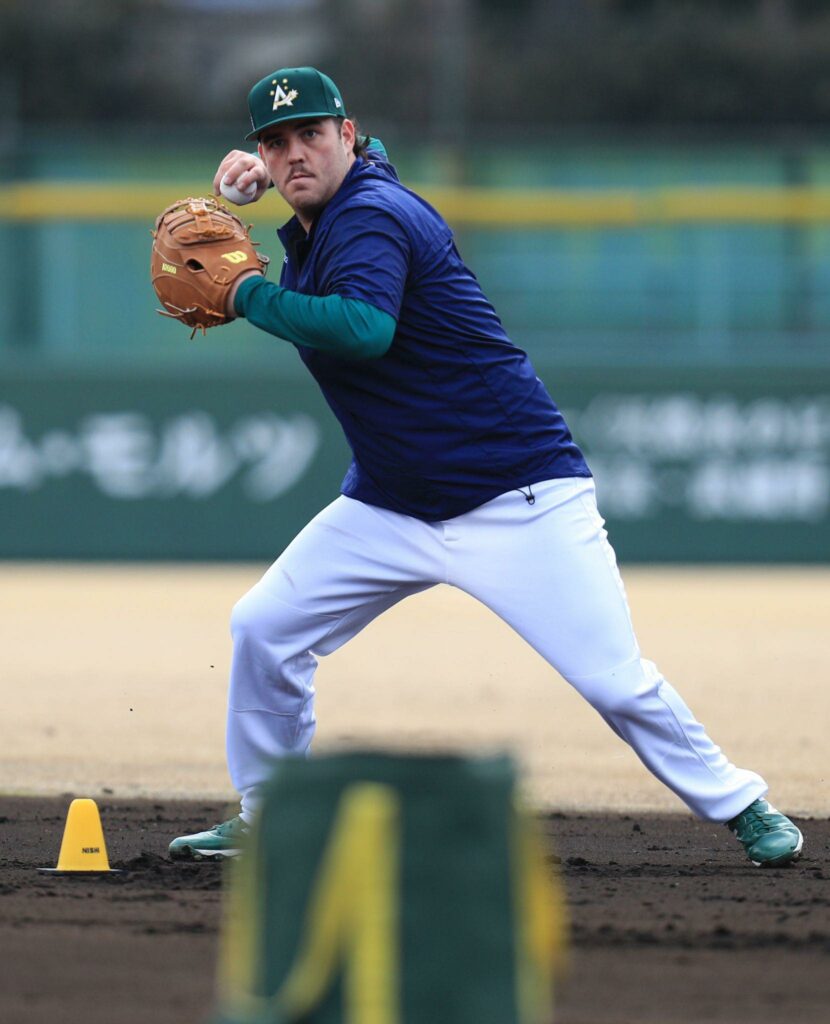
Rixon Wingrove fields a ball at first base (PHOTO: Scott Powick)
“This isn’t a 162-game season,” says Teichmann. “In a tournament that moves fast everything is magnified. Moments are bigger and they can come at any stage – the first inning, the last inning, the third inning. You just have to be ready for it and not let the moment catch up to you.”
When the World Baseball Classic begins on March 9 with a game vs South Korea, Teichmann knows the margin for error is almost zero.
He stresses that Team Australia will have to play nearly perfect and be ready for those big moments when they come, whenever they come. Afterall, the equation for Australia to make it out of the first round in Tokyo is to finish Top-2 in a five-team group with Japan, South Korea, Czech Republic and China.
“We need to establish that pace and expectation right away,” says Teichmann.
That’s why these next 13 days are important.
Australia will train every day between February 24 and March 3 in Fuchu City. It’s their own training camp before an official WBC Camp plus exhibition games in Miyazaki from March 4-7.
Veteran pitcher Tim Atherton has been to a World Baseball Classic before and knows just how crucial a good training camp is to set a team up for a competitive run.
He says because you only play four games in a group-stage of a tournament – and then single elimination games after that – teams empty the tank to try to win every one. There is no ‘long game’ – it’s a sprint to win as many games as you can early and often. Because of that, things in game scenario will happen quicker.
“Our training has to match the speed we will experience at the Tokyo Dome,” he says. “It’s an astro-field so the ball will travel quicker on the ground. We are playing the best players in the world so they will run faster, hit harder, swing harder and throw harder. Teams can bunt at any time. All of these things create a pace of play that is more than just going through the motions of training.”
“We need to emulate the game. Practice doesn’t make perfect…perfect practice makes perfect,” he says.
Australian players were put to their paces in the outfield, focused on team defense, threw some bullpens and got in batting practice in a full-on first training session.
“Everything needs to be quick-quick-quick so when that moment comes it can be slow,” says Atherton.
Tomorrow, Australia will play two exhibition games vs local Fuchu teams in an effort to get some live batting practice in and to face different styles of pitching.
Veteran pitcher Todd Van Steensel says he liked the tone that was set.
“This was really good,” he says. “10 days of this will be really challenging. It’s what we need. You have to be ready to scrap. Each run scored or stopped is so valuable. Things happen early and it can happen at any moment.”
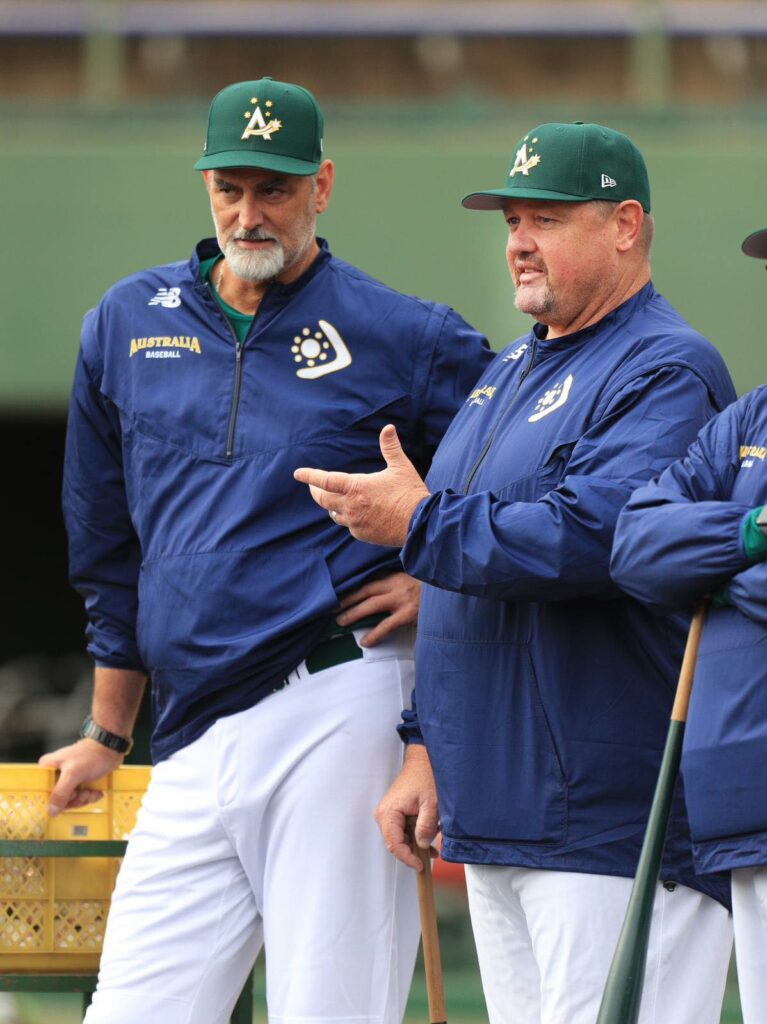
Team Australia head coach Dave Nilsson (right) and assistant coach Graeme Lloyd (left) oversee Australia’s practice (PHOTO: Scott Powick)