25 February 2023
How a Japanese town is helping Team Australia prepare for baseball's biggest tournament
An Aces Sporting Club report by Eric Balnar, Fuchu City, Japan. Photos and video by Hugh Whittle.
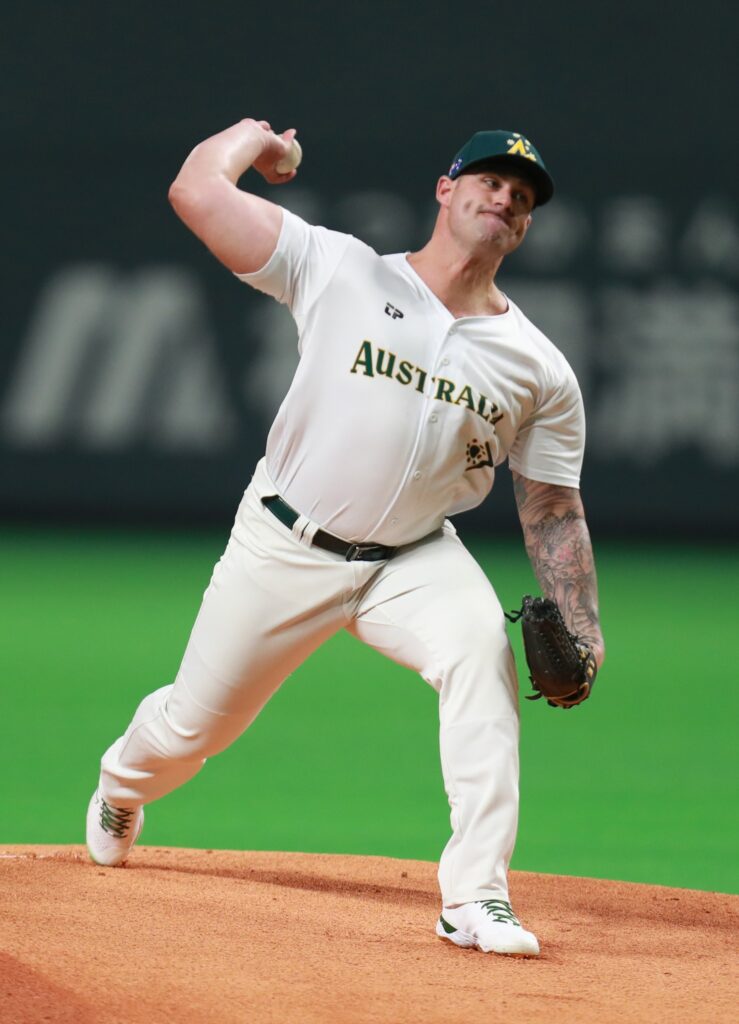
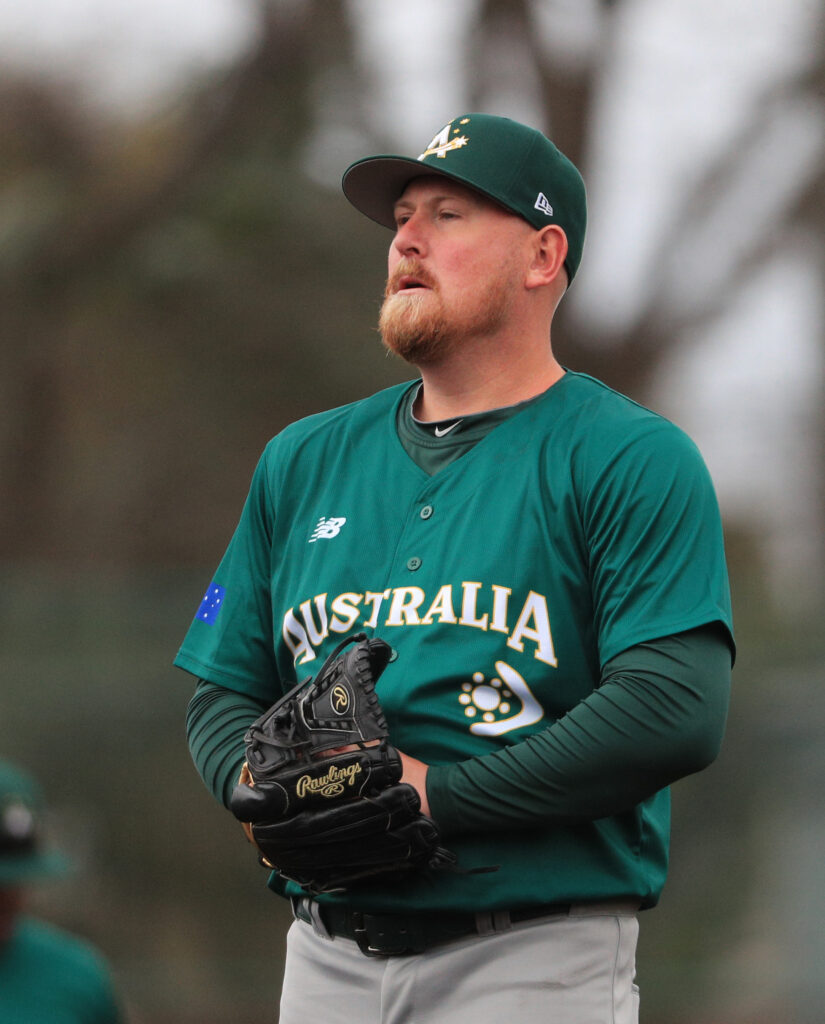
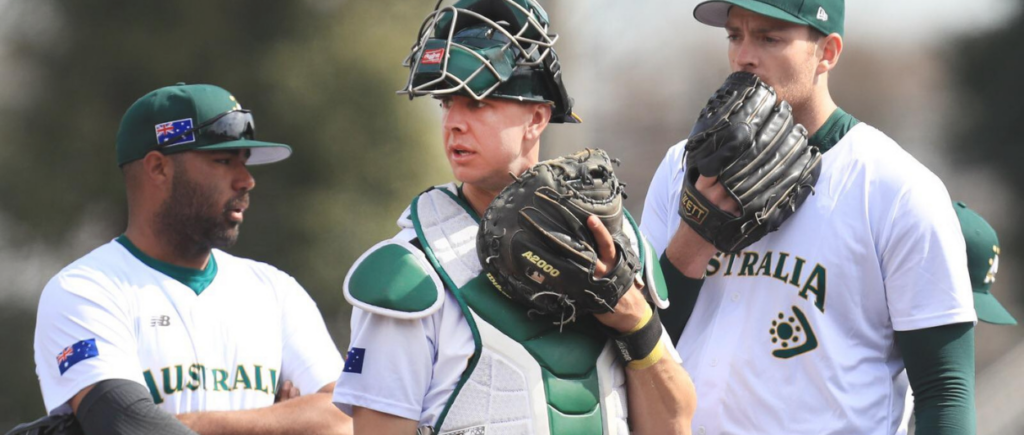
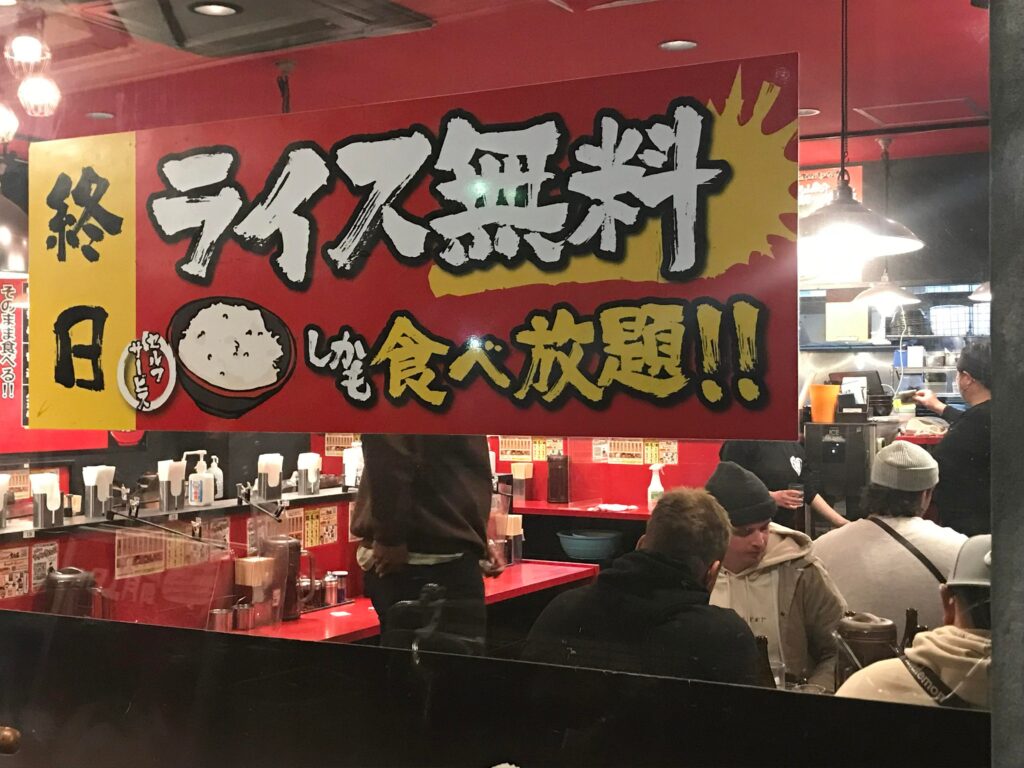
“I have to show you this little ramen spot,” says pitcher Luke Wilkins. “I can’t tell you what it’s called, but I know where it is but I can show you on a map. It’s really simple. It’s so good…all the food is here really.”
The ramen spot he refers to is a big hit among the Australian camp. It’s small – as many little Japanese restaurants are – and outside a major train station. Nobody speaks English and the menu – which doesn’t have a bad item on it – are completely in Japanese. The staff is overly friendly, the food is delicious and they love having the Australian national team around.
In a completely foreign environment, having a “spot” – or a place that feels at least a little familiar – can be a big thing for a person preparing for the biggest tournament of their life.
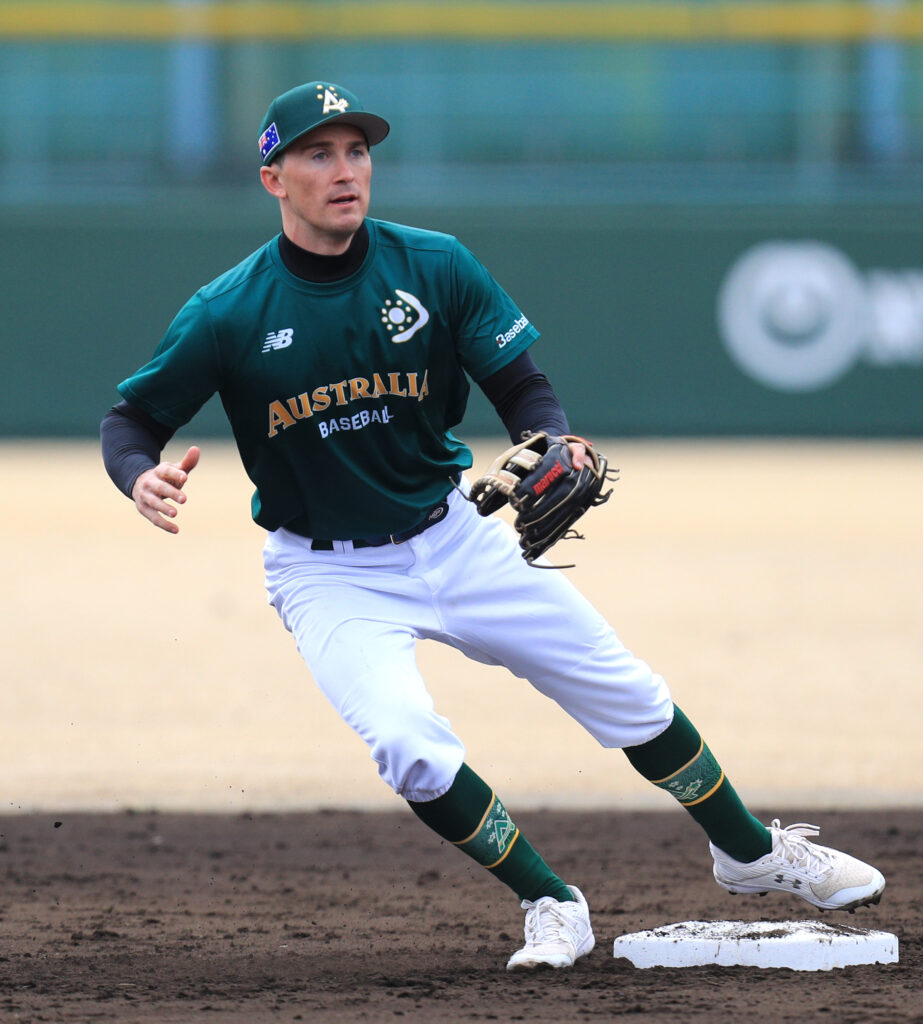
Team Australia is less than two weeks from their first World Baseball Classic game vs South Korea and preparation is key. They’re about to play in front of a sold-out Tokyo Dome against baseball’s best. Everything around is just a little different – the food, the language, the transport, the culture.
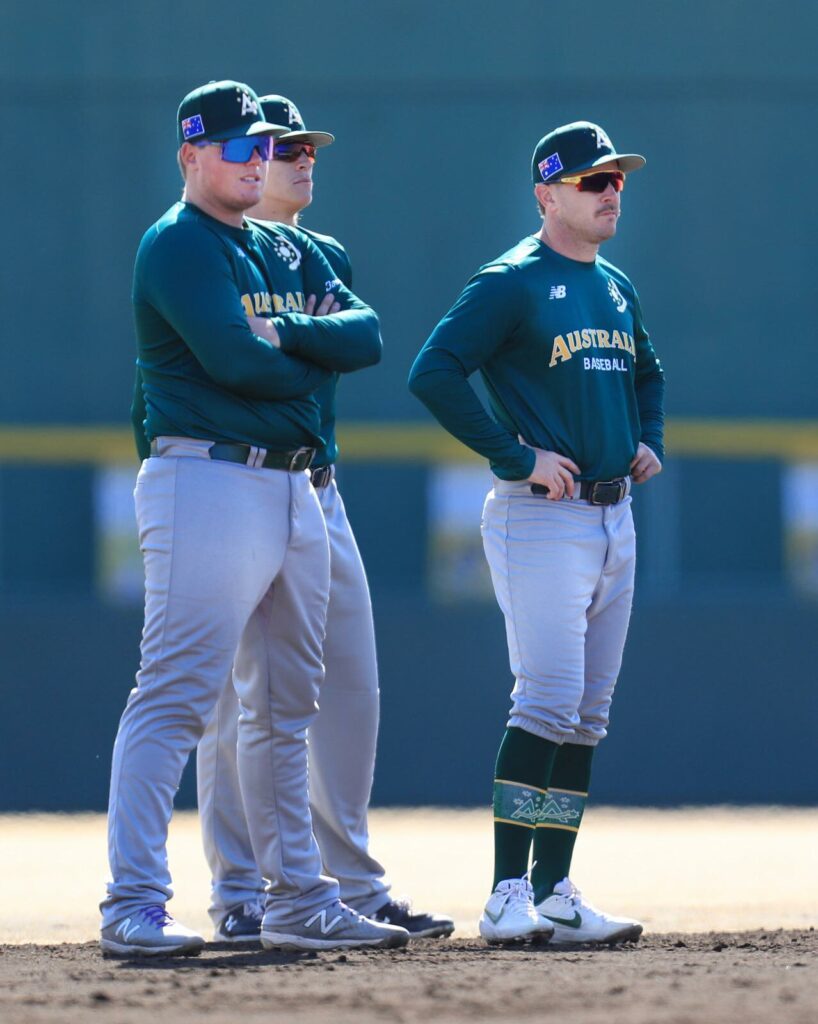
That’s why having a home base is so important. Welcome to Fuchu City, a suburb on the outer edges of the Tokyo metro area. For the next week or so, it may as well officially be an Australian town.
“It’s our home outside Australia,” says Baseball Australia CEO Glenn Williams.
PODCAST: Listen to Dave Nilsson’s chat here (available across all podcast platforms)
It’s a town with a ‘metro-rural feel’ in a big city approaching the outskirts of Western Tokyo. There are lots of parks, sports stadiums, great food and friendly people. It’s a true “workers” city – there’s not much touristy about it.
There are big businesses like Toshiba, NEC and Bank of Japan who base themselves here. The people are sports mad. There is a major race course, the training grounds of various sporting teams, lots of baseball and lots of rugby.
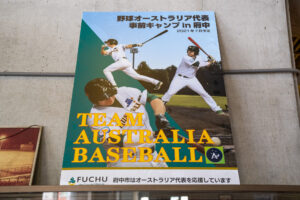
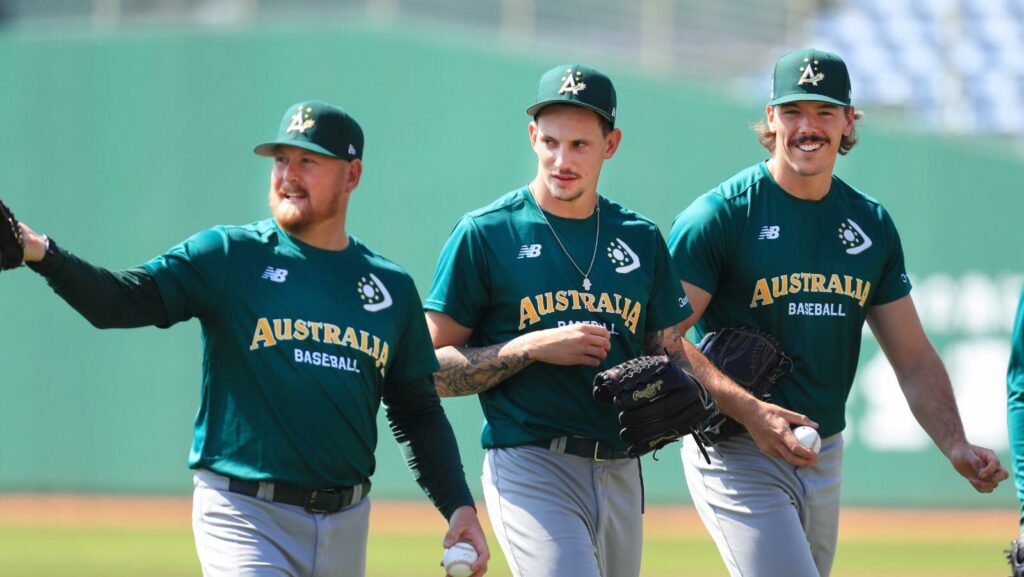
The locals go out of their way to make Australia feel like home. Nothing is too much trouble – they even play Australian music at team lunches and batting practice to make them feel more comfortable.
Players and staff say they can feel the sense of community the town brings.
“I love it here [in Fuchu],” says Wilkins. “Everybody is so excited that you are here. They absolutely love baseball. You feel like celebrities and it really feels like home. It also is nice for the returning players to show new people some of their favourite things to do and see.”
Wilkins has already been to his “local” massage place in Fuchu and referred it to other players. He was rehabbing an elbow injury on his first trip to Fuchu in 2018 and he got some work done at a local shop. During his visit, the shop owner called his family and friends and Wilkins was signing autographs outside the store.
“When I returned this time, they all knew my name,” he says. “They can’t speak much English but it was all ‘Luke!’, ‘Wilko!’, ‘Wilkins!’. It’s really cool. Little things like that make a huge difference.”
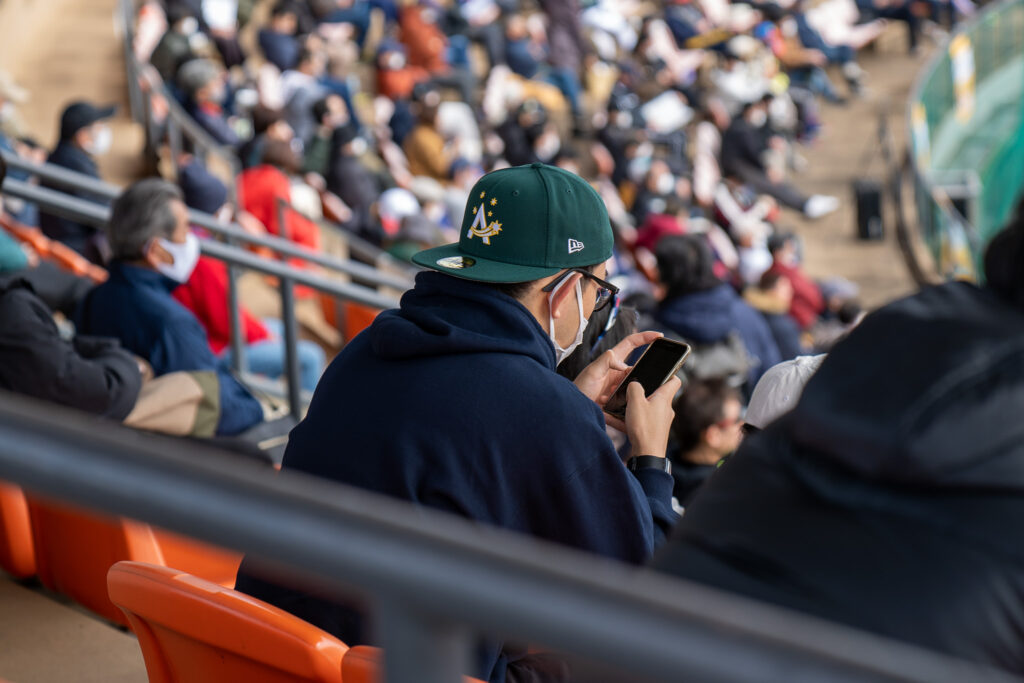
Fuchu City has been a Japansese-base for Australian baseball training camps since 2018. It was first used as a training camp home for an international friendly between Japan and Australia. The relationship started with Baseball Australia via Mr. Takano, the mayor of Fuchu City.
The senior men’s team came here again before the Premier-12 tournament in 2019 and were scheduled to come here for Olympic qualifiers. Now, they are back for the World Baseball Classic – the biggest stage of international baseball.
There’s plans in the works for growth on the partnership, too.
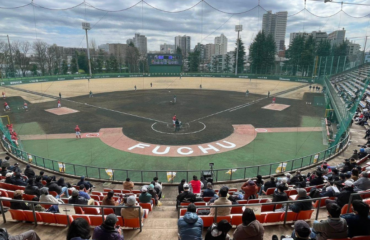
“Look – this is the reason why are here,” says Williams, looking out at the Fuchu City Field before a Team Australia practice match.
“There are 20-30 people out there, getting the field ready on a Saturday morning just so we can prepare to play baseball in the big tournament. They don’t have to do that.”
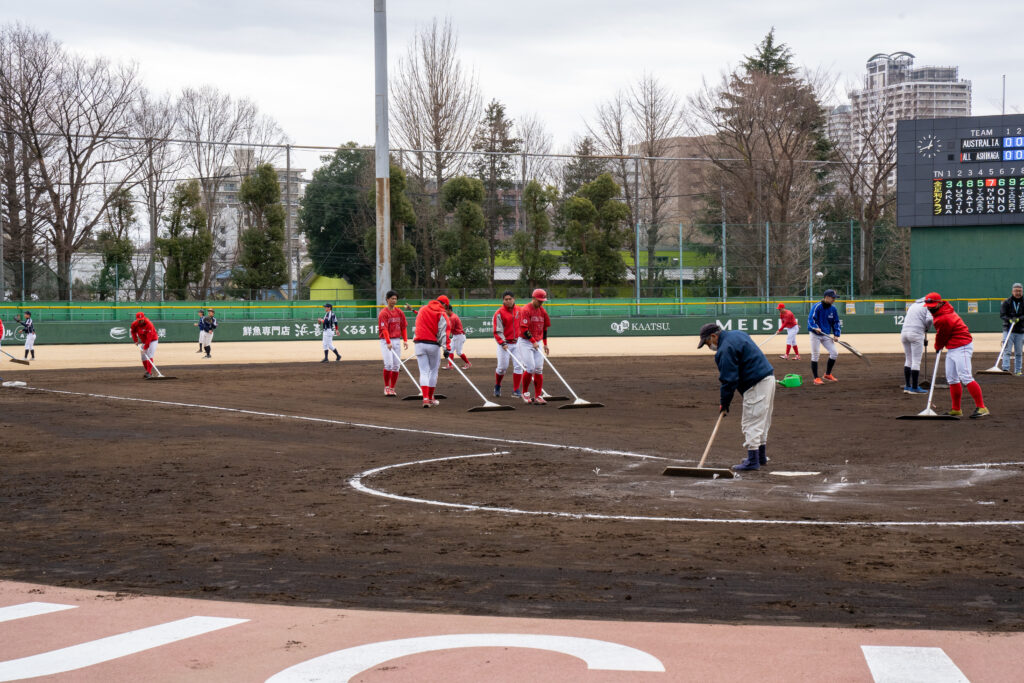
Their local council, staff and community do everything for Team Australia.
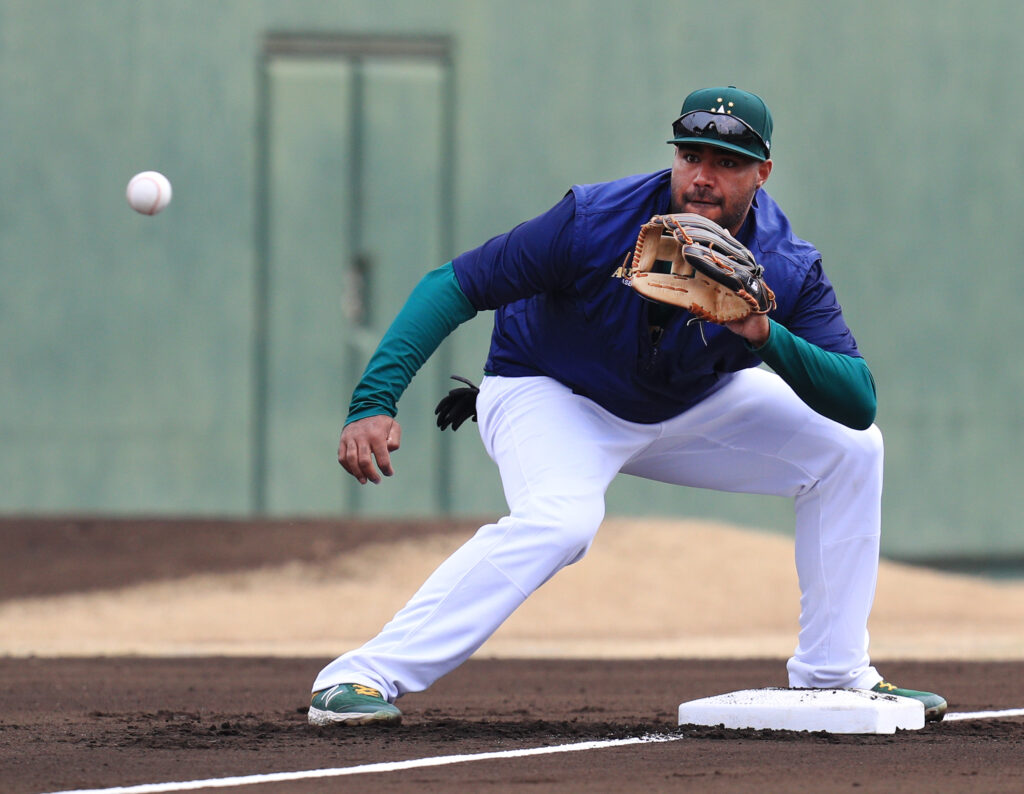
They provide access to facilities, a training field and coordination of many of the logistics. They assist in setting up the hotel, providing on-ground support staff and promotion of local events. Fuchu staff supplies food for games and trainings.
There are school visits, clinics and special events over the next nine days at Team Australia’s WBC training camp.
Coaches and management have rooms at the local stadium and hotel to do work, hold team meetings, and continue to plan Australia’s World Baseball Classic experience.
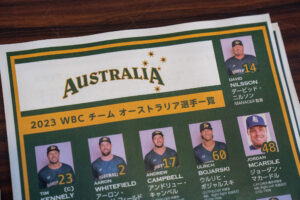
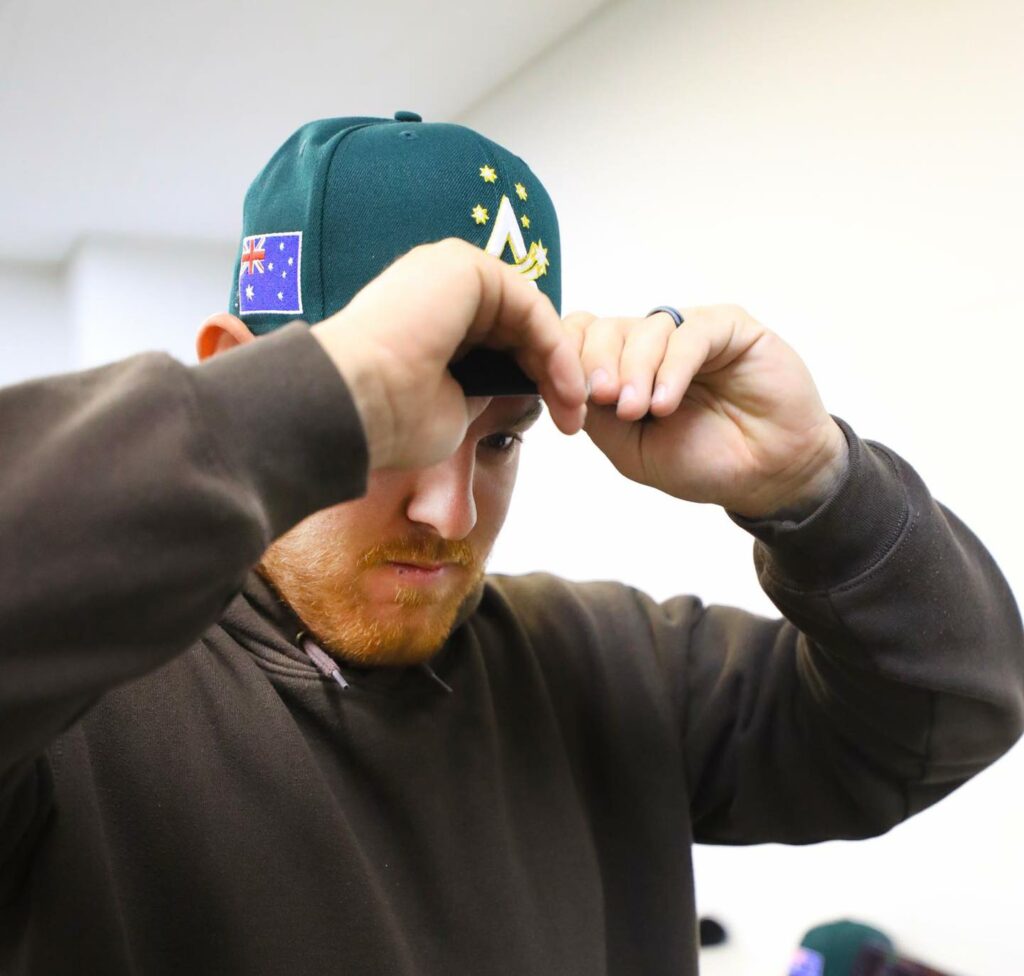
“Look around the stadium. People are waving flags, they have programs with player information, and people are wearing Team Australia hats and ABL jerseys,” says Williams “There’s little kids coming today to watch us play. It’s pretty cool.”
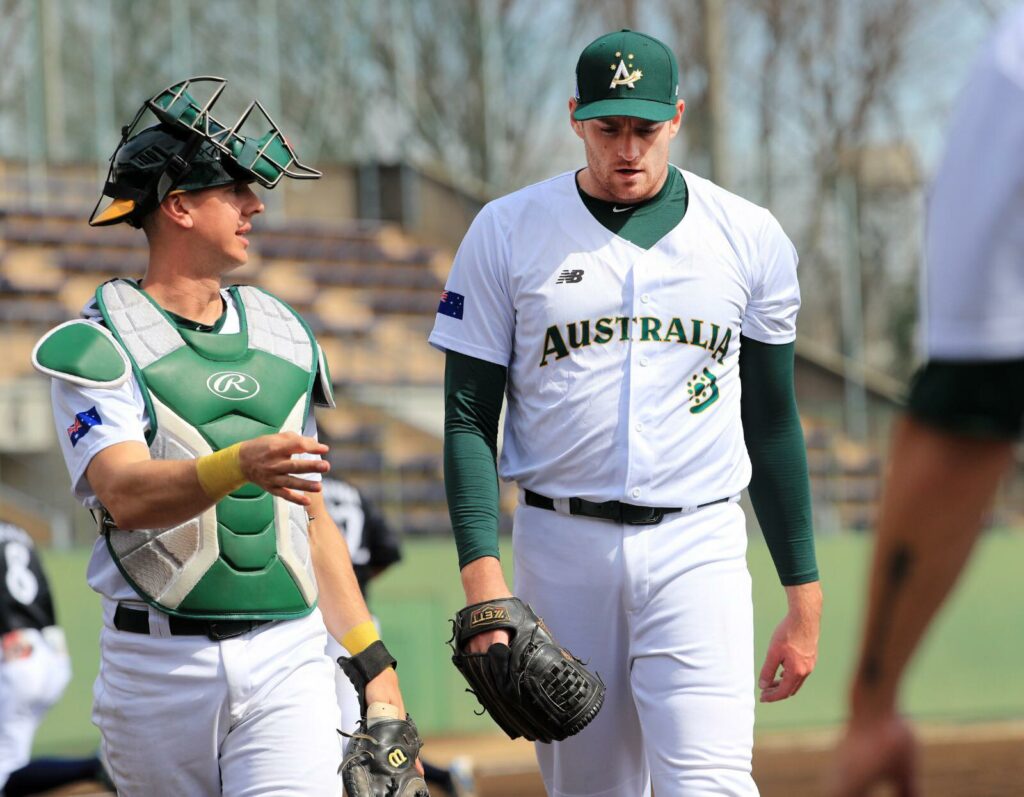
Fuchu City even organises exhibition games for Team Australia to play in. On Saturday 25 February, Australia is playing two seven-inning games vs All Fuchu Baseball Club – last year’s champions in the Adult Tokyo Baseball League.
They even set up local teams to play exhibition games against. The teams is made up of amateur players, independent baseballers, college guys and even one former NPB player (Nagano).
A bus of 200 supporters showed up to cheer on All Fuchu, while many residents of the local community churned out to support. There was a PA announcer, line-ups a program and a whole event.
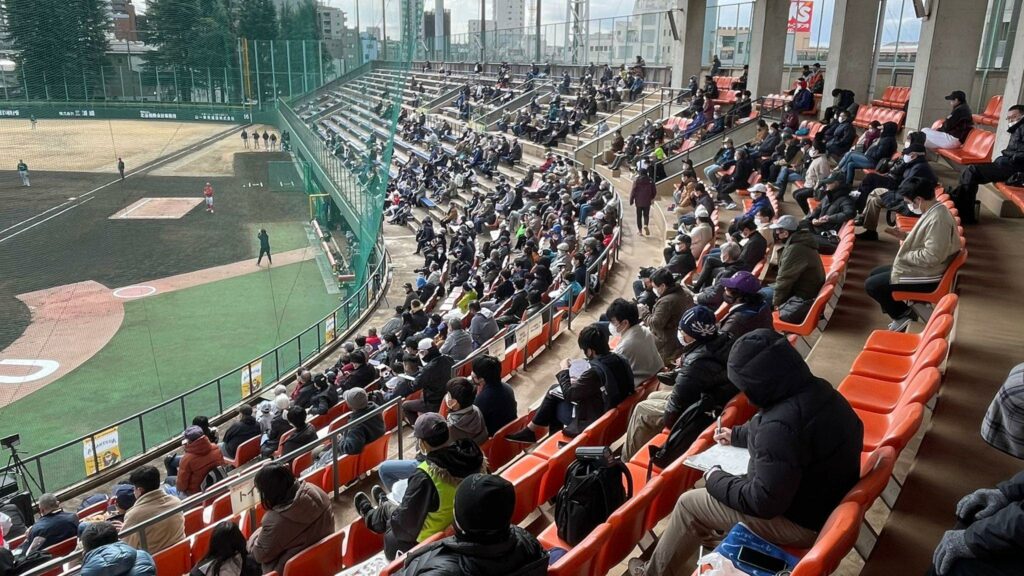
“The local community is very excited to have Australia here,” says Daisuke Minagawa, a manager at of one of the local companies (Aida Chemical Industries), helping to coordinate Team Australia’s Fuchu experience. “Many people now cheer for Team Australia at the baseball. It feels like our team too.”
Minigawa says it is important for Fuchu City to support the world through sport. He says Fuchu is a great place to live. He says there are many parks, friendly people, and a big support for local sport.
“We love our sport. Baseball, rugby, cycling,” he says. “It is important for us to support sports teams.”
Throughout the crowd there are Australian flags, ABL jerseys, caps and merchandise.
“The people here know their stuff,” says Wilkins. “They know who we are and are just so excited to meet us.”
When Australia got a hit or a big out, the crowd erupted. It was a pro-Australia crowd.
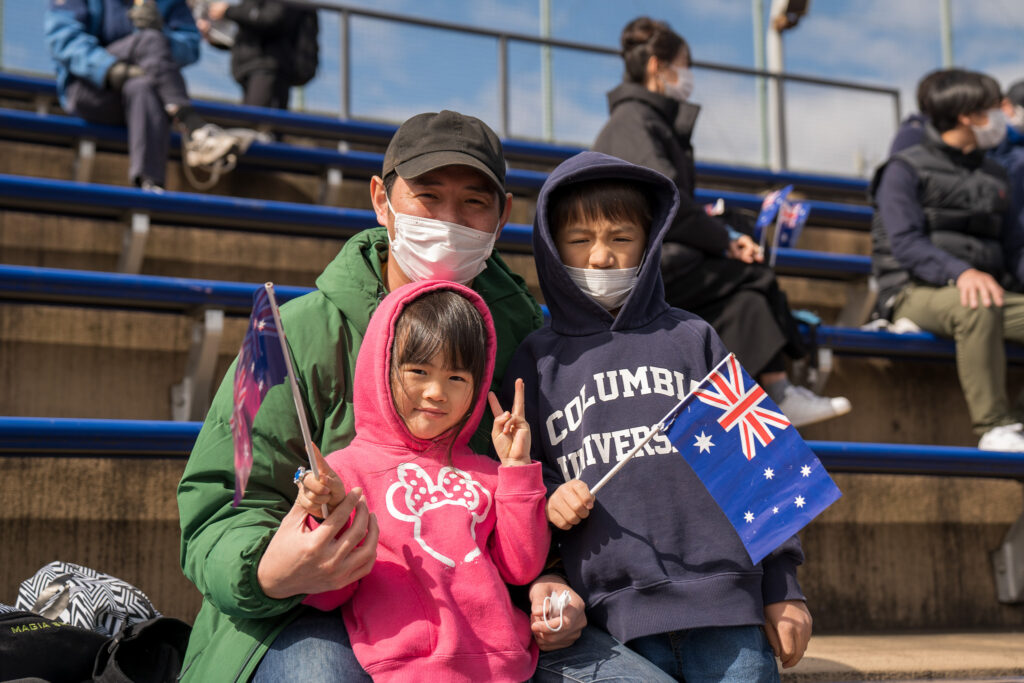
Over the coming days, Australia will give back by participating in school visits and run clinics with local schools. They have a busy schedule of exhibition games, training and visits until the team departs for their WBC-run camp in Miyazaki.
“That’s how we help show our appreciation,” says Wilkins. “Stuff like that.”
Whatever happens in Australia’s baseball journey – the people of Fuchu have left their mark.