02 November 2024
What does Fuchu City, and Team Australia's training camp, actually look like?
Story by Eric Balnar / Photos by Scott Powick
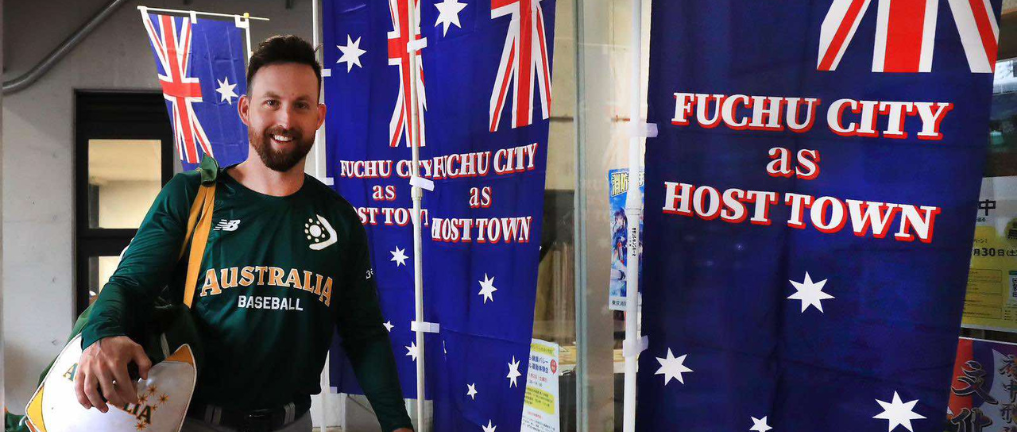
Welcome to Fuchu – a Tokyo suburb and the home of Team Australia Baseball for the next ten days.
Scratch that. It is our second home.
Australia’s national baseball squad has arrived for a training camp to prepare for one of the biggest baseball tournaments in the world – the Premier12.
Consider it baseball’s equivalent of a Senior Men’s World Cup, where only the top twelve ranked countries are invited to play ball.
First up? A November 13 clash with World #1 Japan and a team loaded with all-stars from their top-level of competition (NPB).
The tournament opener will be played in Nagoya, a city about 300km south west of Tokyo, in front of over 50,000 baseball mad Japanese fans and a TV audience that should eclipse 25 million.
Then, both Australia and Japan will join the rest of their group in Taiwan for the remainder of the group stage portion of the tournament.
Want more Premier12 stories? Head to our Premier12 Hub!
The stakes are high so the preparation is important.
That’s where Fuchu comes in.
Team Australia has ventured to Fuchu to train since 2018 and the city has become an important part of planning for any major tournament.
They’re here now before voyaging to Nagoya.
PAST STORY: How a Japanese Town is helping Team Australia prepare for the WBC
So, what does Fuchu look like? What does the training camp entail? What will the players be doing? What is the city itself like? Where do the players eat?
We hope this article helps bring you here with us to Fuchu, Japan.
The Schedule and Preparation
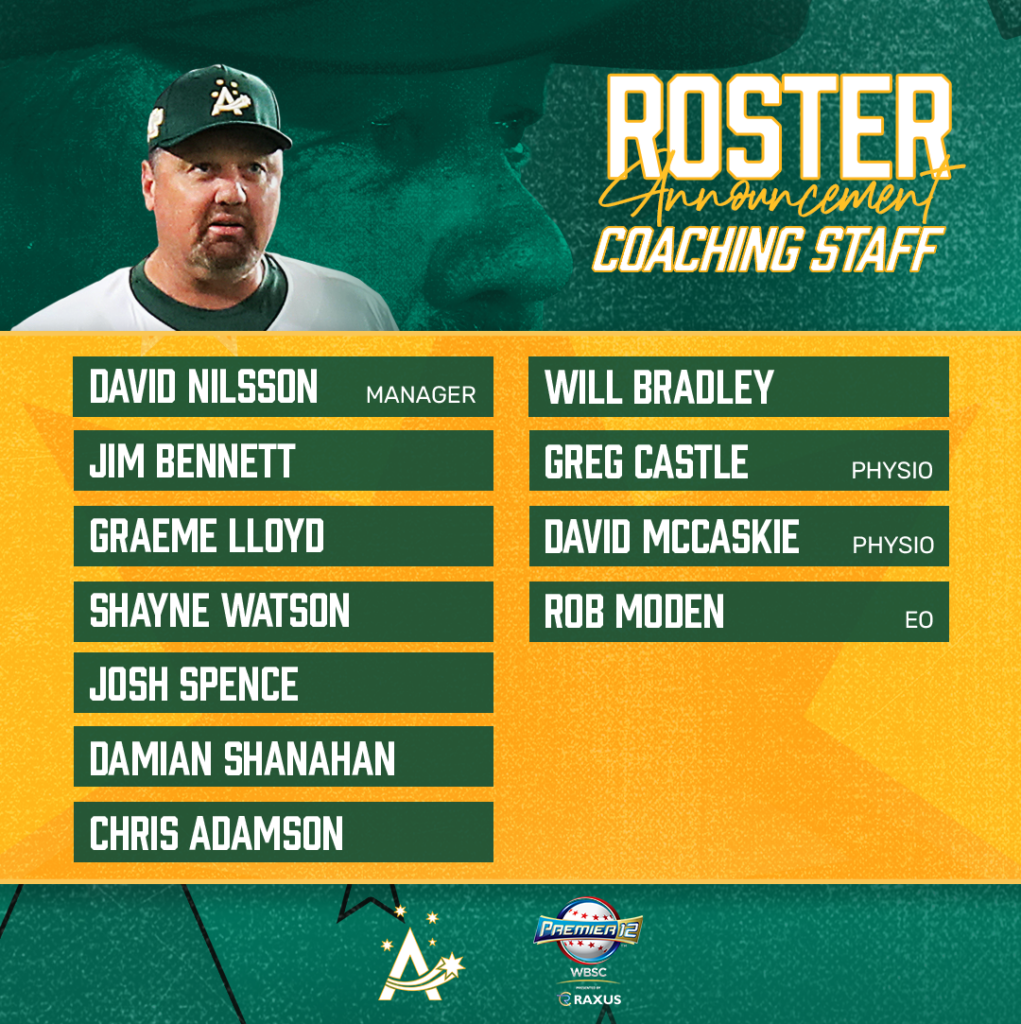
“It’s designed to be hard,” says Australia’s national team manager Dave Nilsson (below).
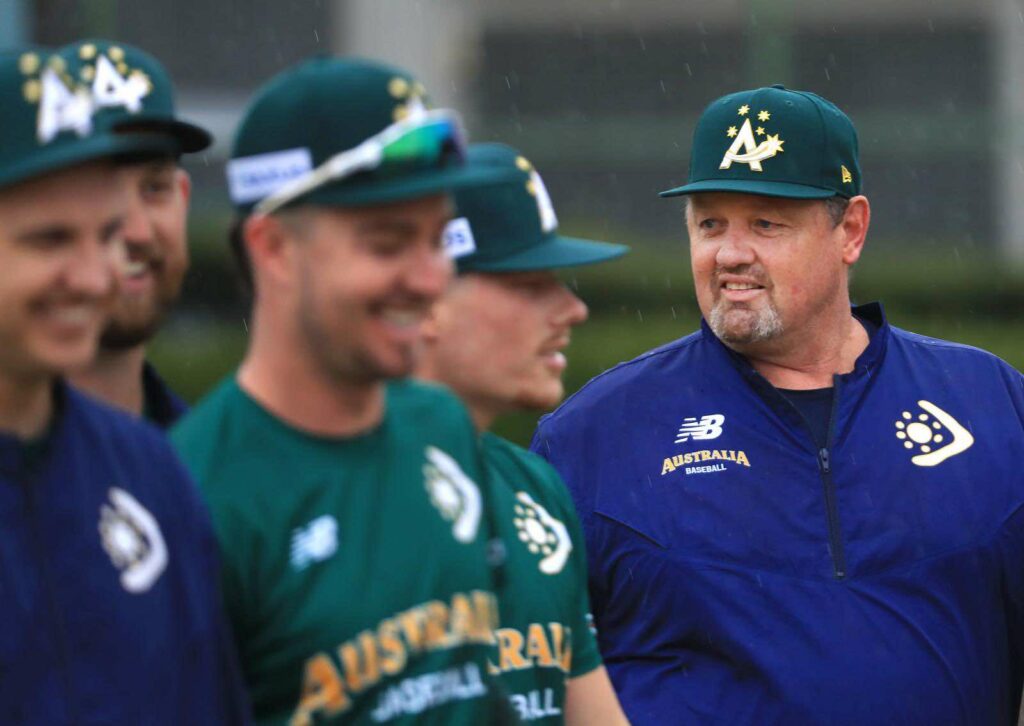
“It’s a physically hard camp. It’s about creating fatigue. It’s about creating stress and then attention to detail under that stress. It’s become a location that all the guys know and they love it, says Nilsson. “But there are no distractions. There’s no outside people they go away to. They go to the hotel, they hang out with each other. They go to the field, they hang out together. It’s baseball and bonding. Everybody is all working together but Fuchu [camp] does not provide an easy day.”
It’s a jam packed schedule for Australia’s Roster of 28.
On November 1, Australian baseball players from baseball leagues all over the world flew in at various points of the day to reunite under the Green & Gold banner.
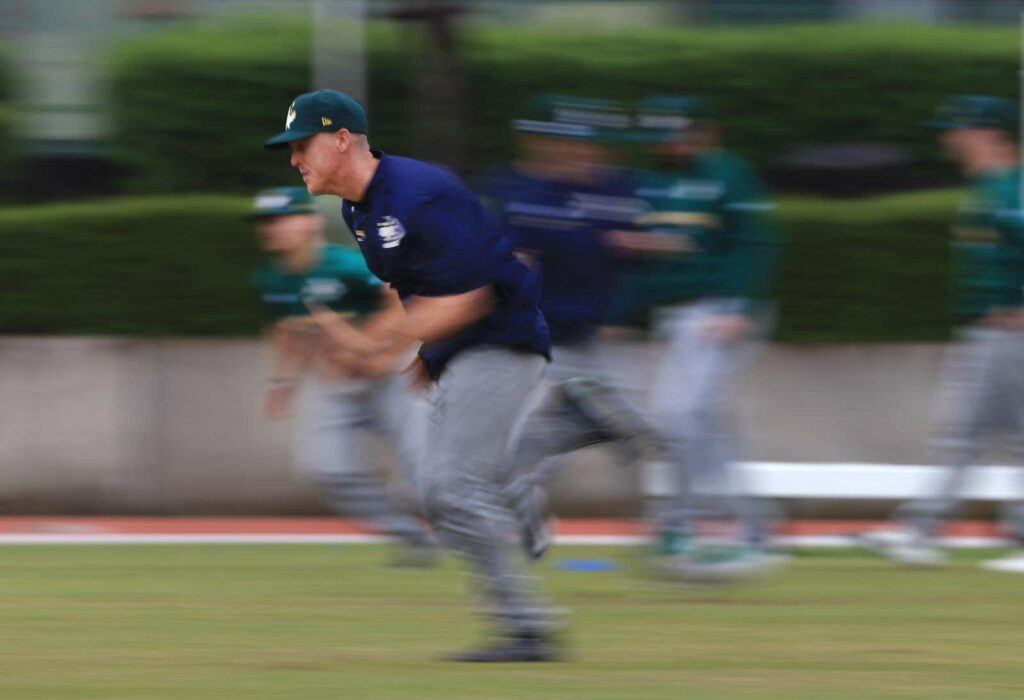
Above: Catcher Ryan Battaglia with hustle. Photo: Scott Powick
From November 2 – 10, there is at least one practice a day. Australia will play five practice matches against local Japanese company teams on top of their regular training schedule.
On Monday 4 November, they’ll host a baseball clinic for local junior players.
On Tuesday 5 November, they’ll spend the afternoon visiting a school.
Mixed in there is a dinner at the Ambassador’s House, a local ceremony or two, and a lengthy list of media request from Japanese outlets.
All up it’s nine trainings, five games, a school visit, a clinic, and some functions to attend to.
These sorts of activities help the locals feel connected to Australian baseball, according to Shugo Mukoyama, the chairman of the All Fuchu Baseball Club
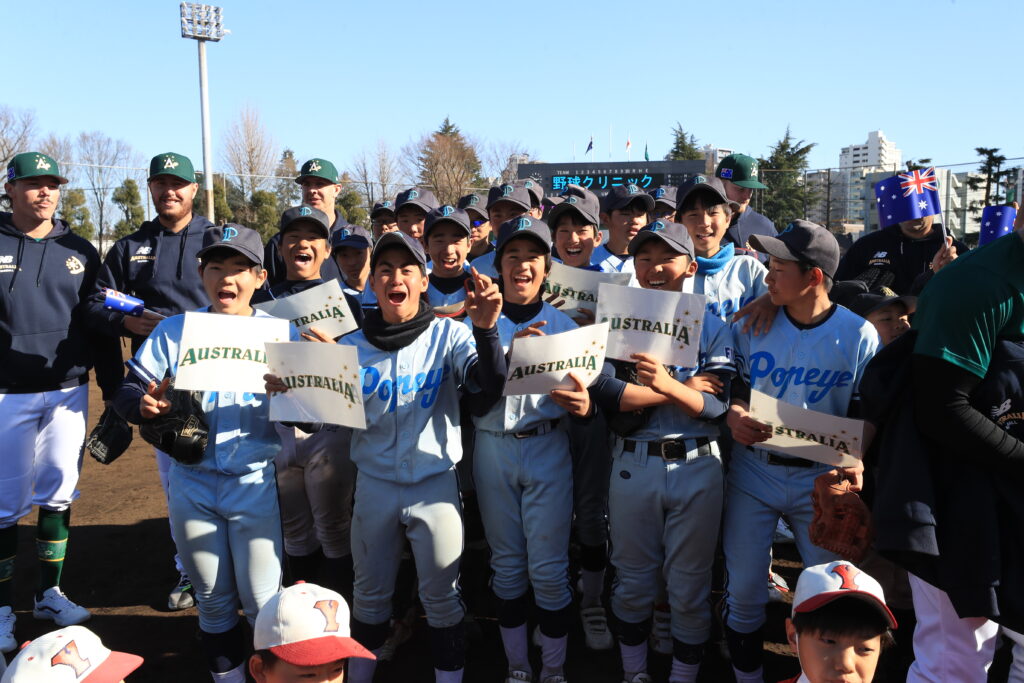
“By watching the game at Fuchu Field, fans become more familiar and more supportive of Team Australia,” says Mukoyama. “The most famous team for Fuchu kids is now Australia. We feel closest to them.”
On November 11, the team travels to Nagoya ahead of their November 13 clash with Japan.
But until then, Fuchu is home.
The Community
There are about 260,000 residents of Fuchu.
They pride themselves on being a sports town, home to two top rugby teams, the race course and of course a vibrant baseball community.
Fuchu is lined with restaurants of all styles of foods. From ramen shops, to steakhouses, to curry restaurants, to burgers…there’s something for everyone.
There’s even a Wendy’s outside the team’s hotel.
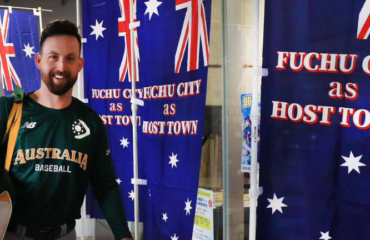
Streets are lined with Australian colours and flags.
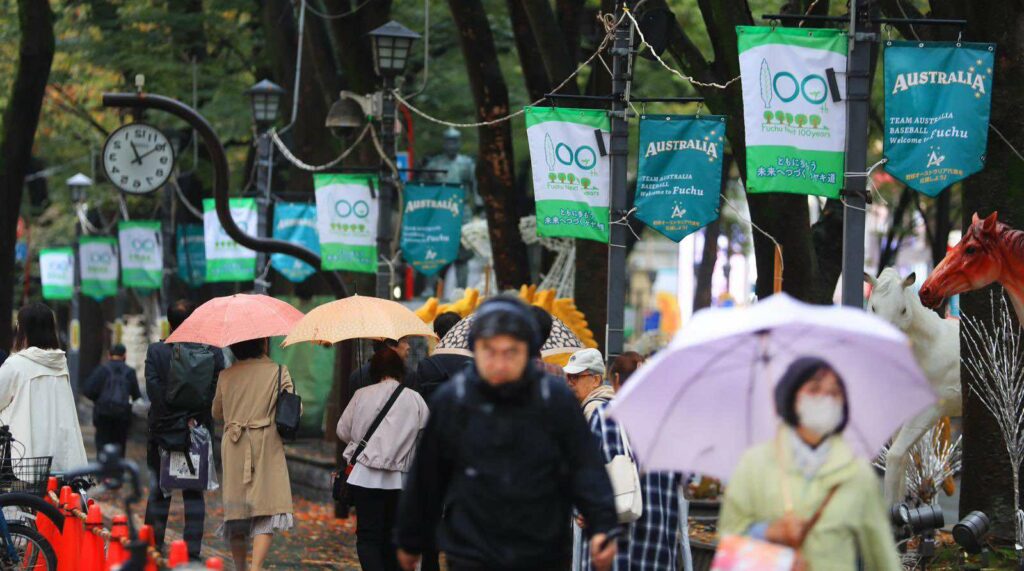
“We hope the team feels welcomed and at home,” says Daisuke Minagawa a manager at of one of the local companies (Aida Chemical Industries), helping to coordinate Team Australia’s Fuchu experience.
The residents are friendly and inviting. Shop employees go out of their way to help translate. It’s not uncommon to have a few friendly hellos from locals on the streets.
A beautiful park is nearby. It’s home to Okunitama-jinja Shrine, one of the oldest in Japan with a history dating back 1900 years.
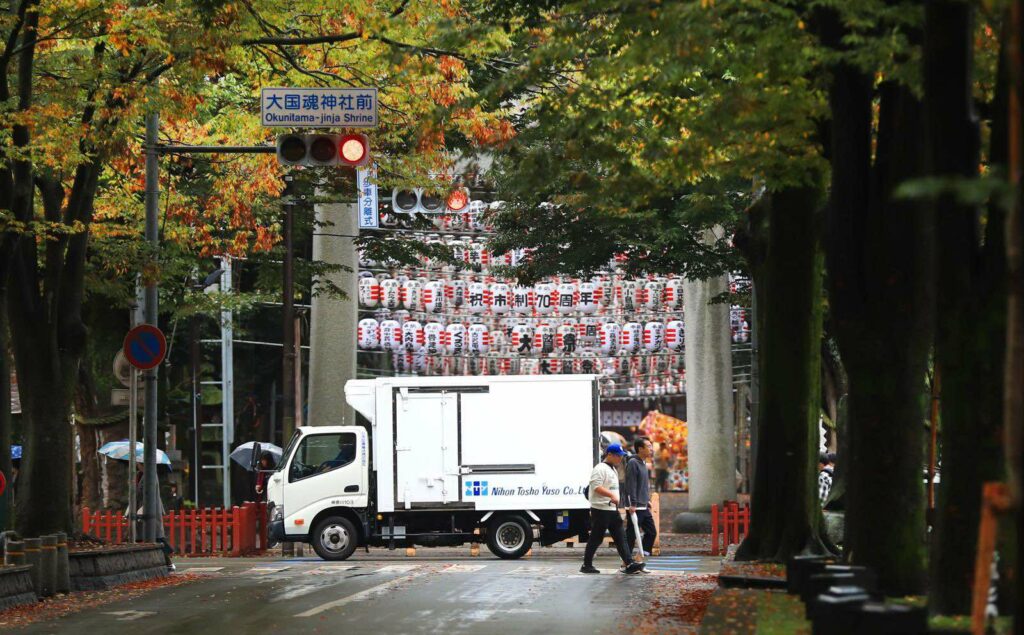
“Fuchu is a wonderful city, the location is great. We have access to everything. The people are incredible. They embrace us and the team embraces them. It has everything we need,” says Nilsson.
Toshiba has a base in Fuchu, and iconic beverage giant Suntory is here too. Japanese multinational information technology and electronics corporation NEC employs a large number of people in the area too.
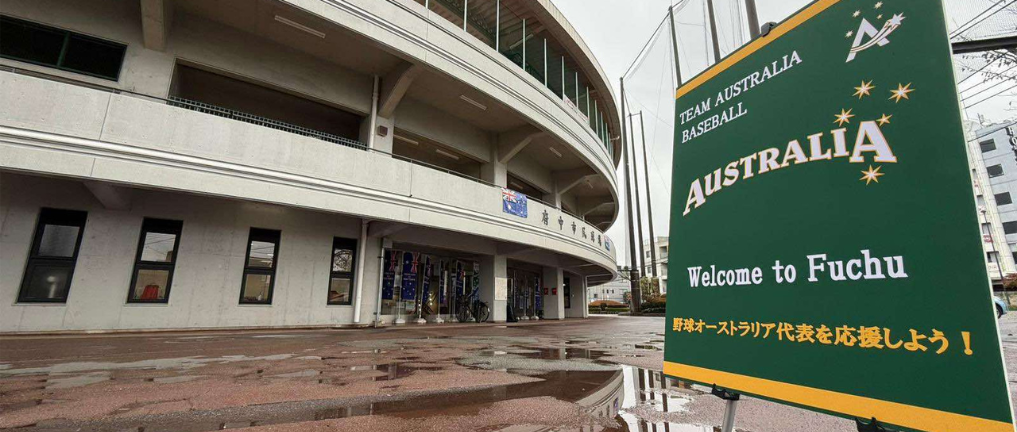
The Stadium – Fuchu City Baseball Field
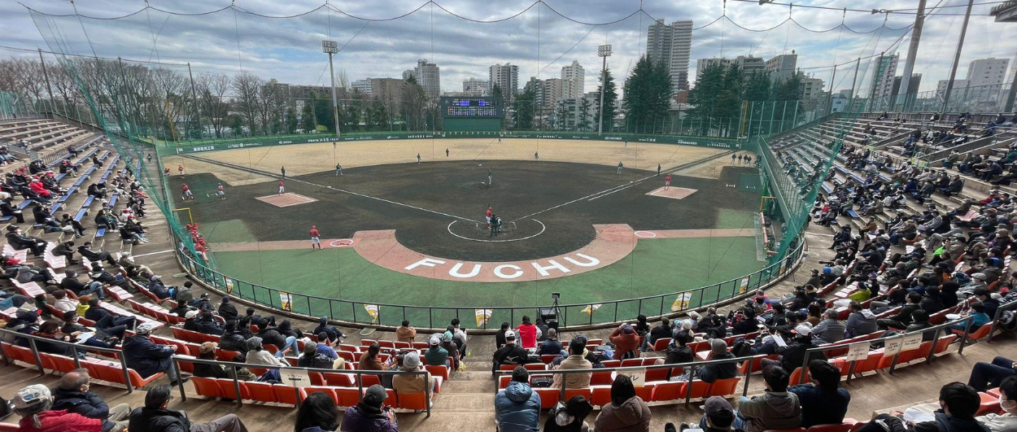
Residents come to watch Australia practice in March, 2023 ahead of the WBC. Photo: Scott Powick
“Baseball is really connected to the citizens life here in Fuchu,” says Daisuke Minagawa.
The centre to that life is the Citizens Stadium. The ballpark is owned by the community and has been the home to Fuchu baseball since 1950.
The stadium, which fits about 5,000 people, supports everything from grassroots baseball, to kids, to local clubs, to women’s competition to adults leagues.
“The facilities are great. It has everything we need,” says Nilsson.
The Tokyo Giants women’s team even calls Fuchu home.
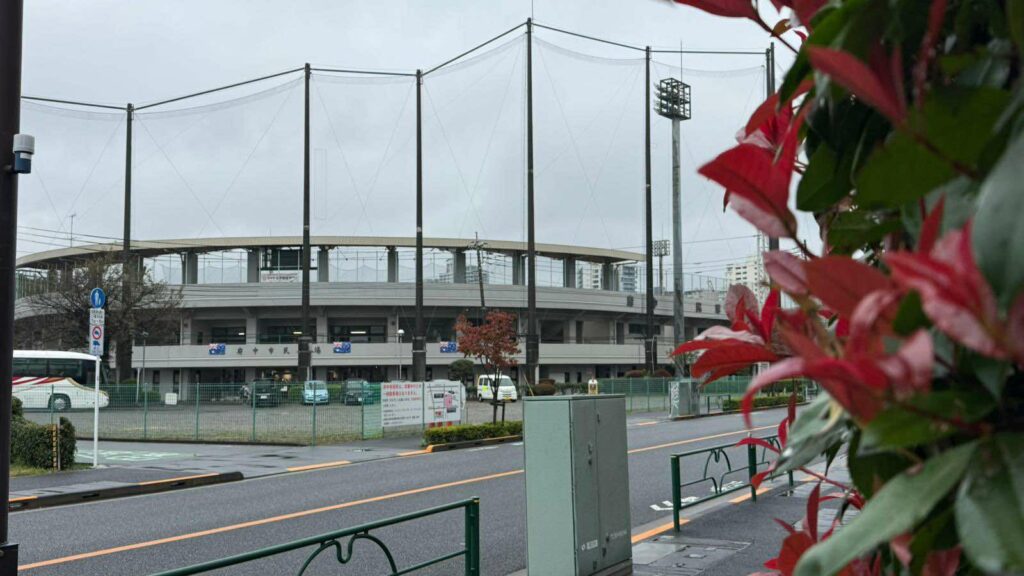
“It is a baseball field for all citizens,” says Mukoyama of All Fuchu Baseball Club.
“It is for kids, for adults, for all people. It is an important part of life here.”
The Adult Team is called ‘All-Fuchu.’ They are comprised of high-level players who live and work in the community, including many retired NPB players.
These baseballers work full-time and play on weekends. If you’re in Australia, it’s the equivalent of club ball except it’s played in a stadium of 5,000.
All-Fuchu competes in the Kanto Region League against other communities.
There are two games that can’t be missed: a rivalry with the Tokyo Mets and a clash with Oshikaga.
The women’s team is called the Mares, named after the neighbouring Tokyo Racecourse.
“Women’s baseball is one of the first cities to support women’s baseball,” says Daisuke. “The community really wants to support the community and boost more activities.”
In fact, the stadium was in need of upgraded change rooms as women’s programs were expanding.
The City of Fuchu supported, but the baseball community launched a large crowd funding campaign that raised over $7.6 million yen (76,000AUD)
“The target was five million yen but we raised more in just three months,” says Daisuke.
It’s hard not to be impressed by the facilities. Hand crafted wood locker rooms, fresh showers and work out rooms give an aura of clean history.
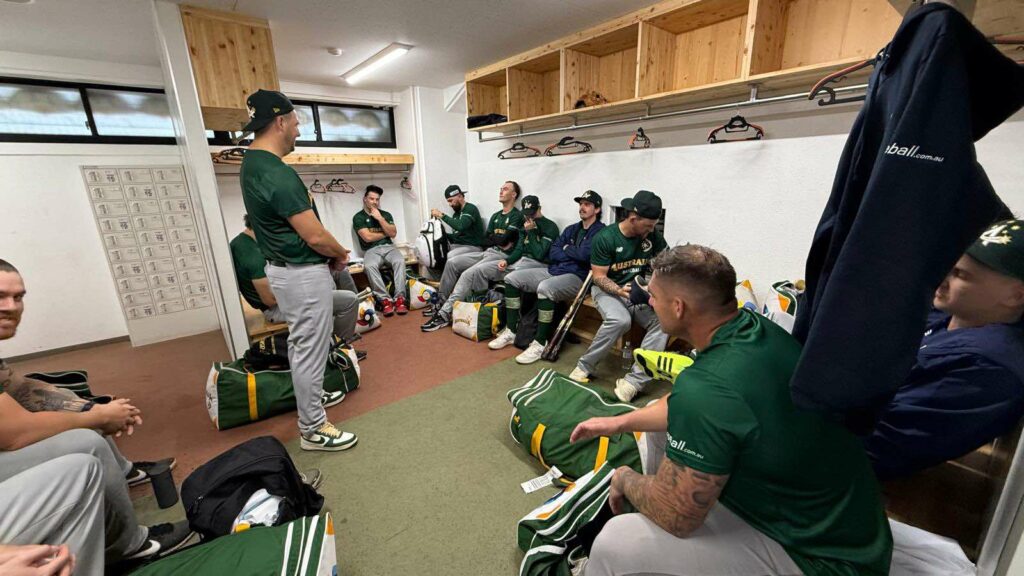
Above: Players meet in one of the newly renovated locker rooms.
Where they eat, and what the players do
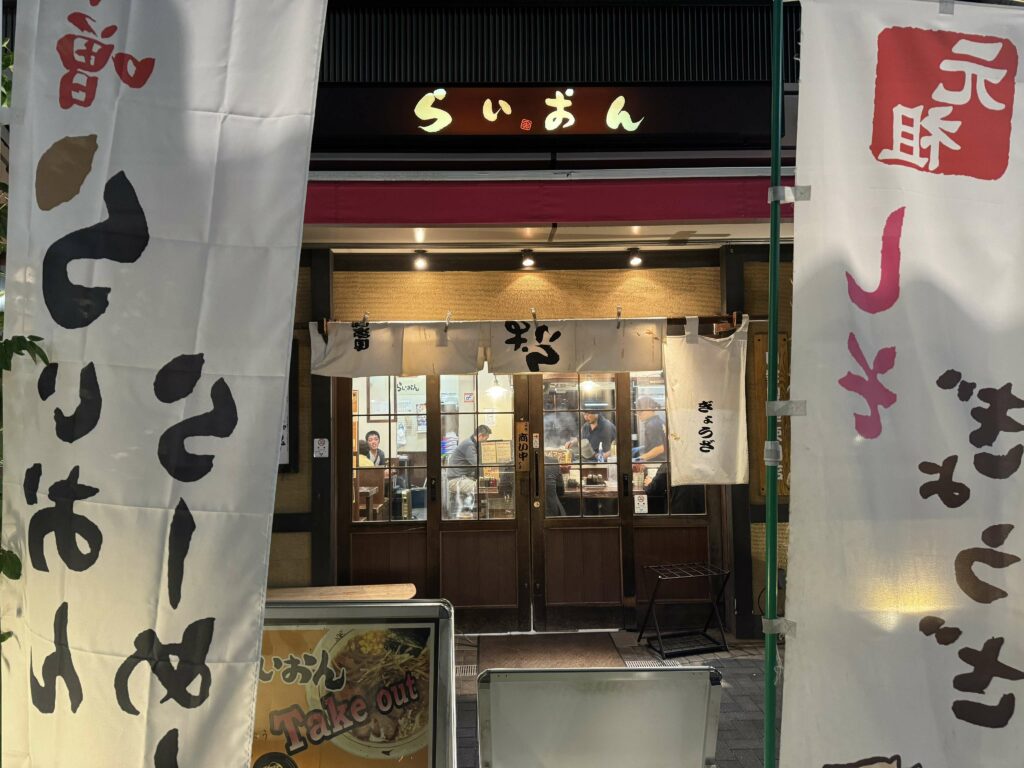
Food is an important part of life in Fuchu.
Lion Ramen, right near the train station (above), is a big hit amongst players.
“That’s the spot right there,” says Australian pitcher Sam Holland. “Order the number two.”
Other popular spots include the many Japanese Curry restaurants, local Japanese style Barbecues, the Takoyri Steakhouse, and of course many of the local convenience stores – Family Mart, Lawson and 7/11.
Daisuke even brings in a large basket of gummies unique to Japan for the players to try.
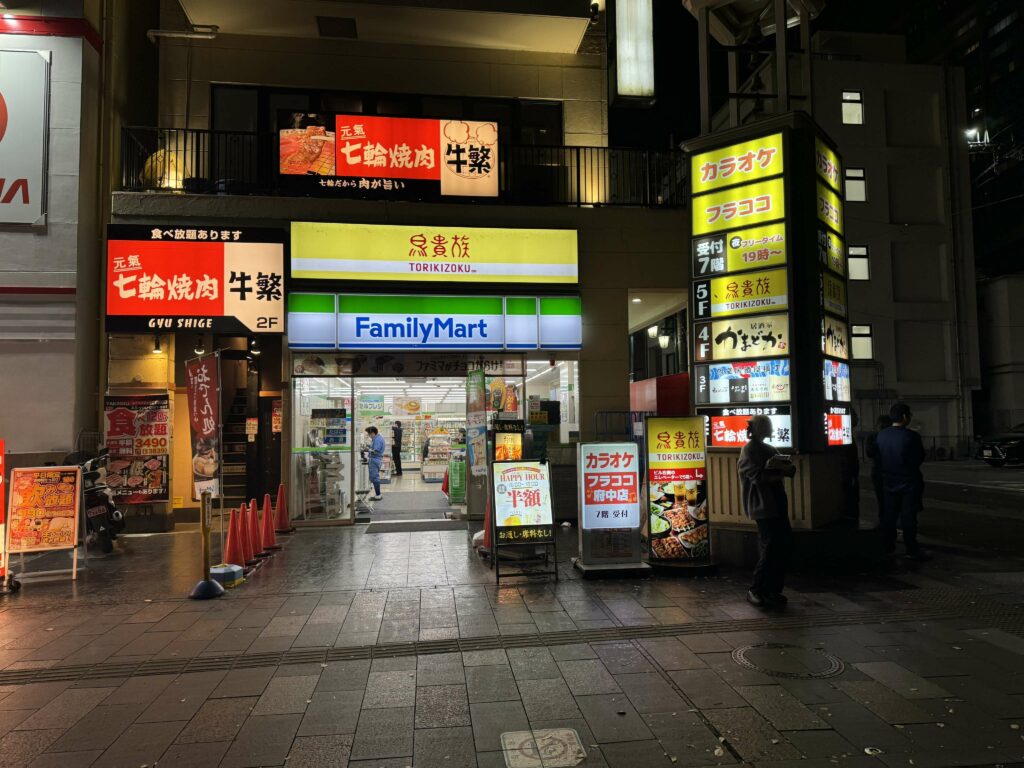
And no – these convenience stores aren’t like we have in Australia. You can purchase a hot, fresh, delicious meal for as low as $4 AUD.
The restaurants get in the spirit too. A bar called ‘Fuchu Fan Zone’ has completely rebranded in Team Australia baseball colours – from the signs out front, to branding inside.
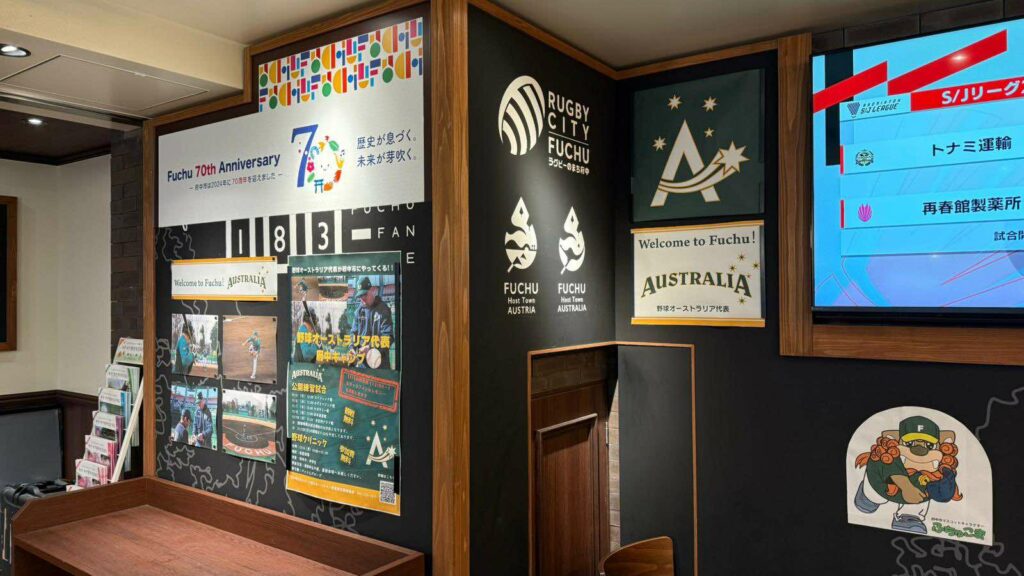
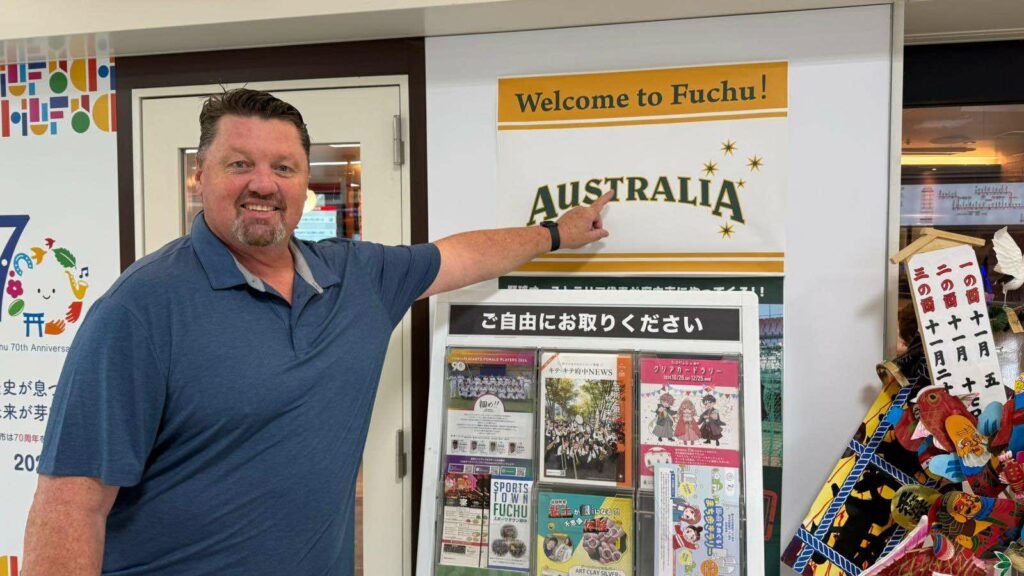
“We have a chance to bond,” says Darryl George, one of Australia’s infielders. “We don’t see each other for large stretches of the year so at the field, at the hotel, at the restaurants, we have a chance to connect and get to know each other. We offer support for each other – you often see guys help each other out with whatever they’re going through in life.”
You can find Australian players walking the streets, trying local food, exercising, visiting baseball stores and relaxing when they aren’t training.
Training Day 1 – Report
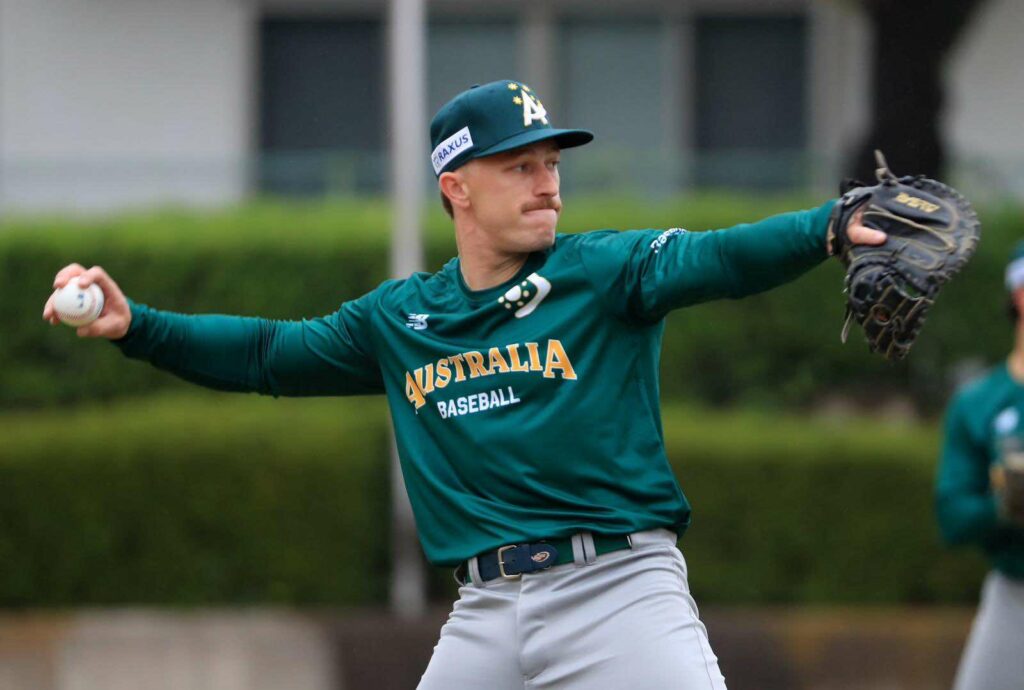
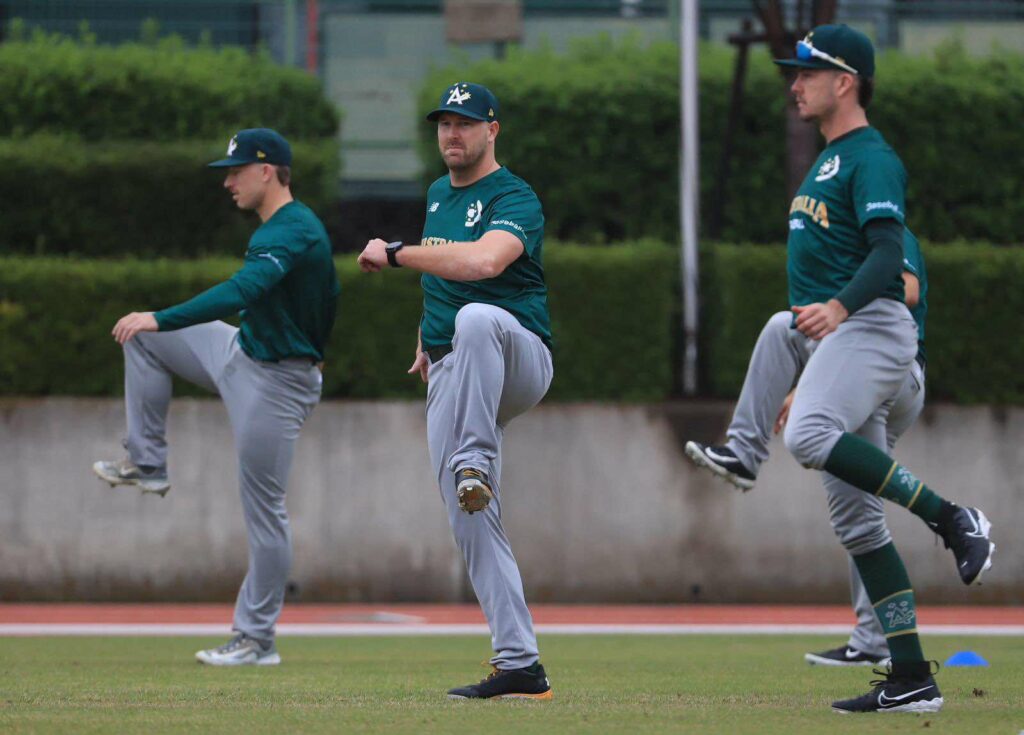
Heavy rains overnight, and a steady downpour in the morning, forced Australia to alter their originally scheduled five hour practice.
The team still worked out at a track and field facility next door to the Fuchu Stadium.
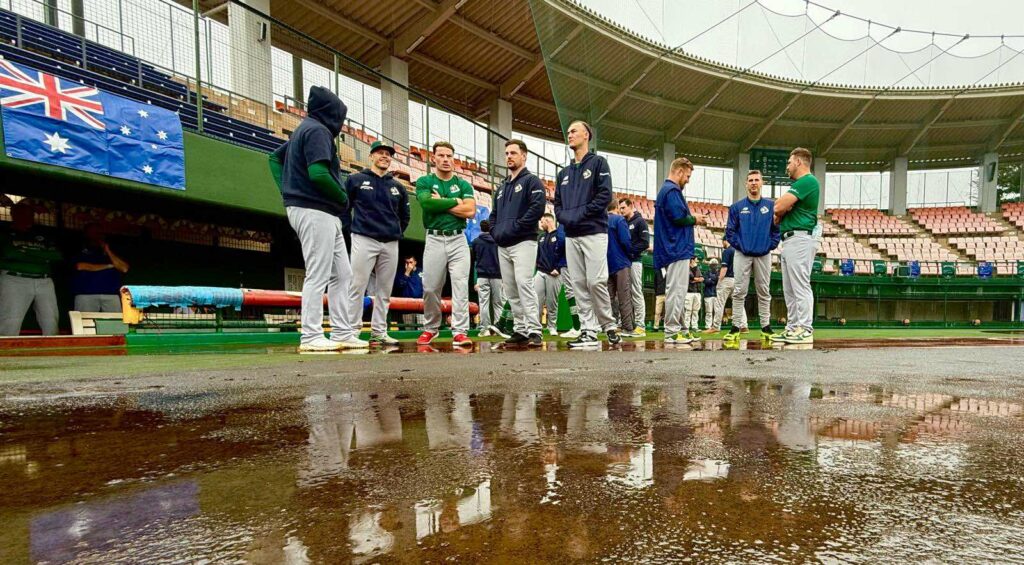
“The guys had to move around,” says Nilsson. “There was some conditioning that needed to be done.”
Players threw and worked out in the field. Nilsson says he and the team embraced the conditions.
“There’s a good chance we have conditions like this in Taiwan,” he says. “This offered an opportunity to work out in tough conditions with similar circumstances.”
The team is scheduled to work on their swings at local batting cages in the evening.
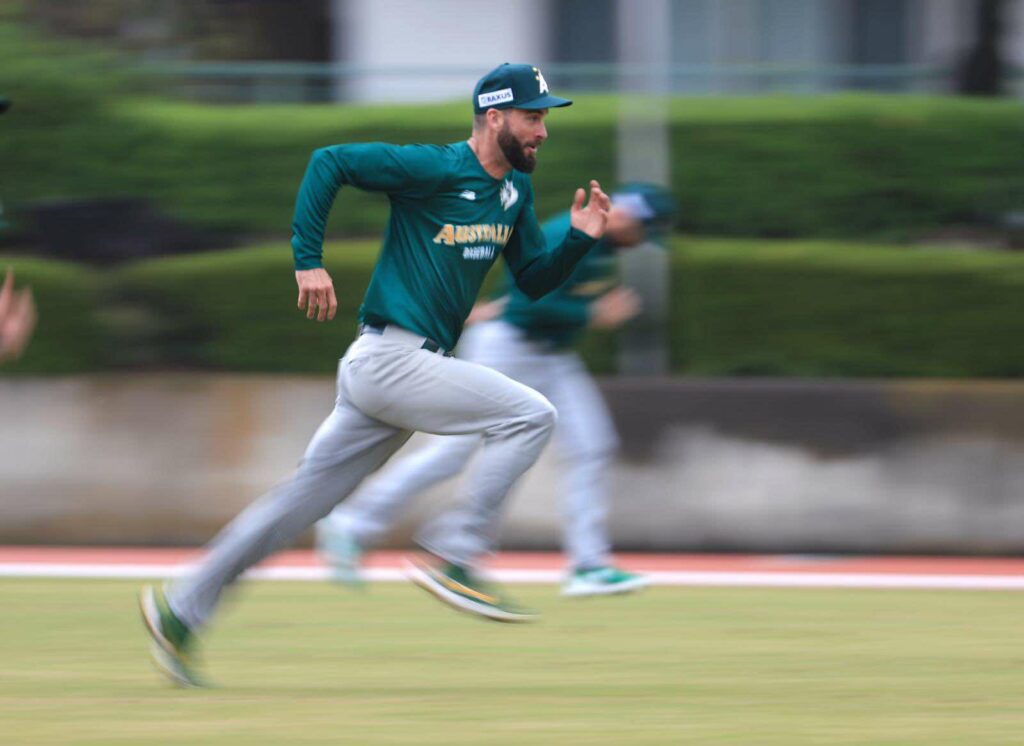
Above: Sam Holland. Below: Alex Hall & Graeme Lloyd