Baseball.com.au Baseball.com.au
News
Hub: 2026 World Baseball Classic
Play Baseball
Find a ClubBaseball5™Sporting SchoolsMobile Coach AppCoachesUmpiresScorersCome and Try Days / EventsAussies Abroad
Events
Hub: 2026 U18 and U16 NationalsHub: U18 World CupEventsEvents CalendarAustralia at World Series 2025National ChampionshipsLittle League
Media
WatchPro Aussies AbroadPodcastCommunityDocumentaryJoin the Mailing List
Governing the Game
Baseball Australia WebsiteAbout Us and BoardStrategic PlanResourcesBaseball Information HubNational Integrity PlanCorporate ReachBaseball CalendarContact Us
Australian National Teams
Team Australia
Team Australia Event Archive
National Tournament Archive
...
Governing the GameAustralian National TeamsTeam Australia Event ArchiveNational Tournament Archive
En
Select a Language
  • News
  • Hub: 2026 World Baseball Classic
  • Play Baseball
    Back
    • Find a Club
    • Baseball5™
    • Sporting Schools
    • Mobile Coach App
    • Coaches
    • Umpires
    • Scorers
    • Come and Try Days / Events
    • Aussies Abroad
  • Events
    Back
    • Hub: 2026 U18 and U16 Nationals
    • Hub: U18 World Cup
    • Events
    • Events Calendar
    • Australia at World Series 2025
    • National Championships
    • Little League
  • Media
    Back
    • Watch
    • Pro Aussies Abroad
    • Podcast
    • Community
    • Documentary
    • Join the Mailing List
  • Governing the Game
    Back
    • Baseball Australia Website
    • About Us and Board
    • Strategic Plan
    • Resources
    • Baseball Information Hub
    • National Integrity Plan
    • Corporate Reach
    • Baseball Calendar
    • Contact Us
  • Australian National Teams
    Back
    • Team Australia
  • Team Australia Event Archive
  • National Tournament Archive

News

feature-stories
  • All Categories
  • - Aussies Abroad
  • - Little League
  • - Team Australia
  • ABL
  • APBC
  • Aussies Sign Pro
  • Australian Youth Championships
  • Baseball5
  • College Baseball
  • Community
  • No elements found. Consider changing the search query.
  • List is empty.

18 June 2025 By Eric Balnar

By Eric Balnar

ABL Feature Stories

Vale Don Knapp | In memory of an influential figure in Australian Baseball

with excerpts from Baseball Western Australia

An outstanding contributor to Baseball in Australia has passed away.

Don Knapp – an Australian Baseball Hall of Fame member, Helms Award winner, and Baseball Australia CEO – left his mark on our sport at every level.

He was an MVP, a Team Australia member, a champion coach, a visionary administrator, a tremendous leader and a friend loved by all.

Don’s influence was widespread.

It’s impossible to characterise the influence he had. But here are just a few of the things Don was known for.

AS A PLAYER


Don arrived in Australia in 1971 as a player from Oregon, USA.

He made an instant impact with dominating displays with his bat and and behind the plate.

“Base stealers stopped trying to run on his strong arm and quick release. Pitchers learned to throw the ball low in the zone with runners on base because Knapp’s blocking ability made passed balls almost non-existent,” said a Baseball WA article.

Knapp won the Helms Award in 1972.

He was the Western Australian team captain from 1972-1979, 1982-1983 and in 1985.

Western Australia won the Claxton Shield in 1972, 1977, 1978, 1979 and 1985 with Knapp’s strong influence.

His playing efforts saw him named to Team Australia where he competed for his country at the 1978 World Championships , in the 1978-79 Korean National Team Tour of Australia and the 1979 tour of Korea & Japan.

Knapp was named to BaseballWA’s Diamond Anniversary All-Star Team in 2008 and received a WA Baseball League Outstanding Achievement Award in 1985.

He was inducted in the Baseball Australia Hall of Fame in 2008 and the BaseballWA Hall of Fame in 2021.

Murray Westphal a BaseballWA Hall of Famer told the BWA website of Knapp’s baseball exploits.

“Don Knapp had a major impact on the sport of baseball in Australia. His knowledge of opposing batters’ strengths and weaknesses was comprehensive as was his ability to extract the very best out of every pitcher that threw to him. With emotions running high and the result of the game on the line, there was no better catcher, hitter, or teammate to play with than Don Knapp,” says Westphal.

As a Coach


Knapp took over as a manager of Western Australia in 1984, a position he held for three seasons. He helped guide the Western Australians to a 1985 Claxton Shield win.

He continued to coach and lead at club & state levels, including involvement at the 1996 Olympics.

He played a pivotal role in steering the Perth Heat, both as a manager/coach and in administrative capacities, contributing to the team’s success and professional development

Don Kyle stated the following on Baseball WA’s Hall of Fame induction page:

“I have known, played and coached alongside Don Knapp for 46 years. He was a power hitting catcher with outstanding arm strength. Pitchers lined up for him to call and control their games. Don was a general on the field demanding excellence with a sense of humour. He had the respect and admiration of all members of the baseball and sporting community. He has always shown exceptional leadership skills and as a player and coach had the ability to meld a squad of players into a professional unit.”

Above: The 1975 Western Australia Claxton Shield team 

As an Administrator


Following his playing career, Knapp served in leadership roles with the Perth Heat, WA Baseball and Baseball Australia.

He had a wide range of multi-faceted contributions to our sport.

He was instrumental in the initial start-up of the Australian Baseball League in 1989.

Knapp became the CEO of the Australian Baseball Federation in 1995 – a position he held for 12 years. His leadership focused on professionalising the sport and fostering its development at various levels – from grassroots to elite competition.

His administrative efforts supported the national team’s participation in global events, building on his earlier experience as a player and manager. He facilitated opportunities for Australian players to compete abroad, contributing to the sport’s global integration.

Knapp was the CEO when Australia won the 1999 Intercontinental Cup and 2004 Olympic silver medal.

He was appointed with Life Membership in the Baseball WA community – a reflection of the esteem in which he was held.

Knapp was a noted historian. In 2003, Knapp authored A History of Australian Baseball, documenting the sport’s development in the country.

In recent years, Don remained active in the baseball community through his work on the Baseball WA Heritage Committee, helping to preserve the stories and legacy of our game.

“Don Knapp was more than a player or administrator — he was a great friend, a valued mentor, and a man of the highest integrity. His leadership was principled and generous, and he leaves behind a legacy that will guide and inspire for years to come,” said Baseball WA.

AS A PERSON


Don is one of the most respected figures in Australian baseball.

“Don Knapp was more than a player or administrator — he was a great friend, a valued mentor, and a man of the highest integrity. His leadership was principled and generous, and he leaves behind a legacy that will guide and inspire for years to come,” said Lachlan Dale, CEO of Baseball WA. “I know many people hearing this sad news will find themselves reminiscing and sharing stories with friends and colleagues about the ways Don made a lasting, positive impact on their lives. That in itself is a true measure of the man.”

David Hynes, Baseball Australia’s president, echoes those sentiments. He calls Don’s contribution to Australian baseball “remarkable.”

“He made a difference in every facet of our game and was an amazing influence on me personally, and our sport as a whole. His last text to me said ‘all I ever wanted to do was to be a positive influence on young people’s lives – keep the dream alive!’ Don, rest assured that your incredible legacy to Baseball in Australia will live on,’ says Hynes.

—-

We offer our condolences to Don’s family, friends, and all who had the privilege of knowing him. He will be deeply missed.

He truly made baseball better in Australia.

Rest in peace, Don.

02 June 2025 By Eric Balnar

By Eric Balnar

- Aussies Abroad Feature Stories

Podcast: Australian Baseball News Headlines with Eric Balnar

There’s a heap of Aussies doing really cool things in the baseball world, and I’m here to talk about it.

Welcome to Australian Baseball News – a weekly podcast in less than ten minutes that tells you all the big headlines in our world.

Search for ‘Baseball.com.au’ on Apple Podcasts and Spotify to listen.

Latest Episode (June 4)

Archived episodes can be found at baseball.com.au/podcast.


25 September 2024 By Staff Writers

By Staff Writers

ABL Feature Stories

How Mackenzie Bourke became the first female clubhouse manager in Minor League Baseball history

By Kristin Sims 

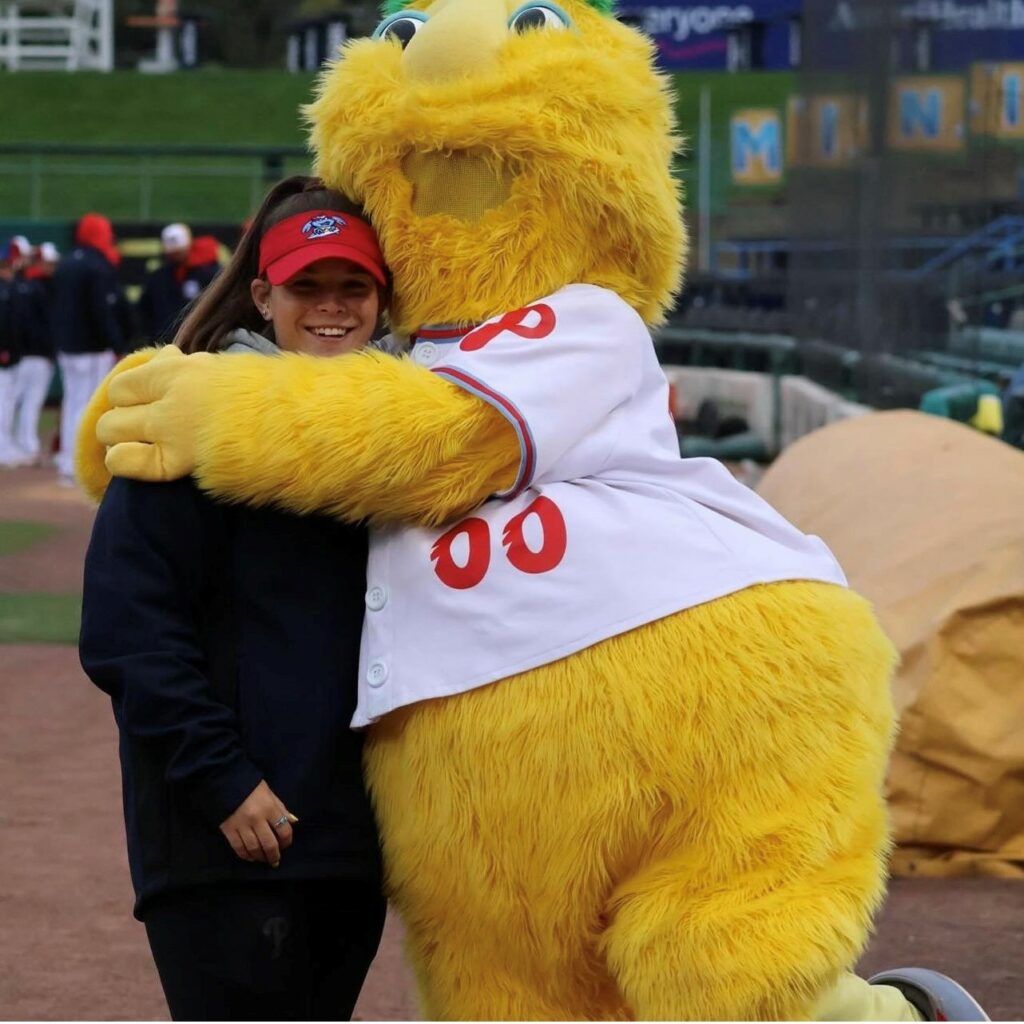
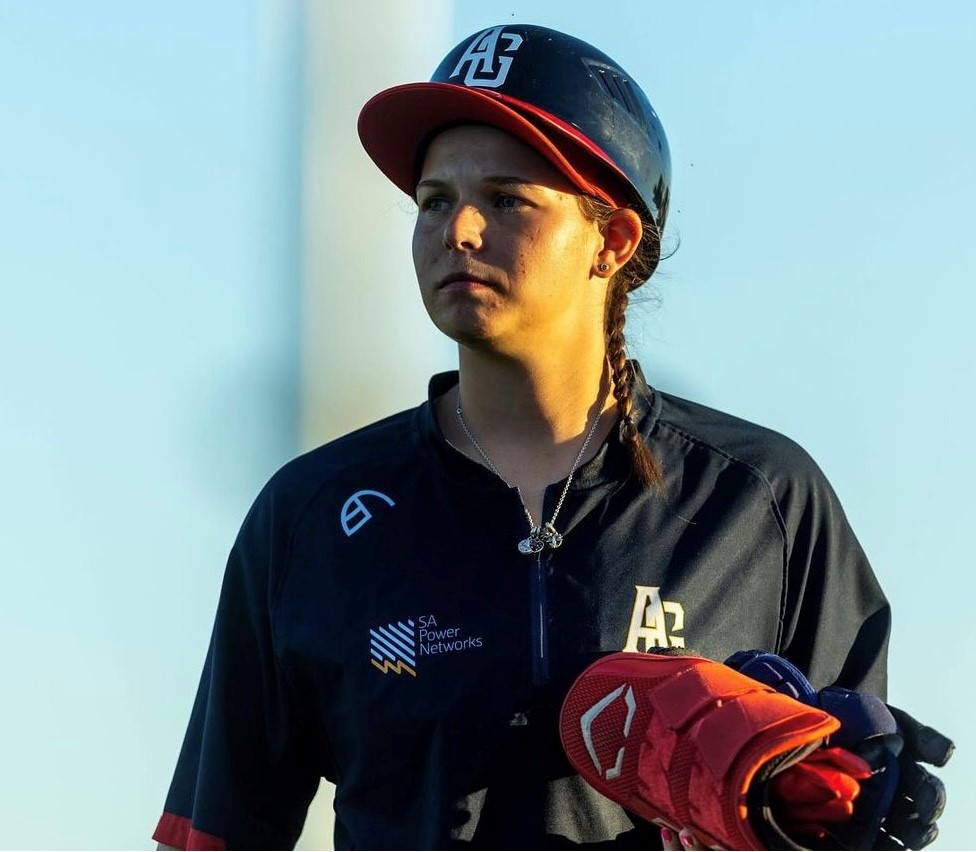
Adelaide local Mackenzie Bourke has just returned home after making history in the United States, by becoming the first female clubhouse manger in Minor league baseball history with the Philadelphia Phillies affiliate team the New Jersey Blue Claws. The journey to America was something Bourke had her eye set on early in her career, with the significance of the opportunity not being lost on her.

Before coming to Baseball, Bourke was working with the NRL in Adelaide. During the offseason for the NRL, Bourke began looking for more exposure in the sporting industry and reached out to the Adelaide Giants.

“I messaged the Giants and said I was happy to do anything, at that stage I just wanted more exposure in the sports industry,”

“I was also playing baseball at the time so I was really interested in the sport and I did a bit of everything when I was first with the Giants.” She said.

Bourke continued to juggle her full time role with the NRL whilst giving the Giants as much of her time as she could, but she always had one goal in mind. That goal? Get to America and work in professional sport.

With that in mind, Bourke had to take a big risk and back herself in with the hopes of making her dream come true.

“I had to assess that the [Rugby] probably wasn’t going to get me to America and that was something I really wanted, so I actually left my full time job and went to the Giants to continue volunteering.”

“I was just doing everything I could to make sure I gave it my best crack, I knew it was something that was going to take time but I wanted to give it my best.” She said.

Giving up a stable salary is never easy, and Bourke recognises that the support of her family was key to being able to chase her dreams.

“It is such a big deal to give up a proper salary and the perks of full time work, but I had my family who are very supportive of me chasing that dream.” She added.

With her hardworking nature, Bourke jumped in to help wherever she could at the Giants, before a spot opened up mid-season for the clubhouse manager position.

Bourke returned to the Giants the following season, and thanks to her efforts the year prior, this time she was the full time clubhouse manager.

“That was what I took the risk for two years ago, was to get that role. It was a really big achievement to actually get into the kind of role that I was really wanting to get into.” She said.

With a successful season under her belt, Bourke was heading off to America to work in a summer camp before the opportunity of a lifetime presented itself. A clubhouse manager role within the Philadelphia Phillies organisation.

“It was exactly the role I wanted to do, so it was just one of those things you couldn’t pass up because if you wait, it may not come up again for a few years, so I took the chance and sent off my resume.” She added.

Thanks to some strong connections to the Phillies from the Giants,  in the form of General Manager Nathan Davidson and Giants Head Coach Chris Adamson, Bourke was able to put forward an impressive application for the position.

“Nathan Davidson has a lot of connections with Phillies and Chris Adamson coaches in the Phillies minor leagues, so I had some great references to back me in and help me out.” She said.

Heading to America didn’t just present a risk for Bourke, the Phillies also had to take their chances on someone coming over from Australia.

“It did take a bit of time, there were lots of phone calls with different people but I understood it was necessary,

“I was lucky that they wanted to take a chance on me and that they were keen to get a female in the space because that has never happened before.” She said.

The prospect of being the first female clubhouse manager is not something that is lost on Bourke, and she was very aware of the challenges and pressure that come with being the first woman to break through the barrier.

“ I did put a lot of pressure on myself because you think I am not just messing this up for myself, it’s also for every female that wants to do this in the future.” She said.

Coming into the clubhouse as a female, Bourke said she felt supported from the beginning thanks to the adherence from the players to the Phillies club motto Protect the Standard. One of the key pillars of the motto is based around respect of others and the club, which was demonstrated regularly in the clubhouse.

“The Phillies and those guys who have been at the Blue Claws are all aware they have to Protect the Standard, and will say that’s not what we do around here so they have been really good in that sense.”

A big part of the clubhouse manager’s role is to build connections with the team, since you spend so much time with them. Bourke made a point of ensuring the connections she made were through the whole organisation, taking the time to get to know the front office staff as well as the players.

“It was a big thing for me to make connections with people in the front office and game day staff, I was really good friends with the game day staff so when I came out on the field I knew all the staff.” She said.

It was this relationship building and the care Bourke took with getting to know everyone around her, that has been a big contributor to her success with the Blue Claws. So much so, that she has already re-signed to come back next season.

“They [the Phillies] were super supportive and very happy with the work that I did this year and are looking to build on that for the future, they like having a female around, it is just something that is so cool to be a part of.” She said.

When it comes to her history making contribution to Baseball, Bourke says that it is still yet to sink in.

“It might take some time to sink in because when I was over there, I didn’t feel like I was the first person to do it because I never felt out of place,

“But this is something that will stay with me forever no matter what I do.”

Reflecting on this last year and the experience she has had, Bourke is feeling good knowing that her initial risk paid off and she has been able to make her dream come true.

“I am very proud of the fact that I took a risk three years ago and that is has come to life and that it was all worth it.” She said.

20 September 2024 By Staff Writers

By Staff Writers

Feature Stories

Baseball’s influence – and its untapped promise – in elevating Australian cricket

by Jason Daniels

Cricketer D’Arcy Short and former MLBer Luke Hughes open up on the growing connection between the two bat and ball relatives and how cricket can draw even more inspiration from the world of baseball.

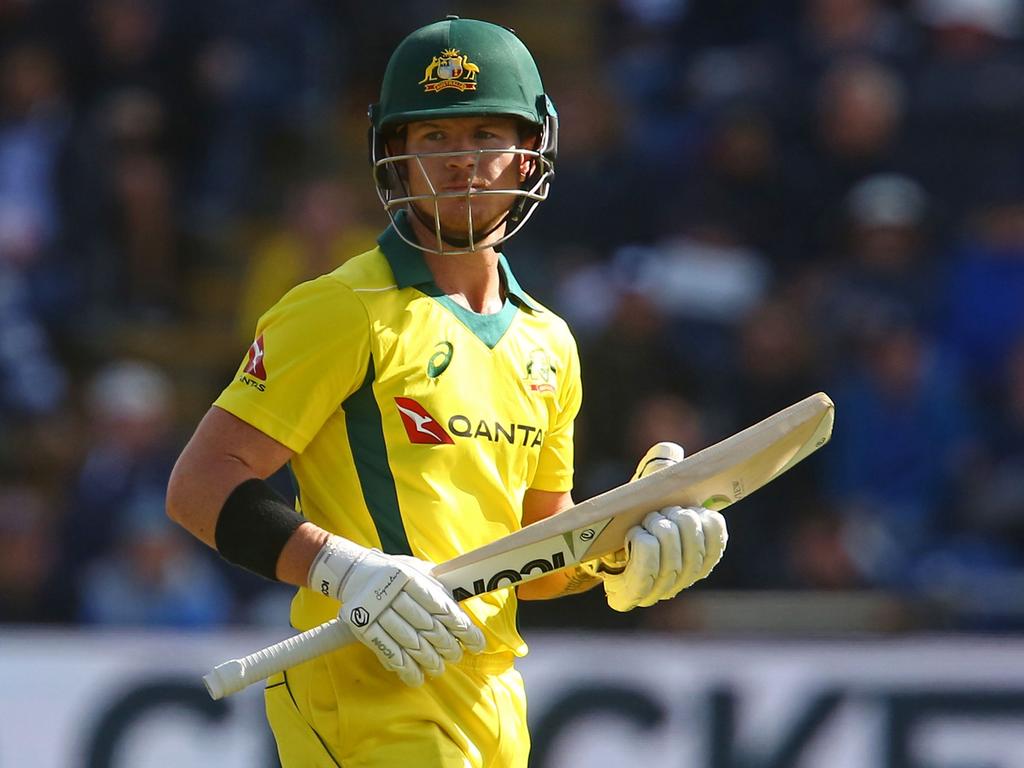
It’s with a smack of the bat and smooth torque of a baseball clean-up hitter that D’Arcy Short knocks an eye-raising six at Auckland’s Eden Park.

The date is February 16, 2018 and team Australia are chasing a record deficit against New Zealand in the Trans-Tasman Twenty20 (T20) series. Australia need 244 runs (8 more than the current record chase) if they are to defeat the rival Kiwis on their home soil.

Short stands at the crease, the massive run total his to chip away at.

He executes to plan, spearheading a record-breaking assault with gusto and good fortune. By the time it’s over, Short notches 76 runs from 44 balls, earning Man of the Match honors as Australia top the near insurmountable tally with 5 wickets and 7 balls remaining.

(Above: 43 seconds…For his torrid performances during the 2017-18 BBL season, Short was aptly named ‘King of the Six’.)

This was Short’s year.

During the 2017-18 Big Bash League (BBL) campaign with the Hobart Hurricanes he became the first batsmen to score more than 500 runs in a season (the League’s 7th since inception in 2011). He achieved the highest run total, most sixes, and highest individual game score of 122 not out.

That season, Short epitomized ‘big bash’ and batting ingenuity. If it appeared that Short was striking the ball unlike most others, that’s because he was.

Short To It, Long Through It


Until he was thirteen years old, Short grew up playing baseball in the Northern Territory. He followed in his father’s steps, who was a state-level player. That’s where Short first learned to drive the ball.

“I loved the baseball,” he says, reflecting on his youth. “I had a cricket bat or a baseball bat in my hands hitting often in the backyard.”

Short was drawn to baseball batting, where getting out once didn’t mean the day was over. As his career has progressed, he’s leaned on his baseball experience to run up cricket scores at a skillful pace.

“Something that helped me when I first started playing cricket was always wanting to hit the ball and having that baseball swing technique in the background, wanting to get my hands through a bit quicker and hitting the ball a bit harder,” Short explains.

His approach sounds like that of a baseballer. He notes similarities in terms of the setup and mentality. When the ball is coming in at 140km an hour, there’s hardly time to think. “Try not to premeditate it too much and just watch the ball as hard as possible to try and commit to your shot.”

A natural overlap exists between baseball and cricket, especially in T20, where big swings are the norm and clearing the ropes equates to majestic home runs. The bat, whether in baseball or cricket, becomes an exclusively offensive weapon.

T20 has also redefined throwing and fielding, two often overlooked aspects of cricket that can separate good from great teams and narrow wins from razor-thin defeats.

“A massive thing that we can probably take out of it is the throwing side of things,” says Short. “That’s where I learned to have good technique, learned how to throw from a young age and have a reasonably strong arm from the start.”

Although baseball has played a formative role in Short’s career, he feels that cricket today can do so much more to incorporate baseball.

“I don’t think we tap into it as much as we should,” he admits.

Short says there’s no clear process for cricketers to learn from the world of baseball. “Generally, the onus is on you to go that way,” he says. But increasingly cricketers are turning to baseball to enhance their technical skills and even to gain inspiration.

Years after he first dropped the rounded baseball bat in favor of the flat cricket cousin, Short has continued to make the cross-over work, most recently thanks to guys like Luke Hughes.

COOL HANDS LUKE


Luke Hughes is one of Australia’s most accomplished baseballers.

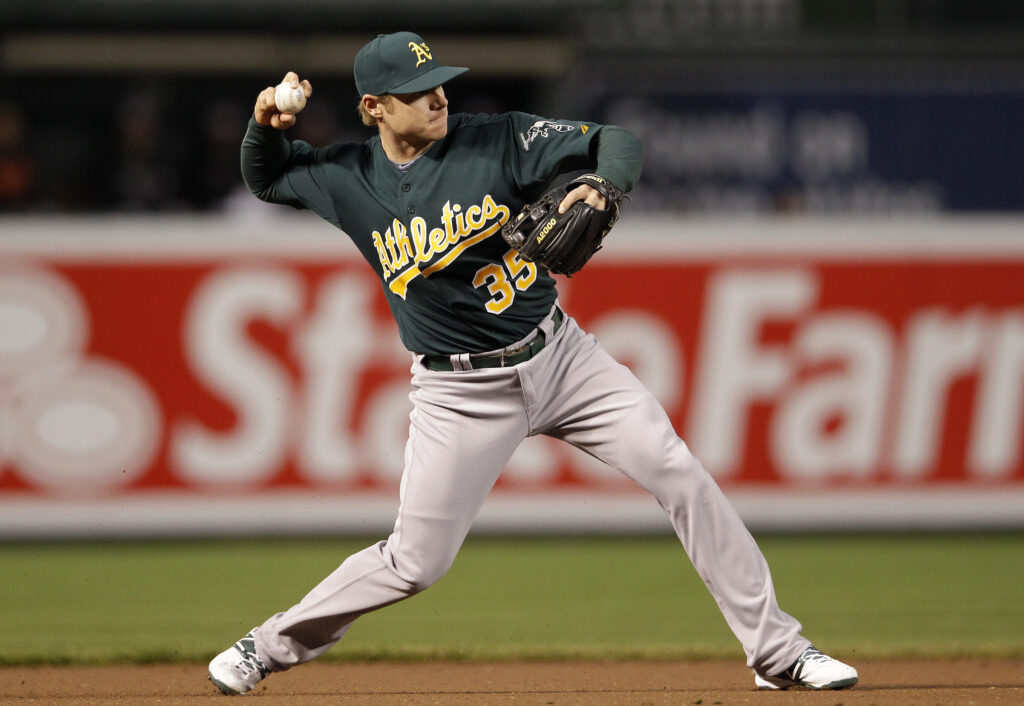
The 40-year-old Perth native played for ten seasons between the Perth Heat and Melbourne Aces and parts of three seasons in Major League Baseball (MLB) with the Minnesota Twins and Oakland Athletics from 2010-12. He also spent more than a decade on the Australian National Baseball Team.

During his time in the big leagues, he manned third, second, and even first base on occasions.

Luke had a reputation as a safe pair of hands.

Upon returning to Australia, Hughes noticed a natural synergy between cricket and baseball. He felt he had something to give back to the sports as well.

“There’s a lot of translation from baseball to cricket,” he says. “Naturally for me being a cricket lover I’ve always been interested in the cross-sporting implementation of how to field.”

An aggressor at the plate, Hughes memorably homered in his first MLB at bat vs. future Hall of Famer Max Scherzer.

As Hughes discusses baseball, it’s impossible not to feel the passion he holds for his defensive craft. His talk of fielding technique is as elaborate as it is insightful.

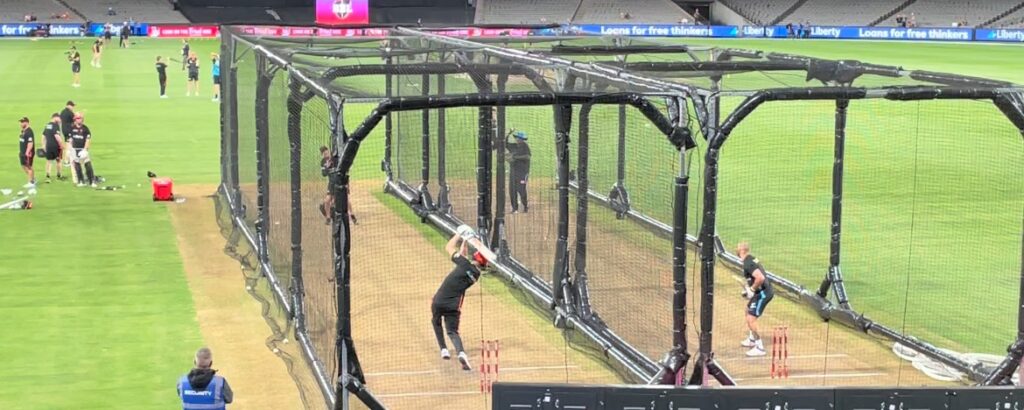
With pedigree and purpose, Hughes joined the Western Australia Cricket Association (WACA) from 2017-18 to work with Perth Scorchers coach, Justin Langer, and Western Australia players on fielding and throwing as well as batting.

“That was really good fun,” he says.

During his second year with the WACA from 2022-23, he and D’Arcy Short became acquainted. It was welcome help for Short who had been going through trying times at the crease.

“We were doing some stuff to find his groove again because he had somewhat lost that power stroke, which set the T20 world on fire when he first started playing,” says Hughes.

Hughes knew he had someone to work with in Short. Cricketers who have prior experience with baseball clearly stand out. “They’re just so much different to the other guys. You can see the difference with their fielding techniques straight away.”

A winner of five Claxton Shields, Hughes has carried that winning mentality over to Australian cricket (AP Photo/Patrick Semansky)

At the crease, Hughes and Short worked on different shots, Short using a cricket and baseball bat to try and regain his technique. They focused on range hitting: trying to hit the ball as far as possible into the outfield, similar to baseball batting practice. “You’re hitting the ball to see where it goes and getting a feel of when you hit it that distance and just taking confidence out of that,” Short says.

This training came at a time when baseball-influenced power strokes were becoming increasingly common in T20. Today, Hughes says this approach is being taught at a younger age. “When [T20] first started, the older guys were still playing conventional cricket shots. The guys that have been coming through the system, these guys are coming out and actually belting the ball all around.”

A Wide Open Field


Luke Hughes didn’t pioneer the overlap between baseball and cricket, but he’s aiming to take it to the next level.

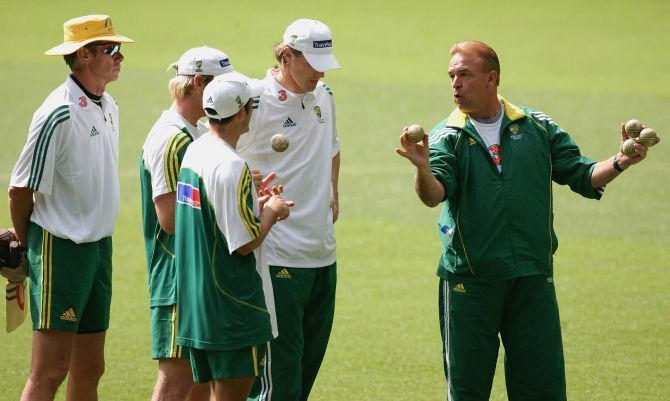
One of the first major exchanges between baseball and cricket in Australia came through an American named Mike Young.

Young moved to Australia in 1981 as an animated baseball coach where he led the Queensland Rams to a Claxton Shield before managing the Australian baseball team at the 1988 Seoul Olympics.

He also coached the national squad to a famous victory at the 1999 Intercontinental Cup in Sydney.

Young introduced the idea of an Australian Baseball Academy that coincided with an uptick in Australians signed by MLB. Twice, in 1997 and 1999, he was named the International Baseball Association Coach of the Year.

By 2000, Australia cricket coach John Buchanan had noticed Young’s ability to develop talent and made him an intriguing offer: to help the national side as the first fielding coach in modern memory.

“He was the one that really changed the way the Australian cricket team went about fielding,” says Hughes.

Young helped to raise Australian fielding and superstars like Ricky Ponting to new heights.

For most of the 2000s, Young transformed Australia’s fielding abilities as the team marched to World Cup wins in 2003 and 2007 and multiple Ashes series romps.

His approach worked because as a hands-on coach, he emphasized effort and intensity to instill more aggressive fielding. Young also brought a fresh perspective to hand-eye ball skills borrowed from baseball. He could explain cricket in novel ways and propose ideas that opened new pathways to innovative tactics and better techniques.

This meant prioritizing sound throwing mechanics, anticipating the pace and location of batted balls, and first step reactions. In time, Young brought in baseball gloves to make playing catch easier with the hard cricket ball. “He actually talked about footwork and the throwing and added in a lot of different aspects,” notes Hughes.

That’s when Hughes feels cricket fielding for team Australia became elite. They had players like Ricky Ponting, one of the best fielders the sport has known. The international community soon took notice. Today, many professional teams utilize fielding coaches.

Throwing From The Feet Up


Hughes counts himself a beneficiary of Young’s pioneering influence.

When Hughes first joined the WACA, he had similar messages to share.

“I was trying to change the mentality,” he says.

He noticed teams at the state association level bringing in baseball pitchers to discuss throwing. But the cricketers weren’t pitchers – they were essentially position players, which requires an altogether different skillset around fielding, footwork, and throwing on the move.

Hughes began a grass-roots effort to alter the mindset of local clubs before going deeper with the WACA. He identified specific areas for improvement. For instance, when fielders approached the ball diagonally or side-on instead of square to the ball, he saw how that left them fielding deep off one foot. As a result, by the time they replaced their feet and pivoted sideways, their mechanics were out of whack, their arms already behind them.

“They don’t actually use any of their weight transfer through their body to be able to throw harder,” Hughes observes. So, players had difficulty throwing accurately because their bodies weren’t in strong, stable positions.

In baseball, he notes that fielders are more conscientious about fielding with their feet out in front and at a bit of an angle. They quickly shift their feet to the target, enabling a firm and accurate throw.

In his second stint with the WACA, one of the things Hughes stressed was everyday footwork. He wanted players to get a better feel for their feet and the rhythm of flowing through the motions of fielding and throwing before they even did fielding drills.

As Hughes broke the mechanics down for players, results came quick. “They were like holy [shoot], my arm actually feels stronger.” Players were finally giving themselves a chance to get in the right throwing position. The upshot? “That essentially saves runs, which essentially helps you win,” says Hughes.

Hughes is helping to reimagine the long-neglected art of cricket fielding. (AP Photo/Charles Krupa)

This past summer demonstrated the importance of fielding in international cricket. When Australia faced Pakistan in test cricket, Pakistan dropped a number of catches.

According to Hughes, “if they caught 50% of the ones they dropped, the whole series would’ve been different.”

“There’s a big reason why the Perth Scorchers have won so many [BBL] championships. Because they have probably three or four elite fielders and they don’t have any below average fielders,” he says.

Other cricket teams will commonly hide below average defenders, and hope the ball isn’t hit their way. But weak spots are eventually revealed.

“That’s the biggest gap I see within the sport,” Hughes says.

Hughes used to attend BBL games and analyze missed fielding opportunities. One of the questions he presented to the WACA was ‘how many runs do you think an elite fielder will save in a T20 game?’ Hughes figures this could be 10 or more runs a game.

“Three elite fielders could be saving 30 runs per game, by diving, or people not running on their arms, or they catch the ball,” he says. In T20 matches where chases often come down to final overs, each run is precious.

Communicating that opportunity to clubs is an ongoing challenge. He finds that old-school mentalities persist.

At trainings, players will bowl and bat and maybe have a quick throw at the end. Coaches will float in and out to help with fielding, but there isn’t a concerted, prolonged push.

“They understand it and they know they need to do it, but no state body actually wants to commit the funds to change it or put someone on full-time,” Hughes notes.

This highlights a void compared with professional baseball where teams have infield and outfield instructors, base running coaches, and hitting and pitching coaches.

Hughes has discussed the importance of training players for fielding with former Australia baseball manager, John Deeble, who worked with Cricket Australia and the Indian Premier League (IPL), as well as with former ABL and MLB player Brad Harman, who has worked with cricketers in the Melbourne area.

“We’re all on the same page, but no real franchises are willing to put the money out there to hire a full-time person,” says Hughes.

“No one teaches [fielding] in cricket. No one actually says this is how you field a ball.”

 Building A Partnership


That’s all likely to change.

The past decade of cricket has seen transformational changes – many with ties to baseball – and more are on the horizon.

Cricket has an impressive track record of including former baseballers, notes Dr. Jason Doyle, Sr. Lecturer of Sport Management at Griffith University. “A number of Australian national team cricketers – including former Test captains – have stated they benefited from playing both cricket and baseball growing up.”

Professional baseballers, too, have given back to cricket. Says Doyle, “[Australia manager and former MLB all-star Dave] Nilsson, perhaps Australia’s most famous baseball export, was credited with sharing tactical insights on how to identify batting strengths and weaknesses and assisting bowlers in learning new types of delivery.”

Remnants of baseball are on display through ‘Bazball’: an aggressive new approach to batting popularized by England’s Kiwi coach, Brendon ‘Baz’ McCullum, which upended the cricket world a couple years ago. The strategy encourages a free-flowing, entertaining, and high-risk flair where players attack each ball and clearly set out to seize the match.

Nilsson has brought coaching chops back to Australian cricket and the national baseball team. Photo: Scott Powick.

In recent years, rules have been implemented in both sports to limit length of play and where fielders may stand to produce fewer delays and more offense, says Associate Professor of Sport Management at Brock University, Dr. Michael Naraine.

Naraine, who grew up playing baseball in Canada and later consulted with the BBL, points out that just as Minor League Baseball (MiLB) represents a more experimental environment compared to Major League Baseball’s (MLB) traditional format, the BBL similarly offers a more casual alternative to test cricket’s old-school approach. Naturally, Australian cricketers have looked across the Pacific to see what baseball is up to.

Around the time that the BBL launched, Cricket Australia needed innovative ideas and new revenue streams. The BBL wanted to make the game more accessible and engaging to younger and female crowds. For inspiration, they turned to sports marketers who could enliven the game atmosphere.

A man named Night Train – yes, Night Train, – from the famed Veeck family that controversially transformed fan experiences for the Chicago White Sox in the 1970s, was brought in by the BBL to help.

“They hired him because he had this experience with MLB and MiLB and he brought that back to Cricket Australia,” says Naraine. “That was really an important milestone for the BBL.”

Teams began applying new features and infused more personality into the game.

“They brought in fireworks, zinger lights on the wicket bales, family festival atmospheres, bouncy castles, face paint, and a host of other new additions and brands such as Nickelodeon and Marvel to the sport environment.”

As Naraine suggests, the BBL began to see that “Minor league baseball in America is the way to test new product.”

Cricket’s Moneyball Moment

Baseball and cricket tell a story of continuous cross-pollination. It’s a matter of time before new exchanges occur. Meanwhile, the two sports are at a crossroads with the future of their growth at stake.

The good news is that baseball and cricket can help each other grow. Both can co-exist and thrive.

For one, Naraine feels that more youth would benefit from playing both sports. It would allow them to adapt their bodies and incorporate new abilities as they physically mature. By staying in a single context athletic environment, they miss out on that opportunity.

“Kids are starting to hyper-specialize earlier on, which is not the best thing for their development,” he says.

He cites Mason Cox from Collingwood of Australian Rules football as a shining example: a former American college basketball player who was able to translate his skills into a new sport at an elite level.

The moment is timely. In 2028, T20 will be a part of the Los Angeles Olympics. It will then be a feature event at the 2032 Olympics in Brisbane. Naraine sees 2032 as a massive opportunity for Australia.

“They’ve got an eight-year window before they have home field advantage at the Gabba [Brisbane Cricket Ground],” he says. This means that Australia has a generation of cricketers it can focus on now, training them with baseball skills to round out their physiology in time for the Olympic games when the world will be watching.

Competitive advantage is up for grabs, and incremental gains can mean the difference between victory and defeat. “It is kind of a Moneyball aspect. We need to tinker around the edges and if we can get just a slight competitive advantage, we can get that much better,” says Naraine. Doing so will require thought leadership, design thinking, and innovation.

“It’s a high-risk, high-reward situation,” he admits.

Naraine sees parallels with several sports that Australia can draw from as they chart a course to improve cricket skills. “We’ve seen that with coaching in [American] football in the US, we’ve seen it in soccer in Europe, we’ve seen it in other sports,” he says.

And with the Australian Baseball League (ABL) next door, cricket has turnkey support. “That is a huge competitive advantage for Australia. There is an ecosystem of baseball in Australia. If cricket can leverage that to make the cricketers better, why wouldn’t you want to do that?”

Luke Hughes offers a similar perspective, noting baseball’s own ‘Moneyball’ era. Considering how competitive entertainment and sports are today, that makes added eyeballs and registrations all the more imperative if leagues are to survive. “You’d think that any sport would look for any advantage they can get,” he says.

He mentions Major League Cricket (MLC) and Baseball United, two sporting bodies that have sprung up in the last couple years in traditionally baseball (USA) and cricket (Middle East and South Asia) territories, respectively.

However, Australia is the only country with established professional leagues in both baseball and cricket – not yet counting the novel leagues above. No other country has such an inherent advantage to achieve this cross-sport success.

What’s Next, Plus Some Predictions


Luke Hughes has every intention to continue coaching cricket.

He says he just received a message from two state players on the under-19 Western Australia women’s team who asked for help with their fielding.

“It’s a very similar thing to the girls’ program,” he says. “They just want information. They don’t get enough coaching and they just lapped up every little thing that I’ve discussed with them.”

D’Arcy Short, meanwhile, continues to follow bits and pieces of baseball in America. The time difference means early morning hours which sometimes makes it inconvenient to watch. One of his goals is to see a MLB game in the flesh.

“That’s probably one of those things that’s on my bucket list: to get over to America and watch it live,” he says.

In the meantime, ever a student of the game, Short will have to settle for practicing baseball. His next plans? “I’m actually trying to go down to a Perth Heat training session and have a swing of a baseball bat.”

Over 100 kids in Adelaide play tee-ball outside the iconic Adelaide Oval in South Australia. Is more cross-pollination between sports on the cards? Photo: Hugh Whittle.

The partnership between baseball and cricket reflects Australia’s resourcefulness, creativity, and athletic spirit. Going forward, what could baseball take away from cricket and vice versa? A few predictions and watch-outs:

  • Designated batsmen. Like the designated hitter (DH) in baseball, designated batsmen in cricket would add offensive skill and excitement to matches while bowlers (save for all-rounders) can focus on their craft. At the time MLB was considering adding the DH to the National League, the same Max Scherzer that Luke Hughes homered off said, “Who would people rather see, a real hitter hitting home runs or a pitcher swinging a wet newspaper?” Players get to do what they do best while fan engagement is maximized.
  • Better cricket fielding stats. History is light on cricket fielding metrics. In the spirit of the ‘Moneyball’ era and the age of mass analytics, cricket could use greater data in areas like fielder spacing, ground covered, runs saved, and throwing efficiency and speed. Teams could strategize accordingly and prepare matchups based on their strengths and the particular opposing team to squeeze the most out of their defensive abilities.
  • More skills competitions. This July, MLB instituted a Futures Skills Showcase where top prospects competed in three batting skills challenges: hitting the ball to infield and outfield targets, ‘calling their shot’ by choosing which part of the field they’ll hit the ball to, and swinging for the fences where bonuses are awarded for consecutive and opposite field homeruns. Similarly, the Korea Baseball Organization (KBO) has showcased “Bunt King and Perfect Pitcher” competitions during all-star festivities. Both baseball and cricket can run with these ideas, adding challenges around fielding ability, throwing accuracy, and batting prowess for fans to lap up and the next generation to study up.
  • Baseball powerplays. In shorter cricket formats, ‘powerplays’ are used where defending teams are restricted in where they can place fielders. This opens up the ground to more runs and action. “I think Major League Baseball will eventually get to that place too,” says Naraine. Imagine in the 6th inning of every baseball game taking out one of your outfielders or shifting where they can stand. Advantage to batters, excitement for fans, win-win for MLB.

MLB is currently looking around the world for inspiration, says Naraine, just as cricket will need to do to continue attracting fans. Cricket will likely look to baseball as it has done before.

The appetite for more baseball collaboration is encouraging. And there’s no telling where it may come from next. As South Australia MP, Jayne Stinson, shared while congratulating the Adelaide Giants on their 2022-23 Claxton Shield, “although there is much that we might prefer we did not have from American culture in Australian culture, baseball is certainly not one of those.”

01 September 2024 By Staff Writers

By Staff Writers

Feature Stories Women's Baseball

Profile | Elodie O’Sullivan turned injury & disappointment into incredible opportunity in Japan

by Kristin Sims

Australian women’s baseball stalwart Elodie O’Sullivan has played the game at the highest levels, playing with the Emeralds at World Cups and winning national titles.

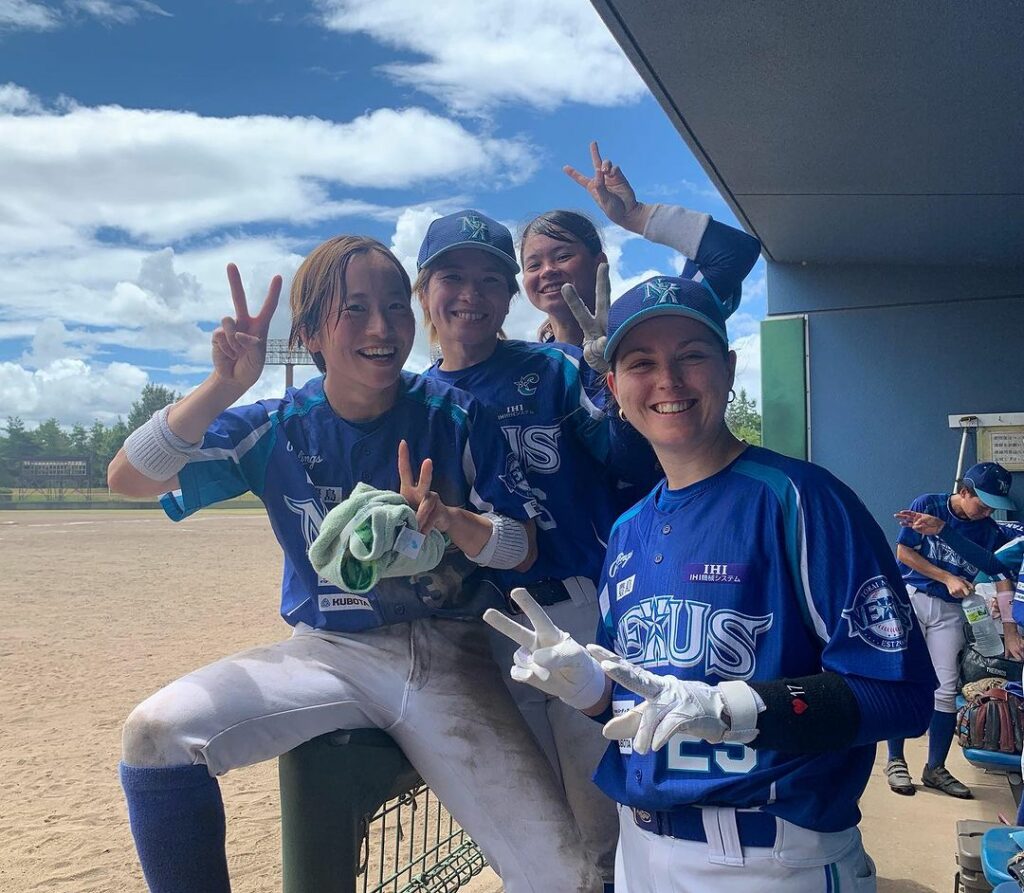
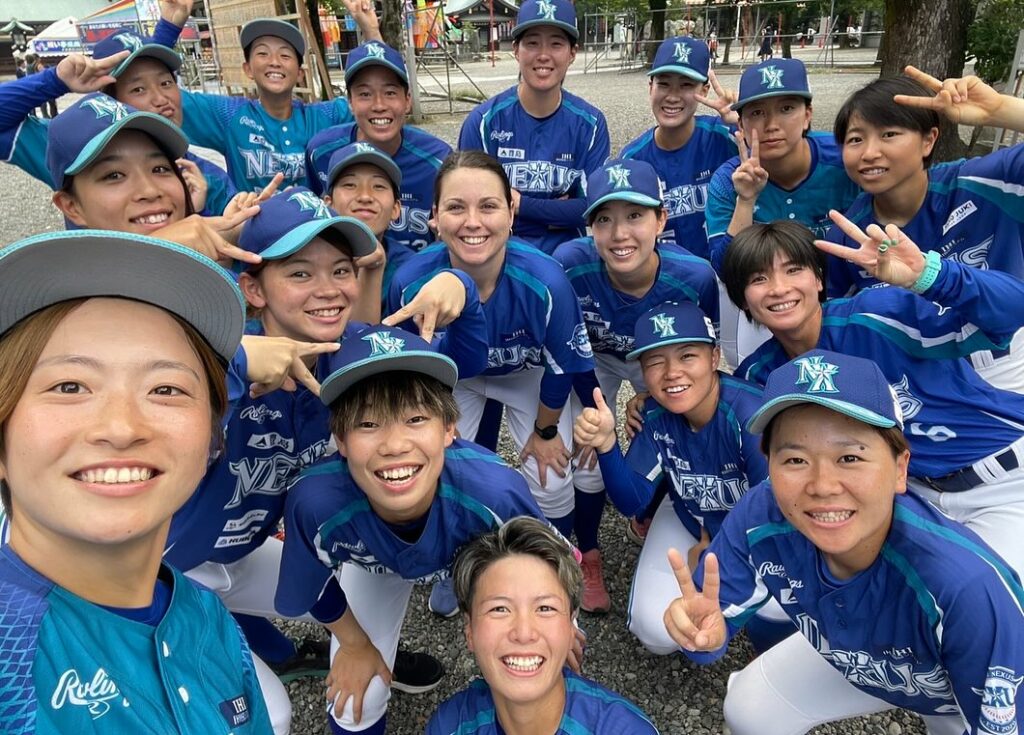
Recently, she has returned from her second stint playing in Japan’s top league for a women’s team called Tokai Nexus.

O’Sullivan is the only Australian woman to play this level baseball in 2024. But her journey isn’t as straight forward as it seems…

When baseball pushes you down, bounce back higher


The 2022/23 season of baseball in Australia was one of highs and lows for O’Sullivan.

The season began with seven months of overcoming a serious foot injury for the 2018 World Cup representative.

She recovered in time to become an important contributor to Western Australia’s first women’s national title in eleven years in April, 2023. It was a big moment for O’Sullivan, who moved to WA from her home state of New South Wales for a job opportunity as an engineer.

She missed out on selection for the World Cup in August.

But injury and the disappointment of missing national team selection didn’t knock her down.

That’s when O’Sullivan went to work. The 29-year-old took her baseball destiny into her own hands.

Not shying away from wanting to continue to play against the best and challenge herself to a higher lever, she reached out to Risa Nakashima, the head coach of World #1 women’s national team Japan. O’Sullivan knew Nakashima from the Japanese star’s experience in Australia as a player, state coach and showcase coach.

Nakashima helped O’Sullivan land an opportunity with Tokai Nexus in 2023 for her first season.

“One of my proudest moments of my career was overcoming that injury and getting myself back to where I needed to be,” O’Sullivan said. “I recognise the opportunity wasn’t just handed to me, it was a huge honour that she (Rika Nakashima) was able to find an opportunity for me and I definitely did not take that for granted.”

O’Sullivan returned to Australia improved. Her talents were on display again at the 2024 Australian Women’s Showcase, where she won a championship with the Brisbane Bandits, was one of the tournament leaders in batting, and made phenomenal plays in the field.

Her performance in 2023 in Japan earned her an invite back in 2024.

Learning the differences between Japanese and Australian baseball


There are some big differences playing overseas compared to Australia. One stand out is the format of games.

Unlike at home where games are played weekly across a season, in Japan the competition, which consists of 38 teams, is played in a knock-out format meaning the days are long and the pressure is nothing short of intense.

“I love the single elimination style,” says O’Sullivan. “You need to learn how to win and a great way to do that is by basically playing a grand final every single day, you really can’t take your foot off the pedal. It is just so ultra competitive.”

Simply put: If you win, you keep playing.

O’Sullivan says she sometimes was playing four games a day in searing Japanese heat. She took this in her stride and used the conditions to build her mental resilience and focus on post game recovery.

“You need to be out in the sun for up to eight hours at a time and if you can’t give your best, then there is another person in the flanks working just as hard, waiting to take your spot,” she says.

O’Sullivan was one of those players “in the flanks.”

But patience pays off. After her long stint on the sidelines, O’Sullivan says she was ready for whatever came her way and wanted nothing more than to compete against the best.

“I felt like I was in the form of my life and I was so excited to use my hard work and training in a new environment, I was bursting to get out and compete,” she says.

One of the key differences for O’Sullivan is the etiquette and respect to the game paid by the Japanese players.
She says she feels very lucky to have the chance to be part of a team on the other side of the world that aligns with her own values closely.

“The respect for the game really stuck out to me,” she says. “There’s so much respect on display to officials, coaches, and your opposition. Everyone spends time raking the field and gives absolutely everything out on the field.”
O’Sullivan adds that mindset to the game is something held close to her heart.

“It is really important for me to be in environments and teams that resonate so closely with my own personal values,” she says. “This experience has been no different.”

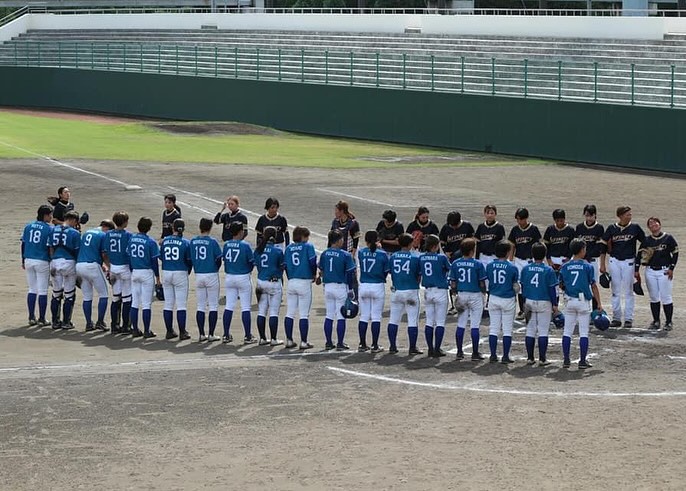
Players typically bow to each other before and after games in Japan, a sign of respect Elodie O’Sullivan says she resonates with. Photo: @el_osully)

“It’s indescribable to be part of a team with so much talent, passion and respect for the game with an unmatched work ethic,” she adds.

Coming home


When it comes to continuing the development of her game, O’Sullivan says that her time in Japan allows her to bring back strategies to Australia that will help her both on and off the field.

“I am learning new strategies and understanding a whole new side to the game,” she says.

One aspect is small ball – an element of the game Japanese players traditionally master.

“My bunting has improved the most and I am now confident I can execute this in any situation,” she says. “The environment has reminded me to enjoy the game wherever I am and I know when I am enjoying my game, then I am performing at my best.”

O’Sullivan says she hopes her teammates in Australia will also benefit, saying she will pass on the values she’s learnt to help better those around her and the game she loves.

“I’m inspired to lead from the front and demonstrate how a good culture and respect for the game can bring out the best in people and most importantly bring out the best in teams as a collective,” she says.

“If I can set a good example for showing what hard work, enjoyment and selflessness can achieve, then that is exactly what I want to show through the way I play the game and for me, this is Nexus baseball in a nutshell.”

Tag Cloud:
Elodie O'SullivanKristin Sims
Sponsored
  • Feature Stories 9 months ago Vale Don Knapp | In memory of an influential figure in Australian Baseball
  • - Aussies Abroad 10 months ago Podcast: Australian Baseball News Headlines with Eric Balnar
  • Feature Stories over 1 year ago How Mackenzie Bourke became the first female clubhouse manager in Minor League Baseball history
  • Feature Stories over 1 year ago Baseball’s influence – and its untapped promise – in elevating Australian cricket
  • Women's Baseball over 1 year ago Profile | Elodie O’Sullivan turned injury & disappointment into incredible opportunity in Japan
Baseball.com.au Logo
  • Our Network
  • Baseball.com.au
  • ABL
  • Team Australia
  • Baseball Australia
  • More
  • Baseball+
  • Baseball Photos
  • Contact Us
  • Careers
  • Submit a Story Idea

Baseball.com.au is a division of The Australian Baseball Federation. The Australian Baseball Federation is the peak representative body for baseball in Australia. The Australian Baseball Federation has national and international regulatory and coordination responsibilities. In performing those functions, the Australian Baseball Federation uses the descriptor: "Baseball Australia". (0.0.0)

Subscribe to monthly newsletter
Baseball.com.au Shop
Play Baseball
© 2026 Baseball.com.au. All rights reserved. (0.0.0) Privacy Policy Terms & Conditions
Website design by Thirst Creative