Baseball.com.au Baseball.com.au
News
Hub: 2026 World Baseball Classic
Play Baseball
Find a ClubBaseball5™Sporting SchoolsMobile Coach AppCoachesUmpiresScorersCome and Try Days / EventsAussies Abroad
Events
Hub: 2026 U18 and U16 NationalsHub: U18 World CupEventsEvents CalendarAustralia at World Series 2025National ChampionshipsLittle League
Media
WatchPro Aussies AbroadPodcastCommunityDocumentaryJoin the Mailing List
Governing the Game
Baseball Australia WebsiteAbout Us and BoardStrategic PlanResourcesBaseball Information HubNational Integrity PlanCorporate ReachBaseball CalendarContact Us
Australian National Teams
Team Australia
Team Australia Event Archive
National Tournament Archive
...
Governing the GameAustralian National TeamsTeam Australia Event ArchiveNational Tournament Archive
En
Select a Language
  • News
  • Hub: 2026 World Baseball Classic
  • Play Baseball
    Back
    • Find a Club
    • Baseball5™
    • Sporting Schools
    • Mobile Coach App
    • Coaches
    • Umpires
    • Scorers
    • Come and Try Days / Events
    • Aussies Abroad
  • Events
    Back
    • Hub: 2026 U18 and U16 Nationals
    • Hub: U18 World Cup
    • Events
    • Events Calendar
    • Australia at World Series 2025
    • National Championships
    • Little League
  • Media
    Back
    • Watch
    • Pro Aussies Abroad
    • Podcast
    • Community
    • Documentary
    • Join the Mailing List
  • Governing the Game
    Back
    • Baseball Australia Website
    • About Us and Board
    • Strategic Plan
    • Resources
    • Baseball Information Hub
    • National Integrity Plan
    • Corporate Reach
    • Baseball Calendar
    • Contact Us
  • Australian National Teams
    Back
    • Team Australia
  • Team Australia Event Archive
  • National Tournament Archive

News

Select
  • All Categories
  • - Aussies Abroad
  • - Little League
  • - Team Australia
  • ABL
  • APBC
  • Aussies Sign Pro
  • Australian Youth Championships
  • Baseball5
  • College Baseball
  • Community
  • No elements found. Consider changing the search query.
  • List is empty.

09 October 2024 By Eric Balnar

By Eric Balnar

ABL

The Alistair Tanner Story - How hard work led to a contract with the Detroit Tigers

story by Eric Balnar, photos by Lauren Finch

Year 12 student Alistair Tanner muscles a lot into a single day.

By 8:00AM, Tanner has already left his Eastern Adelaide suburbs home for Marryatville High School for a full day of school. He’ll be done by 3:15PM.

Then, it’s hustle across the city to West Beach for three hours of high-performance training at BaseballSA until 7:00PM.

Race home, squeeze in dinner, out the door by 8:00PM – it’s time for the gym.

At 9:00PM, it’s off to work, earning some side money storing equipment at a gymnastics facility for a couple hours.

There should still be enough time between end of today and the start of tomorrow to fit in homework. Or, maybe he can fit in other weekly seasonal commitments – club practice, state training, Adelaide Giants, mobility sessions, time in the pool and whatever else a teenager needs to do.

All that hard work is about to pay off.

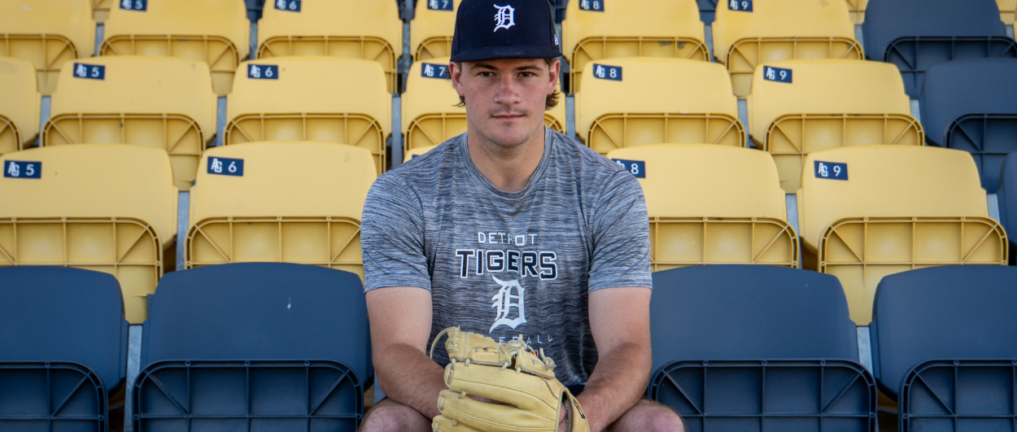
Tanner, a hard throwing pitcher with a mid-90s fastball, has just become Australia’s newest full-time professional baseball player.

The newly turned 18-year-old from Kensington Baseball Club signed a contract with the Detroit Tigers this week to make it official.

Tanner says it makes it all worth the effort, and he knows the real work is about to begin.

“You can always make time for things that you need to do, especially if you love it,” says Tanner. “You can make those sacrifices. Yeah, I’m busy. The social life takes a sacrifice, but you can just get up earlier, or just stay up later, if you want it bad enough you just make it work.”
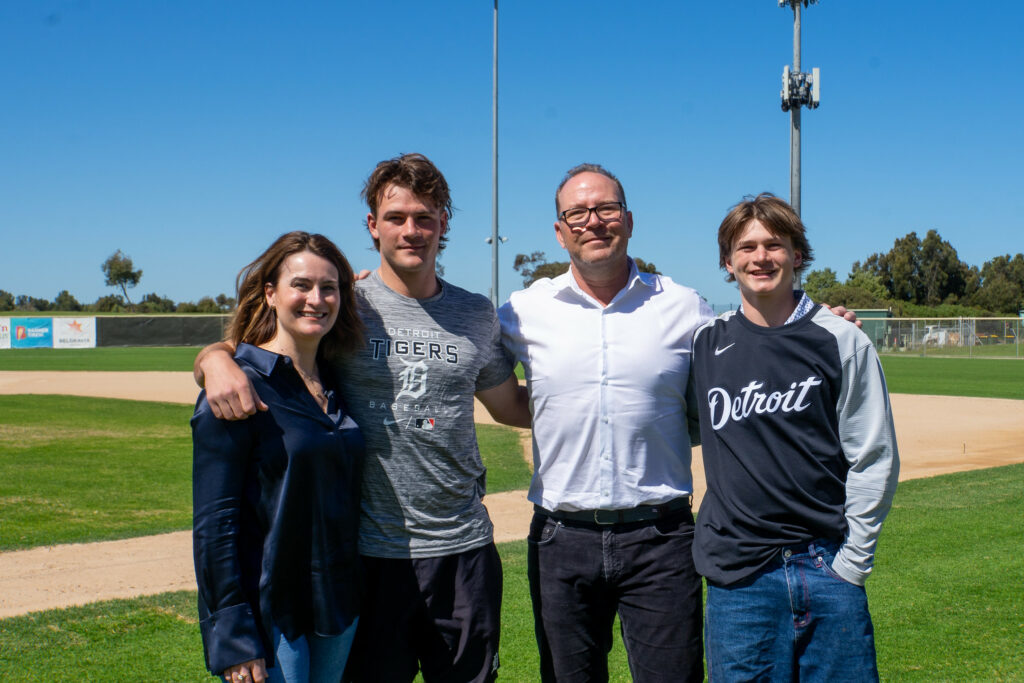
Tanner with his family on signing day. Photo: Lauren Finch

His life is certainly about to change.

Tanner notably has pivoted from his commitment to Arizona State University – a powerhouse baseball program which as produced more Major League players than any other US school.

The offer from the Tigers was too good.

“It’s been a dream of mine to see if I could play Major League baseball,” says Tanner. “I think by signing with Detroit, it gives me the best chance of fulfilling my goals.”

“It was a very hard decision to choose between college pathway and Detroit but after thinking through choices, I’ve decided to turn pro.”

Tanner is certainly an alluring pitching prospect.

He dazzled at the Under 18 National Championships last January in front of 14 MLB scouts huddled around a radar gun. Tanner’s fastball touched 94 on the gun in a must-win game for South Australia.

He can throw harder than almost any Australian and he hasn’t even graduated high school.

His fastball has since been logged at 95 miles per hour, his curveball spin rate is higher than major league average, and he possesses four different pitches – a fastball, curveball, slider and a splitter.

Now he’ll get a chance to refine his craft in a professional system.

“I want and need to get better at everything,” says a hungry Tanner.

The South Australian teen says the Tigers have been in touch for several years, keeping a close eye on him through his rise up the Australian ranks, and he’s felt comfortable with them since day one.

“I’ve always felt they were interested in all aspects of my life. For instance, they understood that finishing school was important to me,” he says. “They were always there to answer any questions I had. I know mum and dad could always reach out to them if they had any questions that needed answering. I feel like I am going to a club that wants everyone in the organisation to succeed.”

THE TANNER TALE – Ali’s Baseball Pathway


Ali started playing baseball when he was eleven.

Unlike other Aussies who have gone pro, there wasn’t a family connection to the game.

“I needed something to do in the summer. I chose baseball and what a good decision that was,” says Tanner. “An old family friend of mine played junior baseball at Kensington Baseball Club. I was playing Rugby and Footy in the winter. My options were cricket and baseball so I started there.”

He says he instantly felt connected to the craft of pitching.

“The higher level I played, the more I fell in love with pitching. I love being in control of the whole game. You’re always involved in the game when you’re on the mound,” he says.

Tanner quickly made an impression in the junior ranks and was selected on charter teams for the Adelaide Marlins – the Eastern & Northern representative teams in South Australia.

He played representative Little League, Junior League & Senior League for the Marlins, all while playing for Kensington locally.

By the age of 15, just four years after picking up a ball for the first time, Tanner made his start in the top division of Adelaide’s local competition.
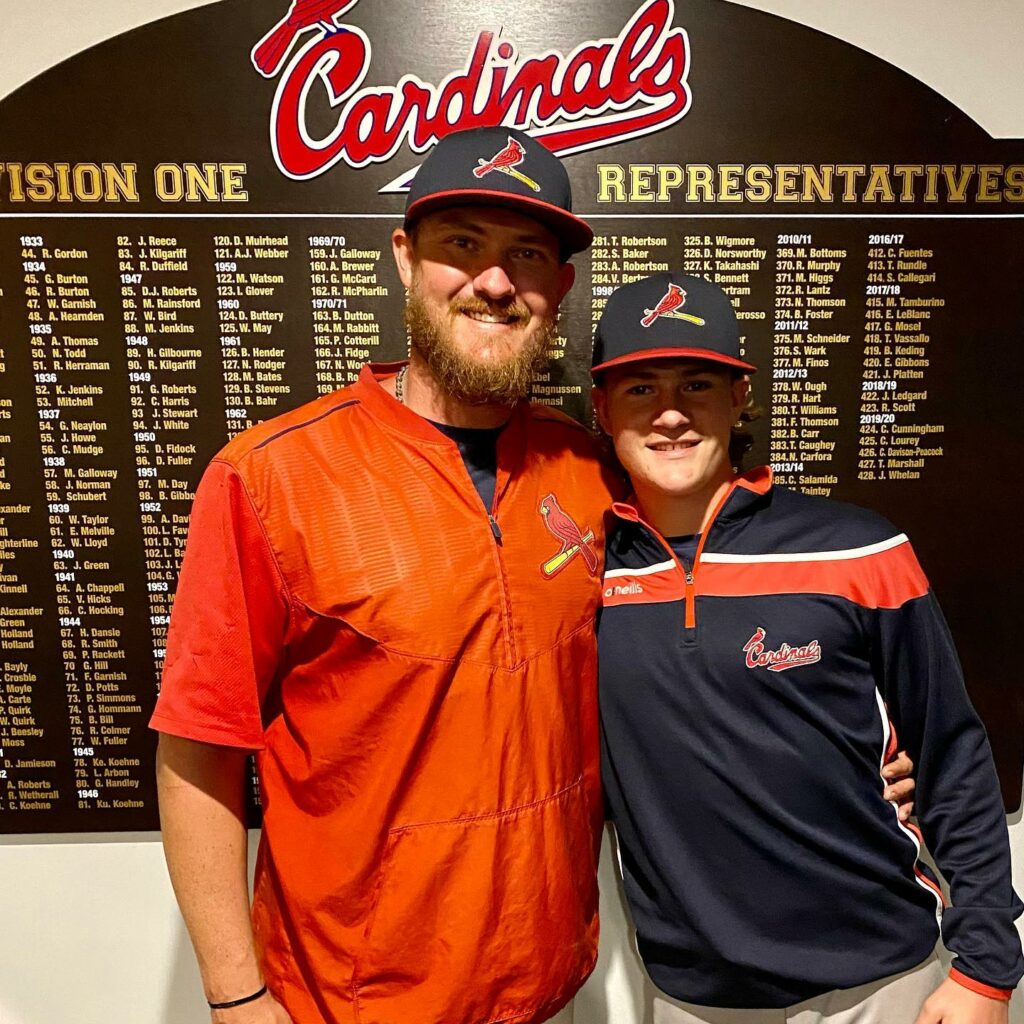
Above: Alistair Tanner before his A-Grade debut in 2021

It didn’t take long for Tanner to crack the state squad.

He starred for South Australia at both the U16 and U18 national championships, including a silver medal in 2024.

Watching him every step of the way was Kensington’s head coach Austin Gallagher, who is now the BaseballSA Performance Pathways manager. Gallagher has worked with Tanner from the start.

He says he knew Tanner was special at a very young age.

“As a junior, he was extremely competitive but always seemed to do what he put his mind to,” says Gallagher.

“I remember specifically a day when he was about 14 years old at a junior league practice and I said to him as he was about to take some batting practice swings, “I know you can pitch, but can you swing?” And his response was, “I’ll show you.” A couple pitches into batting practice, he launched one off the top of the tree over the fence.”

“From that moment, I knew Ali was going to be a special player. When he puts his mind to something, he seems to figure out how to achieve it.”

Shortly after his A-Grade debut, Tanner was invited to be part of the Adelaide Giants’ development program.

He trained with the club full-time the past two seasons, earning a roster spot in 2023-24, and winning two championships along the way.

In November 2023, Tanner made his Australian Baseball League debut. He made four appearances in total across the season in a development role, not allowing a run in his 4.1 innings pitched.
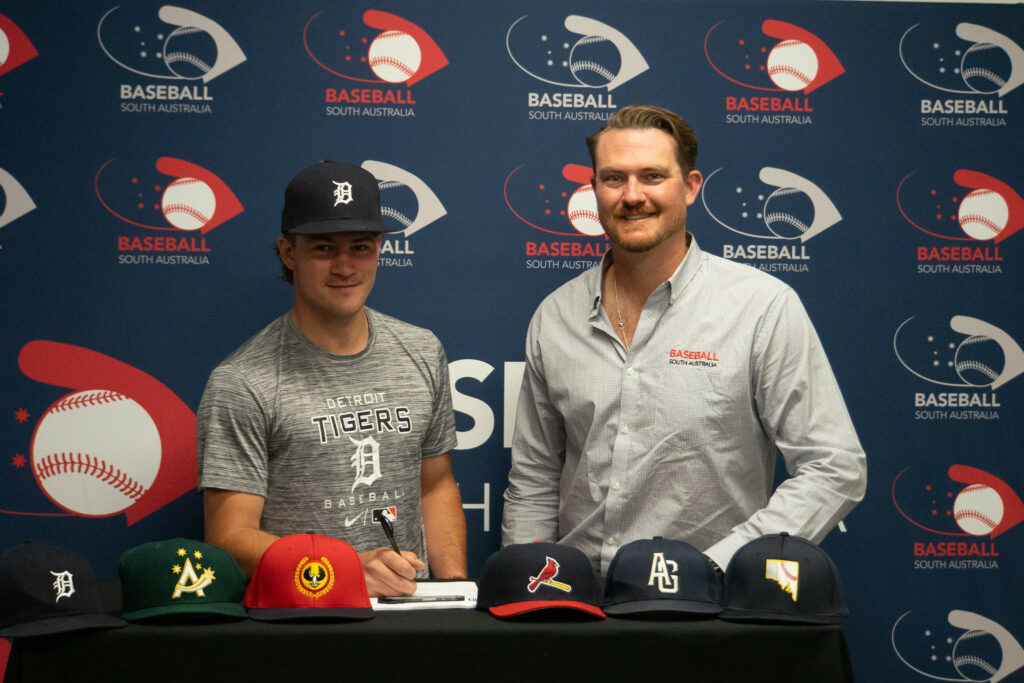
Above: Tanner with his coach and mentor Austin Gallagher

“The Giants have been great for my development,” says Tanner. “They treated me like a regular player even though I was on the development list. They instilled a heap of confidence in me and encouraged me just to go out there in those four games. I’ve been able to hang out with an awesome group of guys who have been happy to share advise from their professional playing experiences.”

He didn’t just catch the eye of local selectors. The national squad came calling.

He was named to the 2023 Under 18 World Cup squad as a 16-year-old. He posted the second lowest ERA of any pitcher on the squad.

In 2024, at 17, he was named to the Under 23 World Cup squad as the youngest player on the list.

Through that all, Tanner was balancing school & life.

Gallagher says the two big Tanner characteristics that stick out are his work ethic and confidence.

“A prime example of this is when Ali goes to pitch at the Australian Youth Championship,” says Gallagher, a former minor league player himself.

“Everyone sees his dominance on the field, how he threw 94mph in front of scouts. But what people don’t see is the fact that in Year 11 he was waking up at 4:30AM, going to the gym, getting a lift in, going for a swim, and having breakfast all before 7:00AM. Everyday. He has a strength & mobility routine he sticks too and just always wants to be in the best position to succeed.”

Then there’s the confidence. Gallagher says no matter who you are or what environment Ali is in, he always seems to be comfortable and not out of his depth. He learns to adapt quickly.

“He believes and trusts in what his game has to offer and is never intimidated by anyone or anything,” says Gallagher.

Tanner says it’s an important mindset to have.

“You always have to be confident,” he says.

“If you’re going to beat yourself before you beat the other team, you’ve already lost. But you have to be confident and not arrogant. You’re there for a reason. You can beat them.”

WHAT’S NEXT FOR ALI
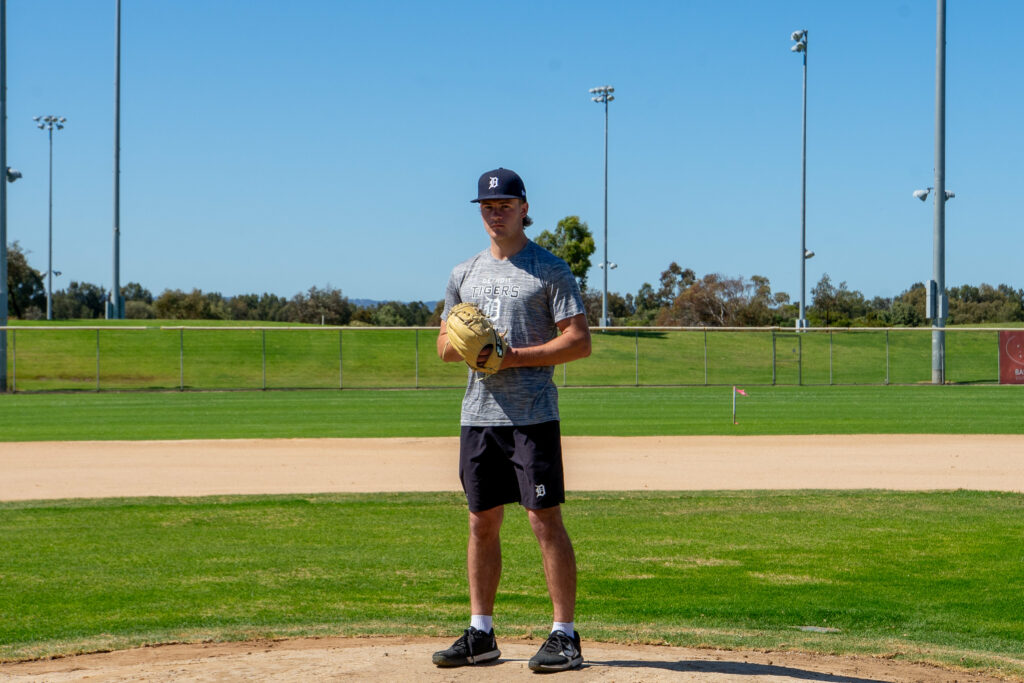

He’s a professional baseball player now. It’s eat, sleep, baseball repeat.

First, Tanner needs to finish high school. His final exam is on November 9.

Through all of that, Tanner says there’s only one thing to do – get better.

He won’t be able to pitch in games in Australia this summer, but he’ll still work out.

He’ll continue to train at Baseball South Australia with HP Manager Austin Gallagher and Adelaide Giants’ star reliever Todd Van Steensel.In January, he’ll head to Florida early for a pitcher’s camp before spring training.

Then, it’s to join the 3,500 other minor league baseball players all trying to reach the summit by climbing the minor league ranks.

And what does Ali want to get better at?

“Everything.”

“I know I need to be better at commanding my pitches. I’m training to master a repeatable action, one that works for me day in, day out. My pitch variety also needs work. While I know I can throw four different types of pitches, achieving a higher quality consistency is really important.”

“I also know that I need to improve on understanding pitch selection and game situations. That will come with more playing and training.”

Tanner joins fellow South Australian Jack Bushell in the Tigers’ minor league system.

Other professional South Australians include Curtis Mead (Rays), Jack O’Loughlin (Athletics), Drew Davies (Reds) and Jack Bushell (Tigers)

A SCOUTING REPORT


Baseball South Australia High Performance manager Austin Gallagher has a close relationship with Ali Tanner.

Gallagher is a former minor league player with the LA Dodgers, but importantly the former Division 1 coach of Kensington Cardinals, Ali’s home club. It was Gallagher who trusted Tanner as a starting pitcher at just 14-years-old in South Australia’s Division 1 competition.

This is what Gallagher had to say.

Height: 6’1
Position: Right-handed pitcher

Notes:

Ali has tremendous upside and swing and miss stuff.

His fastball sits in the low-90s range and is maxing out at 94 mph with 2500-2600 rpm.

He also throws a curveball at 74-76 which is between 2700-2900 rpm, making that an above average major league pitch.

His slider has improved quite a bit over the last few months, having more north and south movement allowing him to, when he locates it, get swing and miss with chase, particularly to right-handed hitters. His slider sits around 78 mph.

His fourth pitch, and which has helped him get more swing and miss against left handed hitting is his split finger. It’s 82-85 mph with low spin that, when thrown properly, falls out of the zone with effect.

Ali will have the ability to succeed at the next level by continually working on his command.

If he can land his off-speed pitches for strikes, he makes for a very difficult at bat for both lefties and righties. The swing and miss stuff is there. Execution will take him to the next level and will be exciting to see where he will be at in a few years.

What Tanner Says

—-

I know that I am still learning the art of pitching. I’ve always been able to throw reasonably hard for my age group but as I’ve gone up through the grades I am constantly being reminded that a good fastball isn’t enough.

In the past 12 months I’ve been lucky to share a season with the Adelaide Giants pitching staff and Team Australian players and coaches who have gladly shared their experiences and advice on the mental side of pitching. Which is great because it’s something that I know I need to keep working on.

25 September 2024 By Staff Writers

By Staff Writers

ABL Feature Stories

How Mackenzie Bourke became the first female clubhouse manager in Minor League Baseball history

By Kristin Sims 

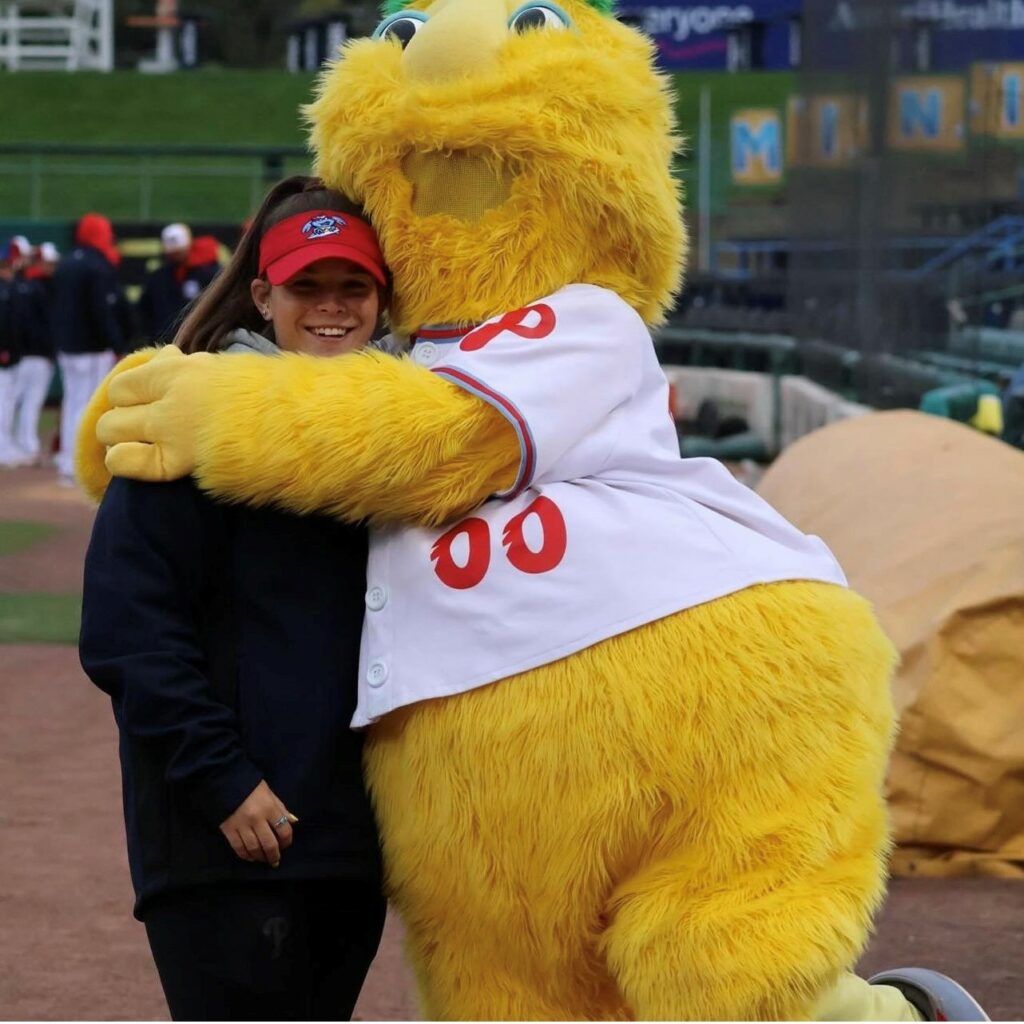
Adelaide local Mackenzie Bourke has just returned home after making history in the United States, by becoming the first female clubhouse manger in Minor league baseball history with the Philadelphia Phillies affiliate team the New Jersey Blue Claws. The journey to America was something Bourke had her eye set on early in her career, with the significance of the opportunity not being lost on her.

Before coming to Baseball, Bourke was working with the NRL in Adelaide. During the offseason for the NRL, Bourke began looking for more exposure in the sporting industry and reached out to the Adelaide Giants.

“I messaged the Giants and said I was happy to do anything, at that stage I just wanted more exposure in the sports industry,”

“I was also playing baseball at the time so I was really interested in the sport and I did a bit of everything when I was first with the Giants.” She said.

Bourke continued to juggle her full time role with the NRL whilst giving the Giants as much of her time as she could, but she always had one goal in mind. That goal? Get to America and work in professional sport.

With that in mind, Bourke had to take a big risk and back herself in with the hopes of making her dream come true.

“I had to assess that the [Rugby] probably wasn’t going to get me to America and that was something I really wanted, so I actually left my full time job and went to the Giants to continue volunteering.”

“I was just doing everything I could to make sure I gave it my best crack, I knew it was something that was going to take time but I wanted to give it my best.” She said.

Giving up a stable salary is never easy, and Bourke recognises that the support of her family was key to being able to chase her dreams.

“It is such a big deal to give up a proper salary and the perks of full time work, but I had my family who are very supportive of me chasing that dream.” She added.

With her hardworking nature, Bourke jumped in to help wherever she could at the Giants, before a spot opened up mid-season for the clubhouse manager position.
Bourke returned to the Giants the following season, and thanks to her efforts the year prior, this time she was the full time clubhouse manager.

“That was what I took the risk for two years ago, was to get that role. It was a really big achievement to actually get into the kind of role that I was really wanting to get into.” She said.

With a successful season under her belt, Bourke was heading off to America to work in a summer camp before the opportunity of a lifetime presented itself. A clubhouse manager role within the Philadelphia Phillies organisation.
“It was exactly the role I wanted to do, so it was just one of those things you couldn’t pass up because if you wait, it may not come up again for a few years, so I took the chance and sent off my resume.” She added.

Thanks to some strong connections to the Phillies from the Giants,  in the form of General Manager Nathan Davidson and Giants Head Coach Chris Adamson, Bourke was able to put forward an impressive application for the position.

“Nathan Davidson has a lot of connections with Phillies and Chris Adamson coaches in the Phillies minor leagues, so I had some great references to back me in and help me out.” She said.

Heading to America didn’t just present a risk for Bourke, the Phillies also had to take their chances on someone coming over from Australia.

“It did take a bit of time, there were lots of phone calls with different people but I understood it was necessary,

“I was lucky that they wanted to take a chance on me and that they were keen to get a female in the space because that has never happened before.” She said.

The prospect of being the first female clubhouse manager is not something that is lost on Bourke, and she was very aware of the challenges and pressure that come with being the first woman to break through the barrier.

“ I did put a lot of pressure on myself because you think I am not just messing this up for myself, it’s also for every female that wants to do this in the future.” She said.

Coming into the clubhouse as a female, Bourke said she felt supported from the beginning thanks to the adherence from the players to the Phillies club motto Protect the Standard. One of the key pillars of the motto is based around respect of others and the club, which was demonstrated regularly in the clubhouse.

“The Phillies and those guys who have been at the Blue Claws are all aware they have to Protect the Standard, and will say that’s not what we do around here so they have been really good in that sense.”

A big part of the clubhouse manager’s role is to build connections with the team, since you spend so much time with them. Bourke made a point of ensuring the connections she made were through the whole organisation, taking the time to get to know the front office staff as well as the players.

“It was a big thing for me to make connections with people in the front office and game day staff, I was really good friends with the game day staff so when I came out on the field I knew all the staff.” She said.

It was this relationship building and the care Bourke took with getting to know everyone around her, that has been a big contributor to her success with the Blue Claws. So much so, that she has already re-signed to come back next season.

“They [the Phillies] were super supportive and very happy with the work that I did this year and are looking to build on that for the future, they like having a female around, it is just something that is so cool to be a part of.” She said.

When it comes to her history making contribution to Baseball, Bourke says that it is still yet to sink in.

“It might take some time to sink in because when I was over there, I didn’t feel like I was the first person to do it because I never felt out of place,

“But this is something that will stay with me forever no matter what I do.”

Reflecting on this last year and the experience she has had, Bourke is feeling good knowing that her initial risk paid off and she has been able to make her dream come true.

“I am very proud of the fact that I took a risk three years ago and that is has come to life and that it was all worth it.” She said.

20 September 2024 By Staff Writers

By Staff Writers

Feature Stories

Baseball’s influence – and its untapped promise – in elevating Australian cricket

by Jason Daniels

Cricketer D’Arcy Short and former MLBer Luke Hughes open up on the growing connection between the two bat and ball relatives and how cricket can draw even more inspiration from the world of baseball.

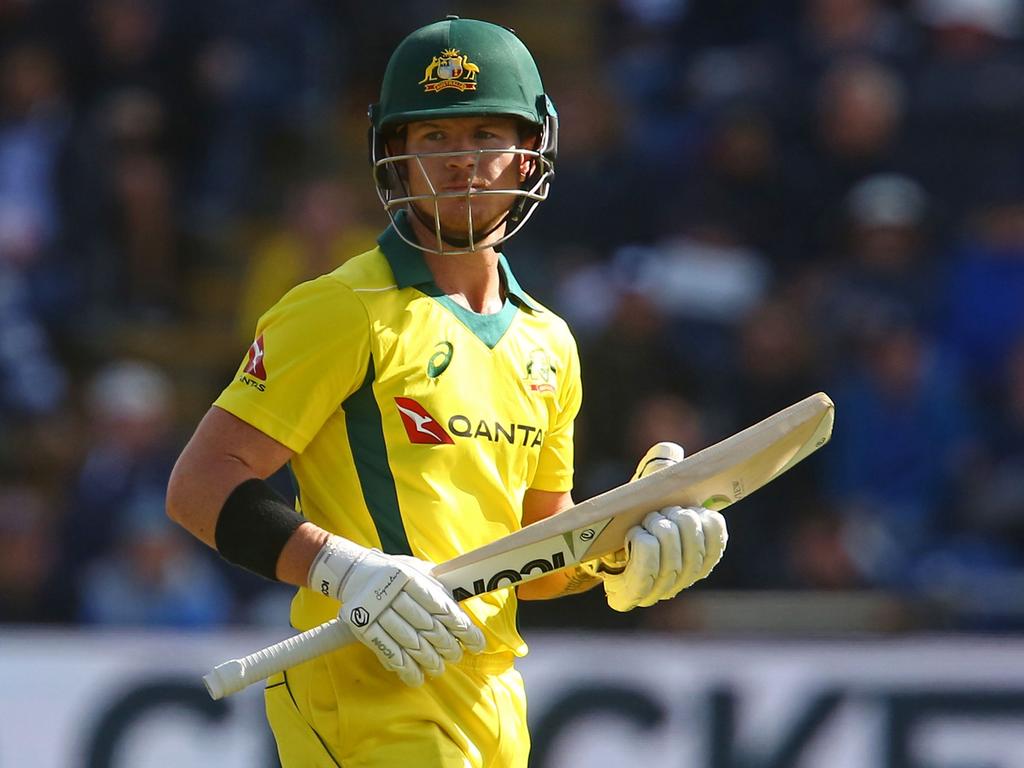
It’s with a smack of the bat and smooth torque of a baseball clean-up hitter that D’Arcy Short knocks an eye-raising six at Auckland’s Eden Park.

The date is February 16, 2018 and team Australia are chasing a record deficit against New Zealand in the Trans-Tasman Twenty20 (T20) series. Australia need 244 runs (8 more than the current record chase) if they are to defeat the rival Kiwis on their home soil.

Short stands at the crease, the massive run total his to chip away at.

He executes to plan, spearheading a record-breaking assault with gusto and good fortune. By the time it’s over, Short notches 76 runs from 44 balls, earning Man of the Match honors as Australia top the near insurmountable tally with 5 wickets and 7 balls remaining.

(Above: 43 seconds…For his torrid performances during the 2017-18 BBL season, Short was aptly named ‘King of the Six’.)

This was Short’s year.

During the 2017-18 Big Bash League (BBL) campaign with the Hobart Hurricanes he became the first batsmen to score more than 500 runs in a season (the League’s 7th since inception in 2011). He achieved the highest run total, most sixes, and highest individual game score of 122 not out.

That season, Short epitomized ‘big bash’ and batting ingenuity. If it appeared that Short was striking the ball unlike most others, that’s because he was.

Short To It, Long Through It


Until he was thirteen years old, Short grew up playing baseball in the Northern Territory. He followed in his father’s steps, who was a state-level player. That’s where Short first learned to drive the ball.

“I loved the baseball,” he says, reflecting on his youth. “I had a cricket bat or a baseball bat in my hands hitting often in the backyard.”

Short was drawn to baseball batting, where getting out once didn’t mean the day was over. As his career has progressed, he’s leaned on his baseball experience to run up cricket scores at a skillful pace.

“Something that helped me when I first started playing cricket was always wanting to hit the ball and having that baseball swing technique in the background, wanting to get my hands through a bit quicker and hitting the ball a bit harder,” Short explains.

His approach sounds like that of a baseballer. He notes similarities in terms of the setup and mentality. When the ball is coming in at 140km an hour, there’s hardly time to think. “Try not to premeditate it too much and just watch the ball as hard as possible to try and commit to your shot.”

A natural overlap exists between baseball and cricket, especially in T20, where big swings are the norm and clearing the ropes equates to majestic home runs. The bat, whether in baseball or cricket, becomes an exclusively offensive weapon.

T20 has also redefined throwing and fielding, two often overlooked aspects of cricket that can separate good from great teams and narrow wins from razor-thin defeats.

“A massive thing that we can probably take out of it is the throwing side of things,” says Short. “That’s where I learned to have good technique, learned how to throw from a young age and have a reasonably strong arm from the start.”

Although baseball has played a formative role in Short’s career, he feels that cricket today can do so much more to incorporate baseball.

“I don’t think we tap into it as much as we should,” he admits.

Short says there’s no clear process for cricketers to learn from the world of baseball. “Generally, the onus is on you to go that way,” he says. But increasingly cricketers are turning to baseball to enhance their technical skills and even to gain inspiration.

Years after he first dropped the rounded baseball bat in favor of the flat cricket cousin, Short has continued to make the cross-over work, most recently thanks to guys like Luke Hughes.

COOL HANDS LUKE


Luke Hughes is one of Australia’s most accomplished baseballers.

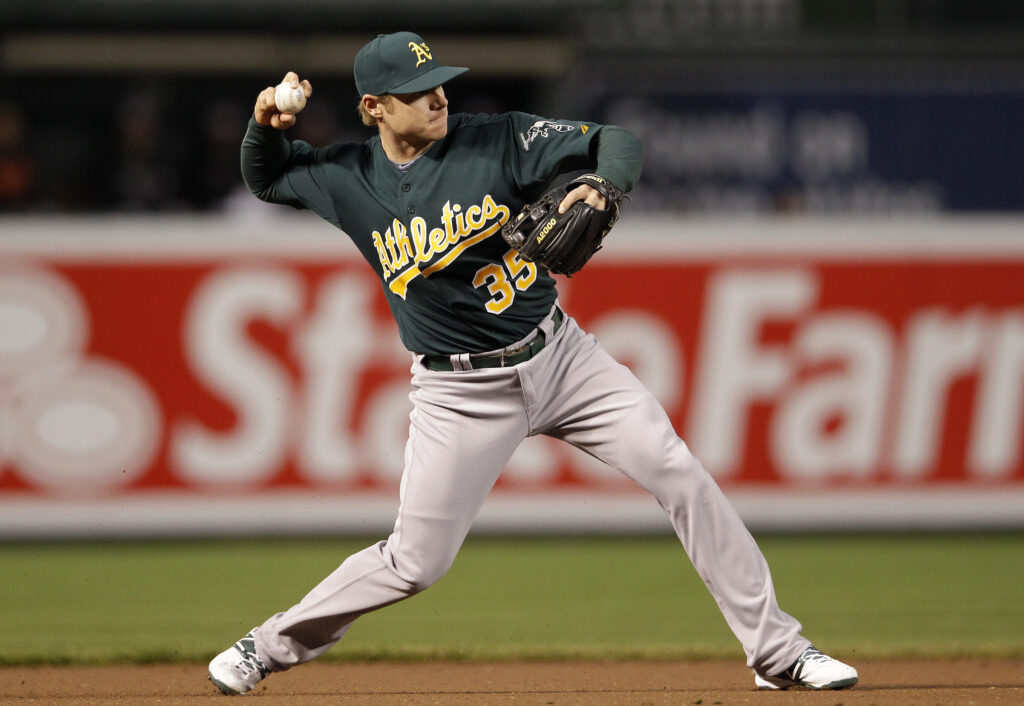
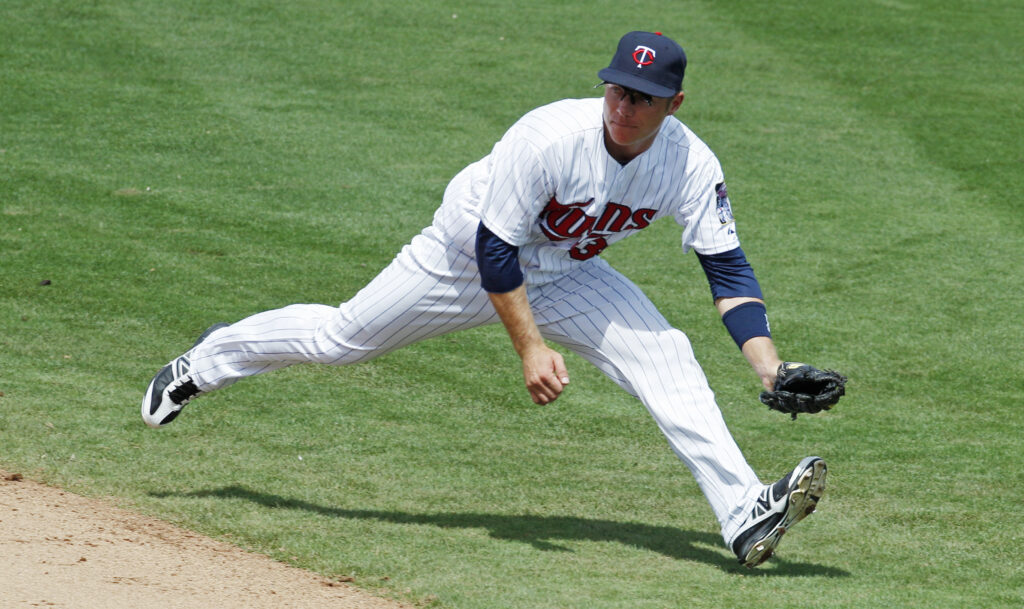
The 40-year-old Perth native played for ten seasons between the Perth Heat and Melbourne Aces and parts of three seasons in Major League Baseball (MLB) with the Minnesota Twins and Oakland Athletics from 2010-12. He also spent more than a decade on the Australian National Baseball Team.

During his time in the big leagues, he manned third, second, and even first base on occasions.

Luke had a reputation as a safe pair of hands.

Upon returning to Australia, Hughes noticed a natural synergy between cricket and baseball. He felt he had something to give back to the sports as well.

“There’s a lot of translation from baseball to cricket,” he says. “Naturally for me being a cricket lover I’ve always been interested in the cross-sporting implementation of how to field.”

An aggressor at the plate, Hughes memorably homered in his first MLB at bat vs. future Hall of Famer Max Scherzer.

As Hughes discusses baseball, it’s impossible not to feel the passion he holds for his defensive craft. His talk of fielding technique is as elaborate as it is insightful.

With pedigree and purpose, Hughes joined the Western Australia Cricket Association (WACA) from 2017-18 to work with Perth Scorchers coach, Justin Langer, and Western Australia players on fielding and throwing as well as batting.

“That was really good fun,” he says.

During his second year with the WACA from 2022-23, he and D’Arcy Short became acquainted. It was welcome help for Short who had been going through trying times at the crease.

“We were doing some stuff to find his groove again because he had somewhat lost that power stroke, which set the T20 world on fire when he first started playing,” says Hughes.

Hughes knew he had someone to work with in Short. Cricketers who have prior experience with baseball clearly stand out. “They’re just so much different to the other guys. You can see the difference with their fielding techniques straight away.”

A winner of five Claxton Shields, Hughes has carried that winning mentality over to Australian cricket (AP Photo/Patrick Semansky)

At the crease, Hughes and Short worked on different shots, Short using a cricket and baseball bat to try and regain his technique. They focused on range hitting: trying to hit the ball as far as possible into the outfield, similar to baseball batting practice. “You’re hitting the ball to see where it goes and getting a feel of when you hit it that distance and just taking confidence out of that,” Short says.

This training came at a time when baseball-influenced power strokes were becoming increasingly common in T20. Today, Hughes says this approach is being taught at a younger age. “When [T20] first started, the older guys were still playing conventional cricket shots. The guys that have been coming through the system, these guys are coming out and actually belting the ball all around.”

A Wide Open Field


Luke Hughes didn’t pioneer the overlap between baseball and cricket, but he’s aiming to take it to the next level.

One of the first major exchanges between baseball and cricket in Australia came through an American named Mike Young.

Young moved to Australia in 1981 as an animated baseball coach where he led the Queensland Rams to a Claxton Shield before managing the Australian baseball team at the 1988 Seoul Olympics.

He also coached the national squad to a famous victory at the 1999 Intercontinental Cup in Sydney.

Young introduced the idea of an Australian Baseball Academy that coincided with an uptick in Australians signed by MLB. Twice, in 1997 and 1999, he was named the International Baseball Association Coach of the Year.

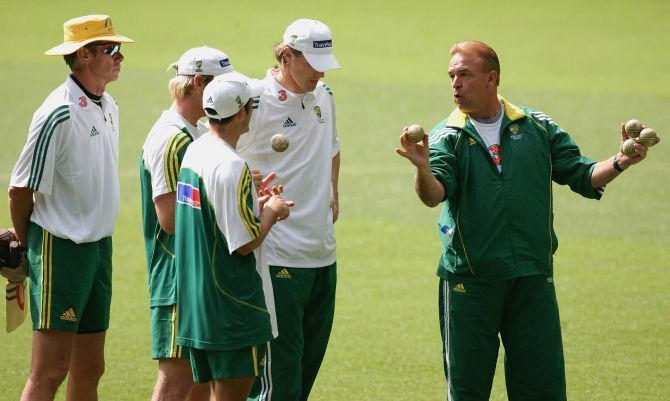
By 2000, Australia cricket coach John Buchanan had noticed Young’s ability to develop talent and made him an intriguing offer: to help the national side as the first fielding coach in modern memory.

“He was the one that really changed the way the Australian cricket team went about fielding,” says Hughes.

Young helped to raise Australian fielding and superstars like Ricky Ponting to new heights.

For most of the 2000s, Young transformed Australia’s fielding abilities as the team marched to World Cup wins in 2003 and 2007 and multiple Ashes series romps.

His approach worked because as a hands-on coach, he emphasized effort and intensity to instill more aggressive fielding. Young also brought a fresh perspective to hand-eye ball skills borrowed from baseball. He could explain cricket in novel ways and propose ideas that opened new pathways to innovative tactics and better techniques.

This meant prioritizing sound throwing mechanics, anticipating the pace and location of batted balls, and first step reactions. In time, Young brought in baseball gloves to make playing catch easier with the hard cricket ball. “He actually talked about footwork and the throwing and added in a lot of different aspects,” notes Hughes.

That’s when Hughes feels cricket fielding for team Australia became elite. They had players like Ricky Ponting, one of the best fielders the sport has known. The international community soon took notice. Today, many professional teams utilize fielding coaches.

Throwing From The Feet Up


Hughes counts himself a beneficiary of Young’s pioneering influence.

When Hughes first joined the WACA, he had similar messages to share.

“I was trying to change the mentality,” he says.

He noticed teams at the state association level bringing in baseball pitchers to discuss throwing. But the cricketers weren’t pitchers – they were essentially position players, which requires an altogether different skillset around fielding, footwork, and throwing on the move.

Hughes began a grass-roots effort to alter the mindset of local clubs before going deeper with the WACA. He identified specific areas for improvement. For instance, when fielders approached the ball diagonally or side-on instead of square to the ball, he saw how that left them fielding deep off one foot. As a result, by the time they replaced their feet and pivoted sideways, their mechanics were out of whack, their arms already behind them.

“They don’t actually use any of their weight transfer through their body to be able to throw harder,” Hughes observes. So, players had difficulty throwing accurately because their bodies weren’t in strong, stable positions.

In baseball, he notes that fielders are more conscientious about fielding with their feet out in front and at a bit of an angle. They quickly shift their feet to the target, enabling a firm and accurate throw.

In his second stint with the WACA, one of the things Hughes stressed was everyday footwork. He wanted players to get a better feel for their feet and the rhythm of flowing through the motions of fielding and throwing before they even did fielding drills.

As Hughes broke the mechanics down for players, results came quick. “They were like holy [shoot], my arm actually feels stronger.” Players were finally giving themselves a chance to get in the right throwing position. The upshot? “That essentially saves runs, which essentially helps you win,” says Hughes.

Hughes is helping to reimagine the long-neglected art of cricket fielding. (AP Photo/Charles Krupa)

This past summer demonstrated the importance of fielding in international cricket. When Australia faced Pakistan in test cricket, Pakistan dropped a number of catches.

According to Hughes, “if they caught 50% of the ones they dropped, the whole series would’ve been different.”

“There’s a big reason why the Perth Scorchers have won so many [BBL] championships. Because they have probably three or four elite fielders and they don’t have any below average fielders,” he says.

Other cricket teams will commonly hide below average defenders, and hope the ball isn’t hit their way. But weak spots are eventually revealed.

“That’s the biggest gap I see within the sport,” Hughes says.

Hughes used to attend BBL games and analyze missed fielding opportunities. One of the questions he presented to the WACA was ‘how many runs do you think an elite fielder will save in a T20 game?’ Hughes figures this could be 10 or more runs a game.

“Three elite fielders could be saving 30 runs per game, by diving, or people not running on their arms, or they catch the ball,” he says. In T20 matches where chases often come down to final overs, each run is precious.

Communicating that opportunity to clubs is an ongoing challenge. He finds that old-school mentalities persist.

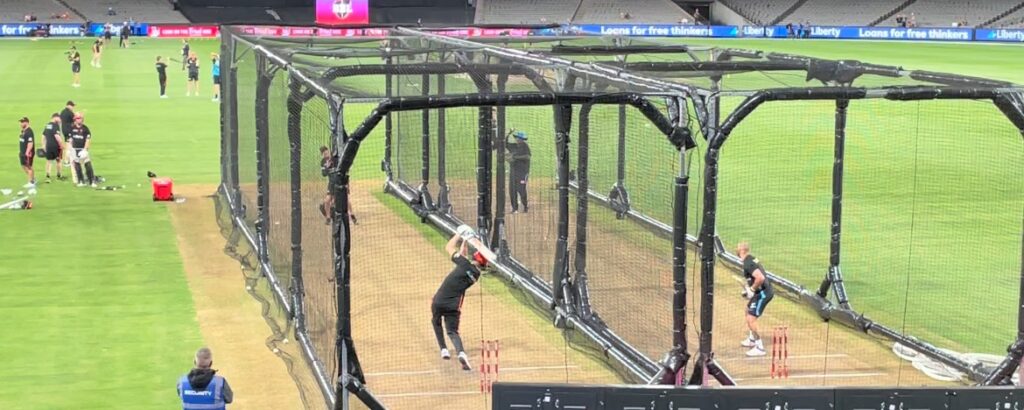
At trainings, players will bowl and bat and maybe have a quick throw at the end. Coaches will float in and out to help with fielding, but there isn’t a concerted, prolonged push.

“They understand it and they know they need to do it, but no state body actually wants to commit the funds to change it or put someone on full-time,” Hughes notes.

This highlights a void compared with professional baseball where teams have infield and outfield instructors, base running coaches, and hitting and pitching coaches.

Hughes has discussed the importance of training players for fielding with former Australia baseball manager, John Deeble, who worked with Cricket Australia and the Indian Premier League (IPL), as well as with former ABL and MLB player Brad Harman, who has worked with cricketers in the Melbourne area.

“We’re all on the same page, but no real franchises are willing to put the money out there to hire a full-time person,” says Hughes.

“No one teaches [fielding] in cricket. No one actually says this is how you field a ball.”

 Building A Partnership


That’s all likely to change.

The past decade of cricket has seen transformational changes – many with ties to baseball – and more are on the horizon.

Cricket has an impressive track record of including former baseballers, notes Dr. Jason Doyle, Sr. Lecturer of Sport Management at Griffith University. “A number of Australian national team cricketers – including former Test captains – have stated they benefited from playing both cricket and baseball growing up.”

Professional baseballers, too, have given back to cricket. Says Doyle, “[Australia manager and former MLB all-star Dave] Nilsson, perhaps Australia’s most famous baseball export, was credited with sharing tactical insights on how to identify batting strengths and weaknesses and assisting bowlers in learning new types of delivery.”

Remnants of baseball are on display through ‘Bazball’: an aggressive new approach to batting popularized by England’s Kiwi coach, Brendon ‘Baz’ McCullum, which upended the cricket world a couple years ago. The strategy encourages a free-flowing, entertaining, and high-risk flair where players attack each ball and clearly set out to seize the match.

Nilsson has brought coaching chops back to Australian cricket and the national baseball team. Photo: Scott Powick.

In recent years, rules have been implemented in both sports to limit length of play and where fielders may stand to produce fewer delays and more offense, says Associate Professor of Sport Management at Brock University, Dr. Michael Naraine.

Naraine, who grew up playing baseball in Canada and later consulted with the BBL, points out that just as Minor League Baseball (MiLB) represents a more experimental environment compared to Major League Baseball’s (MLB) traditional format, the BBL similarly offers a more casual alternative to test cricket’s old-school approach. Naturally, Australian cricketers have looked across the Pacific to see what baseball is up to.

Around the time that the BBL launched, Cricket Australia needed innovative ideas and new revenue streams. The BBL wanted to make the game more accessible and engaging to younger and female crowds. For inspiration, they turned to sports marketers who could enliven the game atmosphere.

A man named Night Train – yes, Night Train, – from the famed Veeck family that controversially transformed fan experiences for the Chicago White Sox in the 1970s, was brought in by the BBL to help.

“They hired him because he had this experience with MLB and MiLB and he brought that back to Cricket Australia,” says Naraine. “That was really an important milestone for the BBL.”

Teams began applying new features and infused more personality into the game.

“They brought in fireworks, zinger lights on the wicket bales, family festival atmospheres, bouncy castles, face paint, and a host of other new additions and brands such as Nickelodeon and Marvel to the sport environment.”

As Naraine suggests, the BBL began to see that “Minor league baseball in America is the way to test new product.”

Cricket’s Moneyball Moment

Baseball and cricket tell a story of continuous cross-pollination. It’s a matter of time before new exchanges occur. Meanwhile, the two sports are at a crossroads with the future of their growth at stake.

The good news is that baseball and cricket can help each other grow. Both can co-exist and thrive.

For one, Naraine feels that more youth would benefit from playing both sports. It would allow them to adapt their bodies and incorporate new abilities as they physically mature. By staying in a single context athletic environment, they miss out on that opportunity.

“Kids are starting to hyper-specialize earlier on, which is not the best thing for their development,” he says.

He cites Mason Cox from Collingwood of Australian Rules football as a shining example: a former American college basketball player who was able to translate his skills into a new sport at an elite level.

The moment is timely. In 2028, T20 will be a part of the Los Angeles Olympics. It will then be a feature event at the 2032 Olympics in Brisbane. Naraine sees 2032 as a massive opportunity for Australia.

“They’ve got an eight-year window before they have home field advantage at the Gabba [Brisbane Cricket Ground],” he says. This means that Australia has a generation of cricketers it can focus on now, training them with baseball skills to round out their physiology in time for the Olympic games when the world will be watching.

Competitive advantage is up for grabs, and incremental gains can mean the difference between victory and defeat. “It is kind of a Moneyball aspect. We need to tinker around the edges and if we can get just a slight competitive advantage, we can get that much better,” says Naraine. Doing so will require thought leadership, design thinking, and innovation.

“It’s a high-risk, high-reward situation,” he admits.

Naraine sees parallels with several sports that Australia can draw from as they chart a course to improve cricket skills. “We’ve seen that with coaching in [American] football in the US, we’ve seen it in soccer in Europe, we’ve seen it in other sports,” he says.

And with the Australian Baseball League (ABL) next door, cricket has turnkey support. “That is a huge competitive advantage for Australia. There is an ecosystem of baseball in Australia. If cricket can leverage that to make the cricketers better, why wouldn’t you want to do that?”

Luke Hughes offers a similar perspective, noting baseball’s own ‘Moneyball’ era. Considering how competitive entertainment and sports are today, that makes added eyeballs and registrations all the more imperative if leagues are to survive. “You’d think that any sport would look for any advantage they can get,” he says.

He mentions Major League Cricket (MLC) and Baseball United, two sporting bodies that have sprung up in the last couple years in traditionally baseball (USA) and cricket (Middle East and South Asia) territories, respectively.

However, Australia is the only country with established professional leagues in both baseball and cricket – not yet counting the novel leagues above. No other country has such an inherent advantage to achieve this cross-sport success.

What’s Next, Plus Some Predictions


Luke Hughes has every intention to continue coaching cricket.

He says he just received a message from two state players on the under-19 Western Australia women’s team who asked for help with their fielding.

“It’s a very similar thing to the girls’ program,” he says. “They just want information. They don’t get enough coaching and they just lapped up every little thing that I’ve discussed with them.”

D’Arcy Short, meanwhile, continues to follow bits and pieces of baseball in America. The time difference means early morning hours which sometimes makes it inconvenient to watch. One of his goals is to see a MLB game in the flesh.

“That’s probably one of those things that’s on my bucket list: to get over to America and watch it live,” he says.

In the meantime, ever a student of the game, Short will have to settle for practicing baseball. His next plans? “I’m actually trying to go down to a Perth Heat training session and have a swing of a baseball bat.”

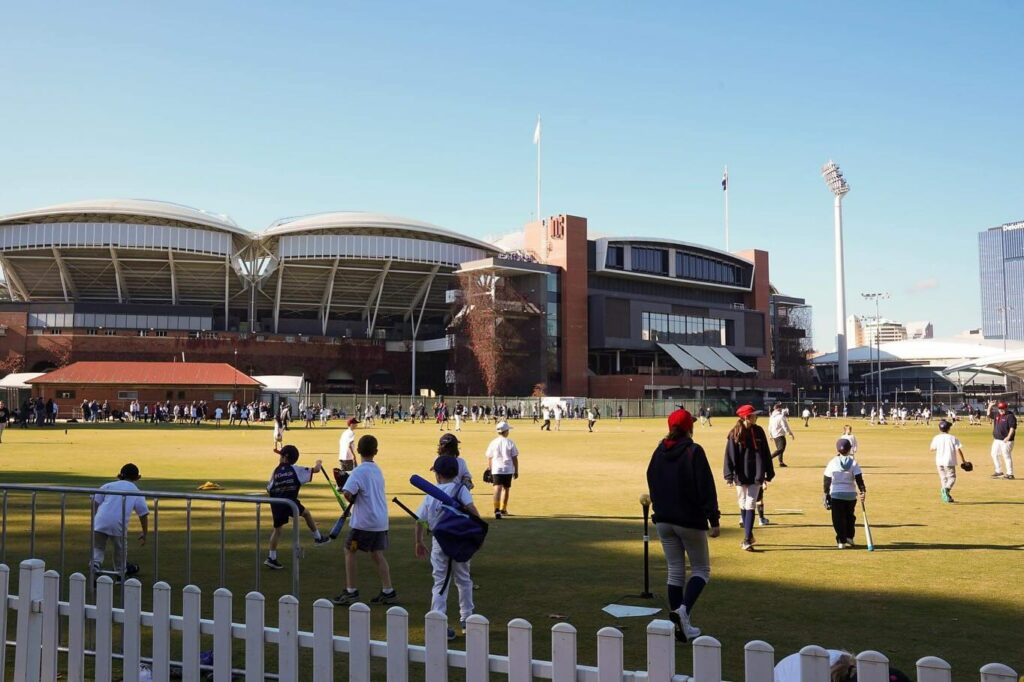
Over 100 kids in Adelaide play tee-ball outside the iconic Adelaide Oval in South Australia. Is more cross-pollination between sports on the cards? Photo: Hugh Whittle.

The partnership between baseball and cricket reflects Australia’s resourcefulness, creativity, and athletic spirit. Going forward, what could baseball take away from cricket and vice versa? A few predictions and watch-outs:

  • Designated batsmen. Like the designated hitter (DH) in baseball, designated batsmen in cricket would add offensive skill and excitement to matches while bowlers (save for all-rounders) can focus on their craft. At the time MLB was considering adding the DH to the National League, the same Max Scherzer that Luke Hughes homered off said, “Who would people rather see, a real hitter hitting home runs or a pitcher swinging a wet newspaper?” Players get to do what they do best while fan engagement is maximized.
  • Better cricket fielding stats. History is light on cricket fielding metrics. In the spirit of the ‘Moneyball’ era and the age of mass analytics, cricket could use greater data in areas like fielder spacing, ground covered, runs saved, and throwing efficiency and speed. Teams could strategize accordingly and prepare matchups based on their strengths and the particular opposing team to squeeze the most out of their defensive abilities.
  • More skills competitions. This July, MLB instituted a Futures Skills Showcase where top prospects competed in three batting skills challenges: hitting the ball to infield and outfield targets, ‘calling their shot’ by choosing which part of the field they’ll hit the ball to, and swinging for the fences where bonuses are awarded for consecutive and opposite field homeruns. Similarly, the Korea Baseball Organization (KBO) has showcased “Bunt King and Perfect Pitcher” competitions during all-star festivities. Both baseball and cricket can run with these ideas, adding challenges around fielding ability, throwing accuracy, and batting prowess for fans to lap up and the next generation to study up.
  • Baseball powerplays. In shorter cricket formats, ‘powerplays’ are used where defending teams are restricted in where they can place fielders. This opens up the ground to more runs and action. “I think Major League Baseball will eventually get to that place too,” says Naraine. Imagine in the 6th inning of every baseball game taking out one of your outfielders or shifting where they can stand. Advantage to batters, excitement for fans, win-win for MLB.

MLB is currently looking around the world for inspiration, says Naraine, just as cricket will need to do to continue attracting fans. Cricket will likely look to baseball as it has done before.

The appetite for more baseball collaboration is encouraging. And there’s no telling where it may come from next. As South Australia MP, Jayne Stinson, shared while congratulating the Adelaide Giants on their 2022-23 Claxton Shield, “although there is much that we might prefer we did not have from American culture in Australian culture, baseball is certainly not one of those.”

15 September 2024 By Eric Balnar

By Eric Balnar

- Team Australia The Perfect Game

U18 NATIONAL SQUAD SCHEDULE, ROSTER, INFORMATION | Details on Australia's U18 trip to Perfect Game World Series revealed

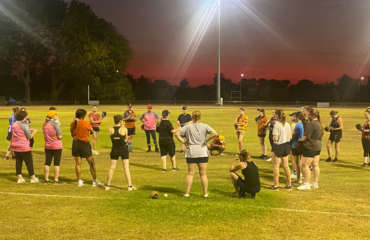
Australia’s U18 national squad is off to the United States in October to compete in a prestigious baseball tournament in front of professional scouts and college recruiters.

42 Aussie players will play in tournaments vs the best American prospects through the Perfect Game World Wood Bat Championships.

Tag Cloud:
U18 National Squad

15 September 2024 By Eric Balnar

By Eric Balnar

Baseball5

Australia announces roster for 2024 Baseball5 World Cup in Hong Kong

Australia has named its eight-player team for the Baseball5 World Cup in Hong Kong from October 7-12.

Tag Cloud:
Baseball5 World Cup

15 September 2024 By Staff Writers

By Staff Writers

Women's Baseball

How the new Darwin Women's Baseball League can make a difference in the NT

by Kristin Sims

It’s an exciting time for baseball in the Northern Territory. Junior participation is growing at an incredible rate and women’s numbers are growing.

The Emeralds came to Alice Springs in April, and that spurned the organisation to create the Darwin Women’s League in hopes of growing the game further and getting women on the diamond.

The Emeralds’ visit was led by the direction of Baseball NT’s Participation and Pathways Kai Meuronen, who is now helping kickstart the Darwin Women’s League.

So far it has garnered a high level of interest from players and sponsors alike, highlighting what the opportunity to play Baseball is bringing to the local community.

One of these people keen to be involved is Australian Baseball pioneer Narelle Gosstray.

“Kai had some strong coaching connections with female players in the ACT from his time there and worked with Baseball Australia to get the Emeralds here, he is truly supportive of developing the women’s game,” said Gosstray.

Gosstray was part of the inaugural Bronze medal winning Australian team in international competition in 2001 and has been involved in the game at all levels in Australia and overseas since 2005.

Now a Northern Territory local, Gosstray is revelling at the chance to not only get back on the diamond but to help foster the growth of the sport she loves in a new environment.

“I love that people are interested in the game I love, and for the young girls they get to play a game that has not traditionally been available for women.” she said.

For Gosstray a chance encounter with previous Baseball Northern Territory General Manager Gemma Scales on a work trip, saw them reminisce about baseball and how they both missed being out on the diamond.

It was here that the original idea for the women’s league came about.

Not wasting any time, Gosstray floated the idea of the league with Kai Meuronen and current Baseball NT GM Rob Gower.

“Rob’s (Gower) approach has been all about building the game as a father of two girls he has a strong gender equity lens and after the interest the Emeralds gained in Alice Springs for boys and girls it fostered a bigger interest in the game, ” Gosstray said.

“I mentioned the idea of the women’s league to Rob and Kai and they suggested that we try a short season to garner interest, with the excitement there is about the opportunity, it seems like we have nailed the timing.”

With the combined knowledge of Gosstray, Meurnonen and Gower, Baseball NT are creating the league initially with four teams that will have players drafted into them to ensure that the skills are balanced across the teams.

To begin with the most important piece is to ensure that those participating are well supported in learning a new skill but also have fun.

It’s a model which has success. Baseball South Australia rolled out a women’s league with just four teams in a similar format in 2016. Now, there are 33 women’s teams and South Australia is a regular medal contender at women’s nationals.

“It gives girls and women a chance to try something new in a safe and non-judgemental environment, we will see people who have never played before develop skills and have fun along the way and make new friends.” said Gosstray.

Gosstray has always seen sport as a way to bring the community together and is aiming for the Darwin league to be no different, with a real hope that the league will give women the chance to try something different and build confidence and connection on the diamond.

“Developing the women’s game is a positive community development opportunity to foster inclusivity and diversity, and we are hearing from women about their excitement to play a game that have never had the opportunity to play before. We have structured games to be on the same night and at the same venue to encourage connection before and after games.” she said.

Getting sponsors Lord Taverners and Santos on board plus support from the Northern Territory government has also assisted with keeping fees and getting some equipment for new players. Both things that are vital to getting people into the game.

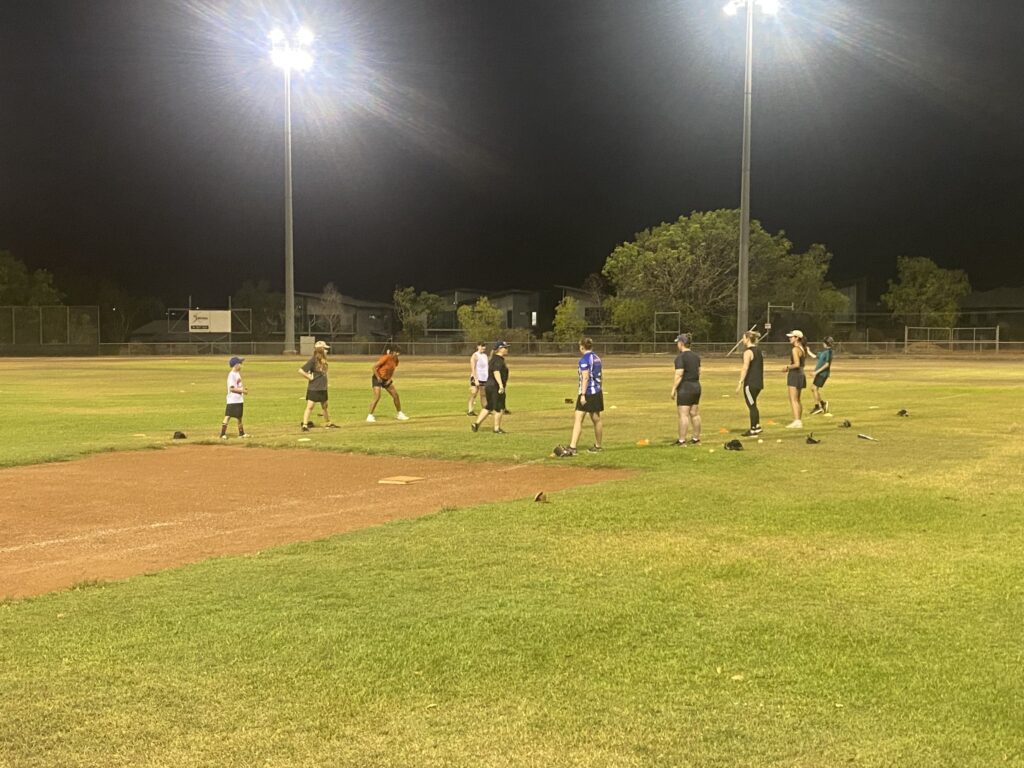
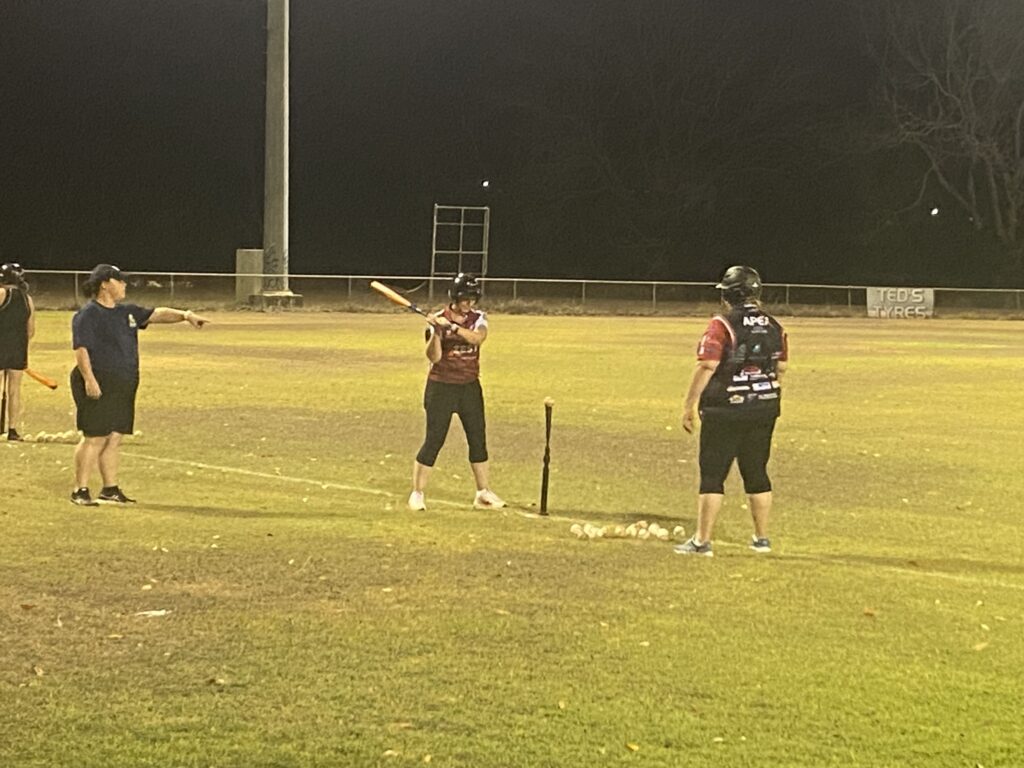
Although nerves were high before the first session on Wednesday night, the evening was a huge success with 33 players attending, with most trying their hand out at baseball for the first time.

Apart from wanting to get back to baseball again herself, Gosstray was most excited about seeing the new players mark their first big plays.

“I’m looking forward to seeing all these girls and women get out on the field and give it a go, I’ve been playing cricket the last three years and seeing the joy on the faces of new people who take their first catch or hit their first 4, knowing II will see similar outcomes with home runs or striking out a batter absolutely makes me burst with energy!.”

There are still two more learning sessions before the season starts, and if the first night is anything to go by, things are looking bright for women’s baseball in the Northern Territory.

Here’s how the Darwin League will work.

DARWIN WOMEN’S BASEBALL LEAGUE SCHEDULE


  • 11 September: Come n Try & Rules Clinic
  • 18 September: Come-N-Try, learn to play and training session
  • 25 September: Come-N-Try, learn to play and training session
  • 27 September: Round 1
  • 4 October: Round 2
  • 11 October: Round 3
  • 18 October: Round 4
  • 25 October: Round 5
  • 1 November: Final Round
  • 8 November: Finals – Week 1
  • 15 November: Grand Final
REGISTER FOR THE DWBL HERE
Cost:
  1. Registration Fee: $31
  2. Baseball Pants: $20 (mandatory uniform, optional purchase)
  3. Glove: $70 (optional)

If you have any questions, reach out to the Baseball NT team!

Tag Cloud:
Kristin Sims

14 September 2024 By Eric Balnar

By Eric Balnar

- Team Australia

Maguire's big day leads Australia to big win over South Africa to close out U23 World Cup

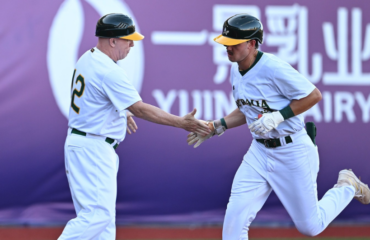
Solomon Maguire let his play do the talking in Australia’s 9-2 win over South Africa on the final day of the World Cup.

Australia’s centerfielder went 2-for-4 with a home run, four runs batted in and a diving catch.

He had enough game changing moments today to create his own highlight reel, but Maguire says the team wanted to leave the tournament with a statement.

“After we had a few tough loses in the last few days it was easy for any of us to check out and think of home time,” he says. “I was impressed by the team today and shows the fight our country has no matter the situation. That’s what gives us continuous chances at all tournaments over and over again.”
Maguire may have played the leading role but there were contributions from everywhere. All nine players in the starting nine reached base. Four pitchers combined to allow five hits.

It wasn’t easy – at least early. South Africa took an early 1-0 lead.

Maguire installed an Australian advantage with a two-out, 2-RBI single up the middle in the bottom of the second to give Australia their first lead.

Australia muscled in a six run third inning to soar ahead 9-2. Maguire punctuated the damaging frame with a two-run homer.
He left his final signature on the game – and the tournament – by making an incredible diving catch in the outfield to end the game.

Maguire was quick to credit his teammates.

“Tournament play is about trusting what we have. Our whole team is good enough to get the job done in any of the situations that were presented in front of us,” he says. “I was lucky enough that my trust led to me helping out of team when we needed it.”

Once Australia had the lead they made sure not to relinquish it. Some tidy defense and excellent work from the pitching staff closed the door.

Left-handed pitcher Conor Myles was particularly impressive. In his third appearance of the tournament, Myles tossed 3.0 innings with five strike outs and no runs.

He finishes the tournament as Australia’s pitching leader: 7.0 innings with no runs allowed.

Chris Burke and Cayden Nicoletto joined Maguire with two hits.

Australia used four pitchers in the win – Zak Elvy, Dylan Clarke, Conor Myles and Lachlan Brook.

The big win marks the end of Australia’s World Cup campaign – with a 4-4 record vs eight different countries. They will finish ninth in the World Cup, and pick up a projected 207 World Ranking Points.

You can read about the game flow below.

BOX SCORE: Stats, scores & play-by-play
U23 WORLD CUP HUB: All your Team Australia news
WBSC PAGE: Official WBSC U23 World Cup Page

PLACEMENT ROUND STANDINGS

7. Netherlands 4-1
8. Chinese Taipei 4-1
9. Australia 3-2
10. Colombia 2-3
11. South Africa 1-4
12. Great Britain 1-4

Game Recap – As It Happened


After teams traded scoreless innings, South Africa struck first in the second.

They barely had to put a ball in play. Zak Elvy walked two batters before Dylan Clarke entered in relief. A pair more of walks, and South Africa scored a run thanks to four base on balls.

Australia responded with a two-out rally in the bottom of the second.

A single to Cayden Nicoletto, walk to Jake Burns and a Ben Fierenzi hit-by-pitch loaded the bases. Solomon Maguire knocked in a pair of runs with a checked swing that deflected the ball up the middle for a 2-RBI single.

Fierenzi scored on a double steal attempt to push the score to 3-1.

South Africa pegged one back in the top of the third.

But Australia did the bulk of their day’s damage in the bottom of the third.

Australia played six runs, punctuated by a two-run Solomon Maguire, to steam ahead.

Cayden Nicoletto started the scoring by driving in a run with an RBI double that was cranked off the top of the wall. JAKE BURNS followed with an RBI single.

Australia scored on a wild pitch and passed ball to push the score to 7-2. That’s when Maguire blew it open with his two-run homer – his second long ball in as many days and fourth RBI of the afternoon.

From there, it was one for the pitchers.

Conor Myles was particularly impressive, going 3.0 innings with five strike outs and no runs. Lachlan Brook pitched a clean final inning, helped by an amazing Solomon Maguire diving catch.

FINAL SCORE: Australia 9 def South Africa 2

Tag Cloud:
2024 U23 World CupU23 Team Australia

14 September 2024 By Eric Balnar

By Eric Balnar

- Aussies Abroad

How baseball at home helped Michael Collins become one of the only Australians to coach in the Major Leagues

story by Eric Balnar, interview by Michael Ibbotson

Michael Collins has ventured to a place where few Australians have journeyed before.

No, he’s not one of the 38 Aussies who have played a Major League game, although he did have a stellar playing career. But he is one of the only Australians to hold down a full-time coaching role with a Big League club.

He even has a World Series ring to show for it.

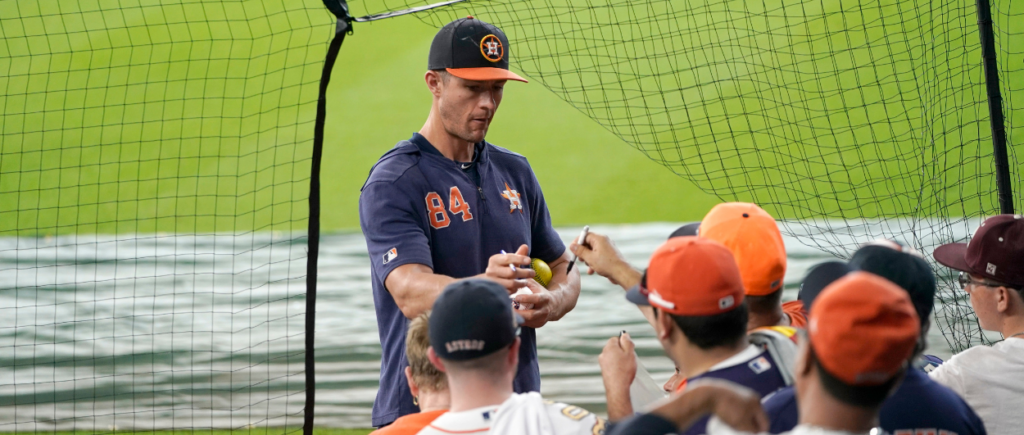
Canberra native Michael Collins is the catching coach with the Houston Astros, a position he’s held since 2019.

What exactly does a catching coach do? Most simply put, on a daily basis he is trying to help the Astros’ catchers be as prepared as possible.

Collins works with the likes of champion catchers Martin Maldonado and Yanier Dias – receivers who have helped guide the Houston Astros to six straight division titles, three World Series appearances, and two championships.

“Whether that is physical work when it comes to [the position], catching, receiving, blocking throwing, and being as ready as possible mentally with our advanced scouting reports, any little things within there they should be aware of that may come up in the game,” says the 40-year-old Aussie.

Listen to the interview on our Podcast here

Collins has found success, winning a World Series ring from the 2022 season, and has gone deep into the playoffs each year.

His route to the Major Leagues is different than many other coaches, and his history in Australia is intrinsically tied.

“It’s a slightly different path…yeah,” he says with a smile.

From player to coach

Collins was an elite Australian Baseball Player. He spent ten seasons in the minor leagues with Angels, Dodgers and Padres and boasted a career .275 average.

He reached as high as Triple-A, the level below the Major Leagues.

That success carried over to Australia when the ABL returned in 2010-11. He hit .360 in the inaugural season, one of the best all-time marks by an Australian.

In 2012, at the age of 28, Collins retired and transitioned into coaching.

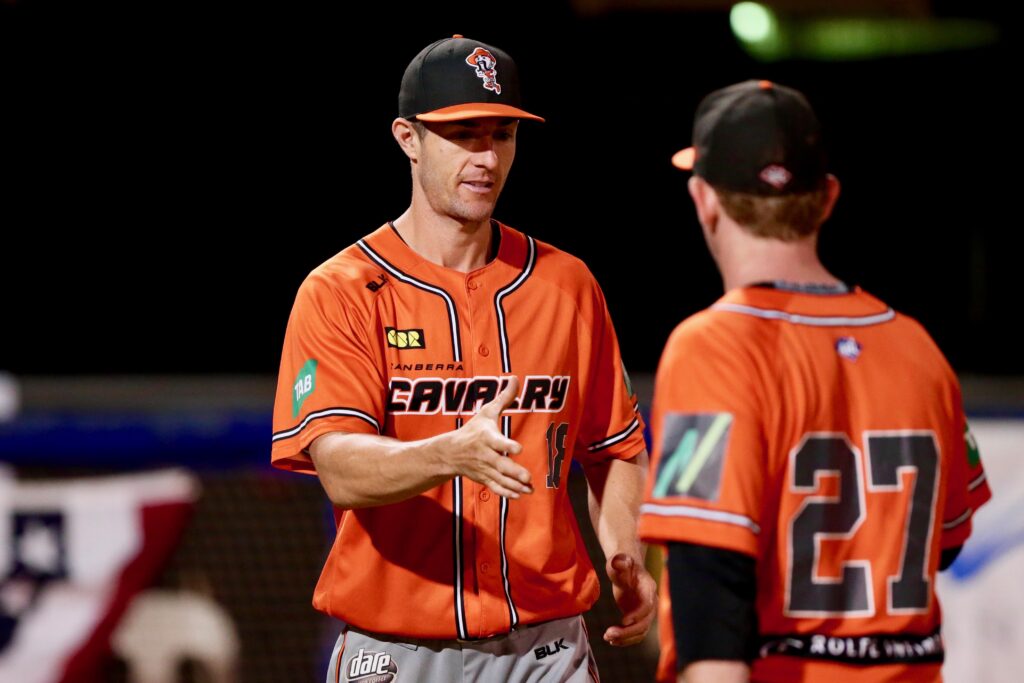
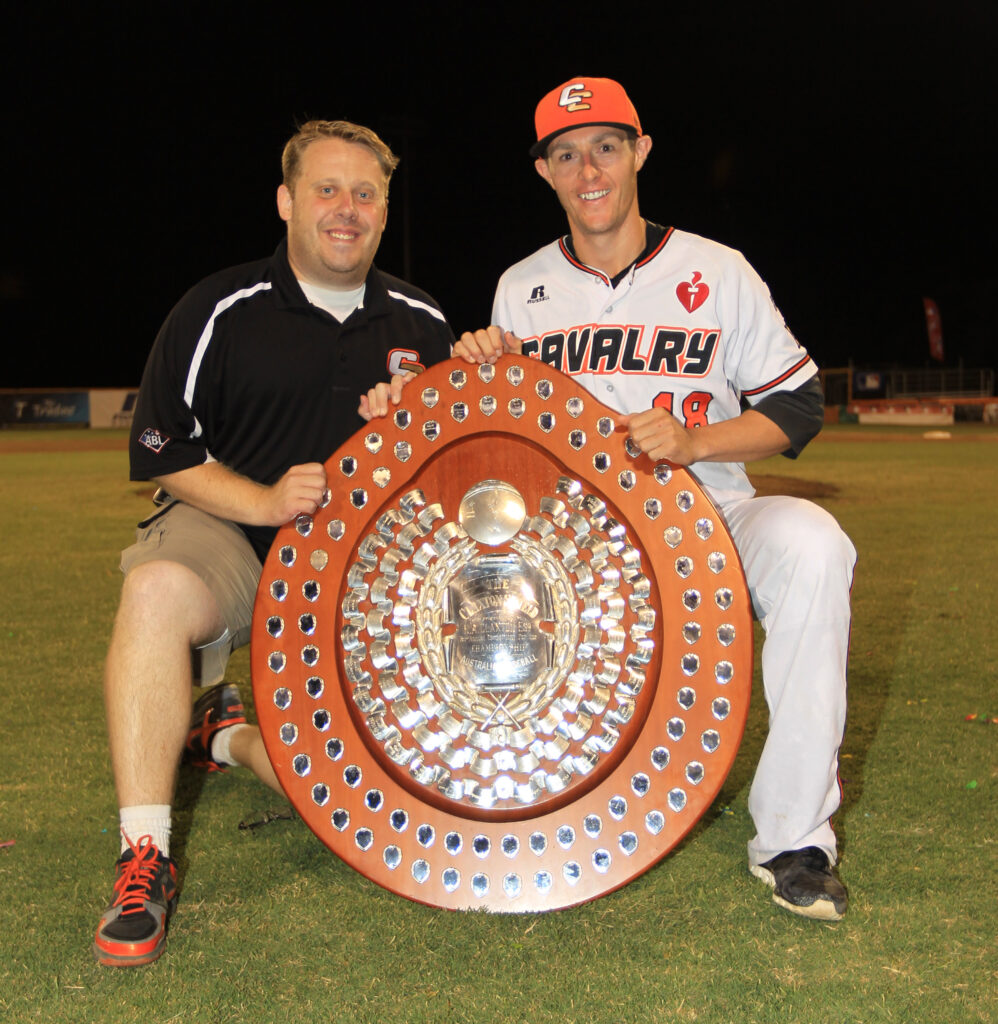
He managed the Cavalry from 2012-2018 and took the team to new heights. He guided the Cavs to their only Claxton Shield in 2013. He led Canberra to an Asia Series win later that year, the only time an Australian squad has one that prestigious title.

“One of the greatest things about managing in Canberra was kind of the experience of being able to learn from successes and failures,” he says. “I was free to manage games from however I thought and was free to learn from the positive or negatives from the game and I didn’t really have too many restrictions.”

All the while, Collins worked in the San Diego Padres organisation as a manager between 2012 and 2017, leading the Rookie Ball clubs, the Fort Wayne TinCaps and the Lake Elsinore Storm.

Just like a player, he was left to climb the ranks of minor league baseball all over again.

He says his time in Canberra really helped him develop as a coach.

“In the minor league it’s more about the development of each individual player and trying to get to the next level. In Canberra it was more about winning, obviously we want to help every player develop but on a nightly basis we are trying to win and I had a chance to personally develop from those experience,” he says.

Collins adds the experience in Australia helped him learn different ways to look at the game. The Australian Baseball League is an eclectic competition, filled with players from professional leagues across the globe, former major leaguers, and top Australian talent.

Not only do you have to manage different cultures, you have the chance to learn from them.

“That’s another great part of the Australian League – you have players from all over. You get to pick different player’s and people’s brain, different experiences people have had. Any time you can get different perspective on things hopefully you can learn from different people.”

Major League Call-Up

The big break happened in 2018.

Late in the ABL season, another year at the helm of the Cavs, Collins received a call from the Houston Astros asking if he would be their bullpen catcher for the 2018 MLB season. He would be in charge of catching the pitchers as they warm up for MLB games, and learn the ropes of how the MLB franchise did their job.

The then 33-year-old accepted a two-year contract. He lasted just one year in the job. He was promoted to a full-time role as a catching coach in 2019.

Collins says one of the biggest things about coaching is being aware of, and processing, information.

“There’s a lot of information out there so the ability to take that information, process through it, and break it down to things that are most important depending on the level and what you’re trying to prepare for,” he says. “Try to gather as much information and opinions as possible, put it all together, and put out what you think is the best combination of all that.”

Connection to Australia

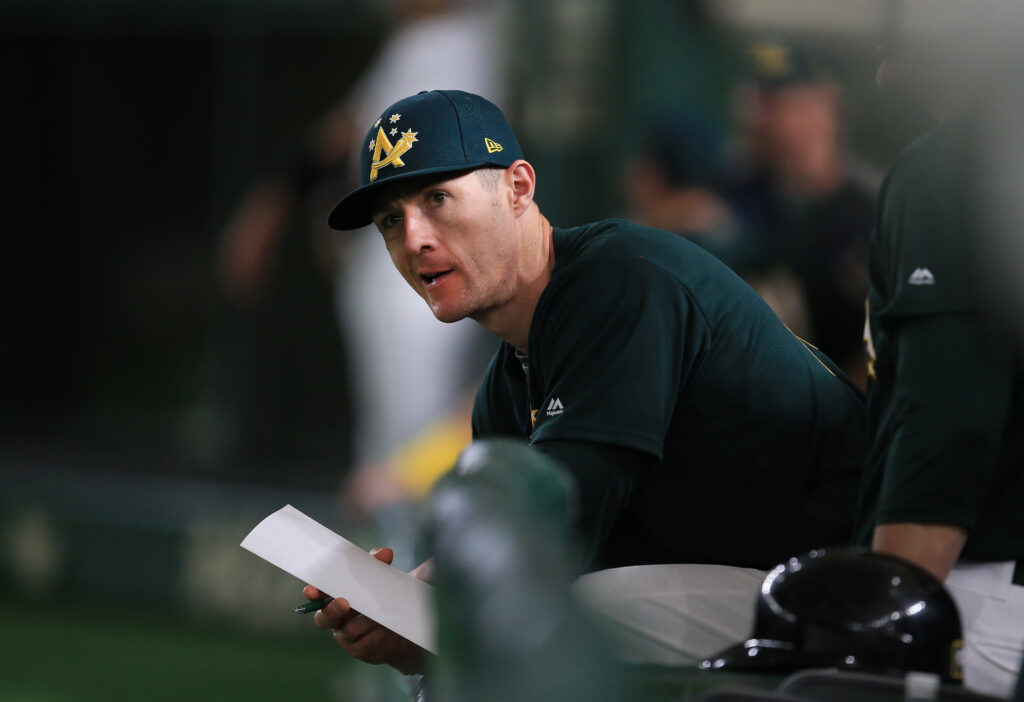
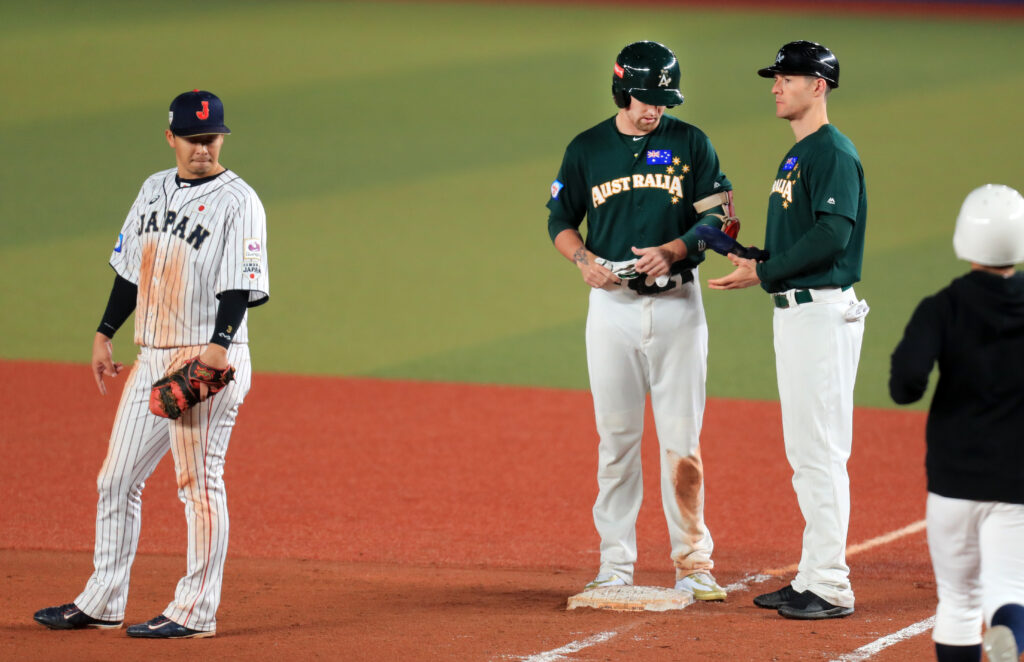
Collins still keeps in touch with the Australian Baseball community. He is part of the senior men’s coaching staff and played a key role on the World Baseball Classic team in 2023.

He’s been part of the coaching staff for three iterations of the World Baseball Classic, and represented Australia as a player in two others.

There are plenty of other Australian coaches in the minor leagues or college baseball trying to reach the level Collins is at now.

He says he is always happy to lend a hand.

“I’ve had a few Australian coaches reach out and we’ve talked and shared experiences, some positives and negatives, about coaching and the life that may lead to,” he says. “I’m more than happy to share any advise or stories especially because minor league baseball is so competive and moves so quick. There’s a lot of things to be aware of.”

Collins hopes to embark on another deep playoff run with the Astros, who are well in front in first place of the American League West.

13 September 2024 By Staff Writers

By Staff Writers

Local Baseball Women's Baseball

Townsville Baseball – where you come for the sport and stay for the people

story by Connie Rowe, photos by Jo Weiss and Nicola Caldwell.

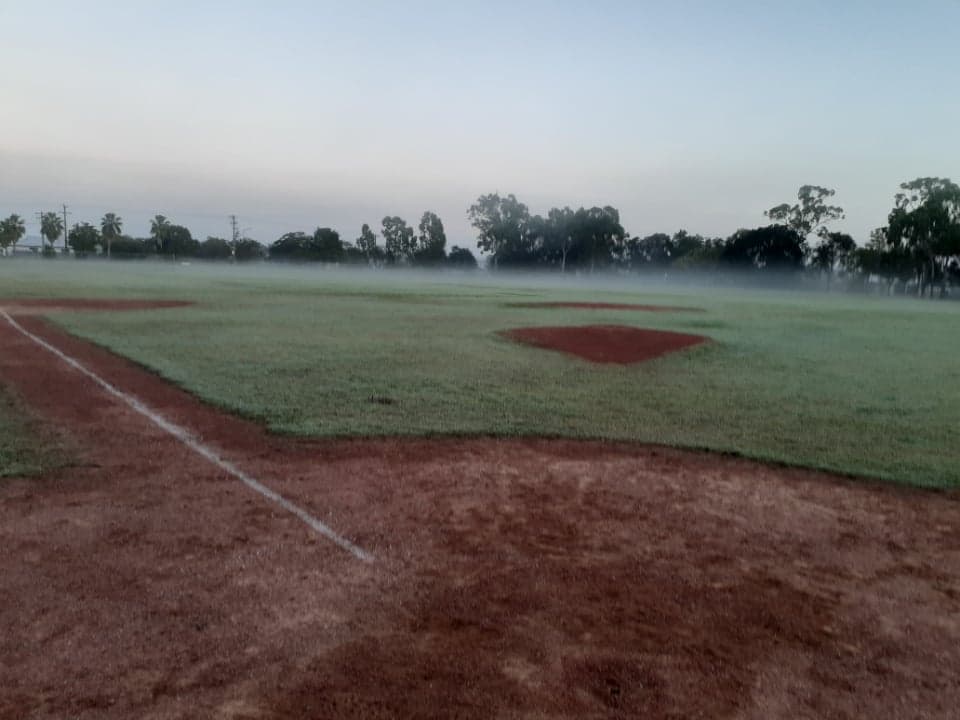
On the doorstep to the Great Barrier Reef, nestled in tropical north Queensland, there is a small community baseball field. On face value, it appears just like any other – a place to run the dogs, play with the kids or simply go for a stroll.

But Jabiru Park in Townsville is far from ordinary. In fact, it is the simplicity and rawness of what this park represents and the people it unites that makes it so extraordinary.

As most of the country prepares for the upcoming baseball season, the Townsville season is coming to a close.

As the anticipation of the upcoming Grand Final looms for what is sure to be an epic match up full of thrills, spills and firsts for the league, everywhere I look I am reminded of what drew me to this community and more importantly, why I have stayed.

Home to the Baseball Association of Townsville, or affectionately known as ‘BAT’ to the locals, Jabiru Park unites our community.

As the sole baseball fields in town, it doesn’t matter who you play for or what skill level you are at – Jabiru is home to us all.

We may come from all walks of life – military, mining, marine biology, motherhood and more – but when we step onto the diamond, we are all ball players.

From four to 84, juniors, rookies and seasoned players alike, the beauty in the ballpark is that everyone is willing to give it a go and try their best. And that is all anyone can ask or give.

For many like myself, Townsville is not our first home – nor may it be our last.

Moving to a new town can often be daunting, without a support network or an outlet to connect with. That was until, each of us discovered the Baseball Association Townsville. With open arms, the community welcomes each of us into the fold and into the family.

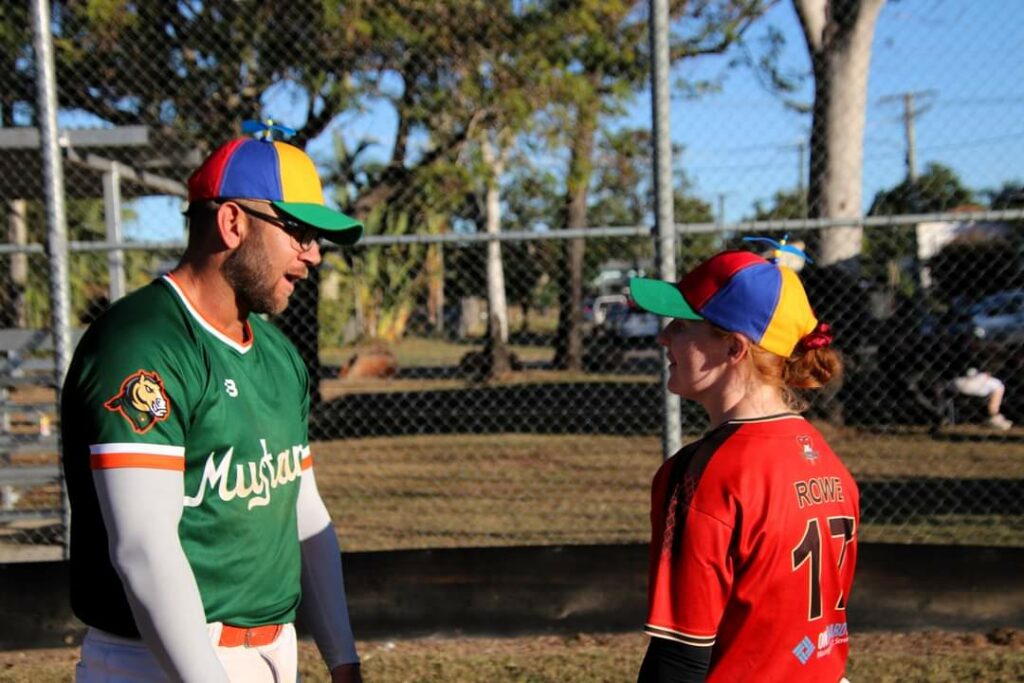
For author Connie Rowe, originally from South Australia, a home has been found in Townsville Baseball

Check the calendars, because Sundays are a write off. From 7:00am the smell of fresh paint drifts across the breeze as lines are marked and cutouts raked to welcome the first pitch.

On the field, we leave nothing to chance and push each other to the very end. In Townsville, we play until the last pitch, where teams can come back from the brink of mercy and turn scores around by 20 runs, where walk off home runs can seal minor premierships, and where women playing baseball are simply baseballers.

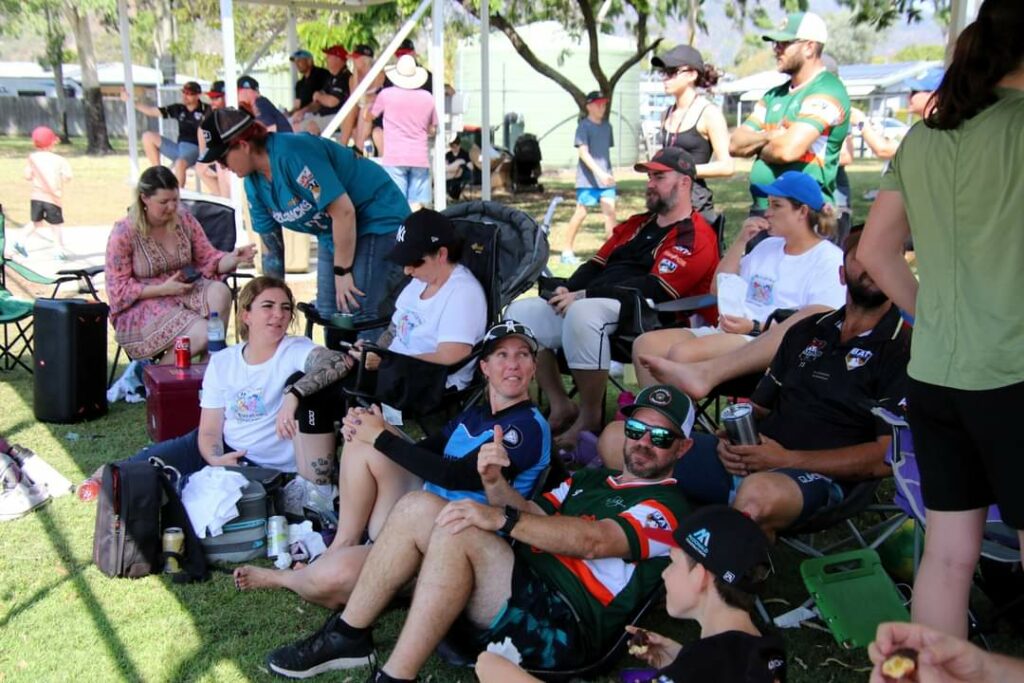
As time and game is called, the humble clubhouse is where you’ll find us; not just the team that came out top for the day, but all teams merged as one. Under the shade of the nearby ghost gums, we see in the dusk – full of laughter, banter and a few light hearted jests.

The prize for the winners of the Grand Final ahead – the intercity cups, this year with a home ground advantage.

They’ll be a battle for the winners with our neighbours around the corner in Cairns.

Week in, week out, we may be competitors but at our heart we are stronger together and it doesn’t take much to bring us together. Nothing speaks truer than when it comes to an intercity challenge.

With our nearest neighbours Cairns, a five-hour road trip just around the corner, we relish the chance to wear our city’s name on our chests with pride. We train hard, we play hard, but most of all we do what we do for each other – on and off the field.

As the sun sets over the ranges, over another season, over the final training session before the big day, I look around me to the smiles on the faces of my closest friends. Long, hard days at work seem a distant memory washed away by the simplicity that is a game of catch.

Four clubs, one association, one family.

13 September 2024 By Eric Balnar

By Eric Balnar

- Team Australia

U16 National Squad Schedule, Roster, Information | Details on Australia's U16 trip to the USA revealed

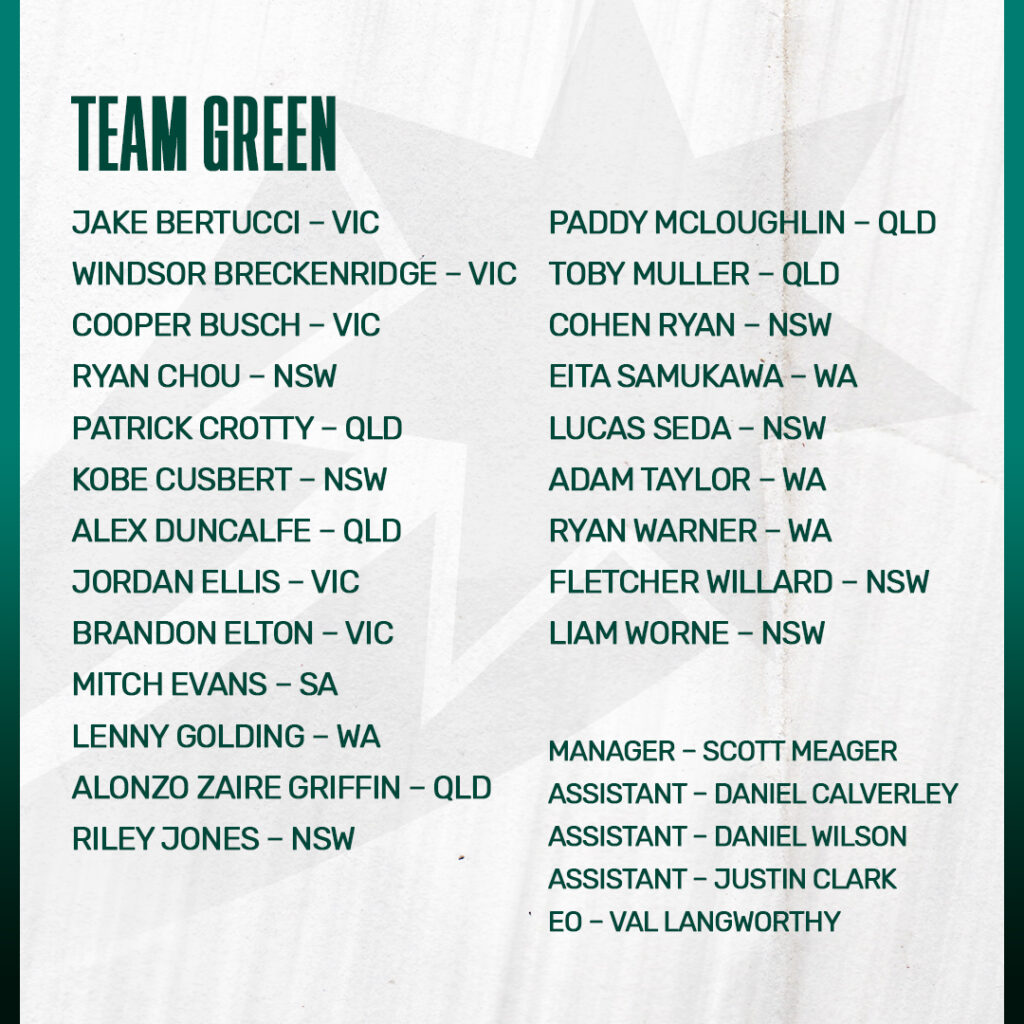
44 of Australia’s most talented junior baseball players are in to Atlanta, Georgia with the National Under-16 Junior Squad from September 7-16.

They’ll have an experience of a lifetime and a huge opportunity to learn & grow.

Their experience includes a five-game series vs the United States 15U national team, training sessions and games at U.S junior colleges & universities plus a tournament at the prestigious Under 16 Perfect Game Fall World Series vs some of the best junior baseballers in America.

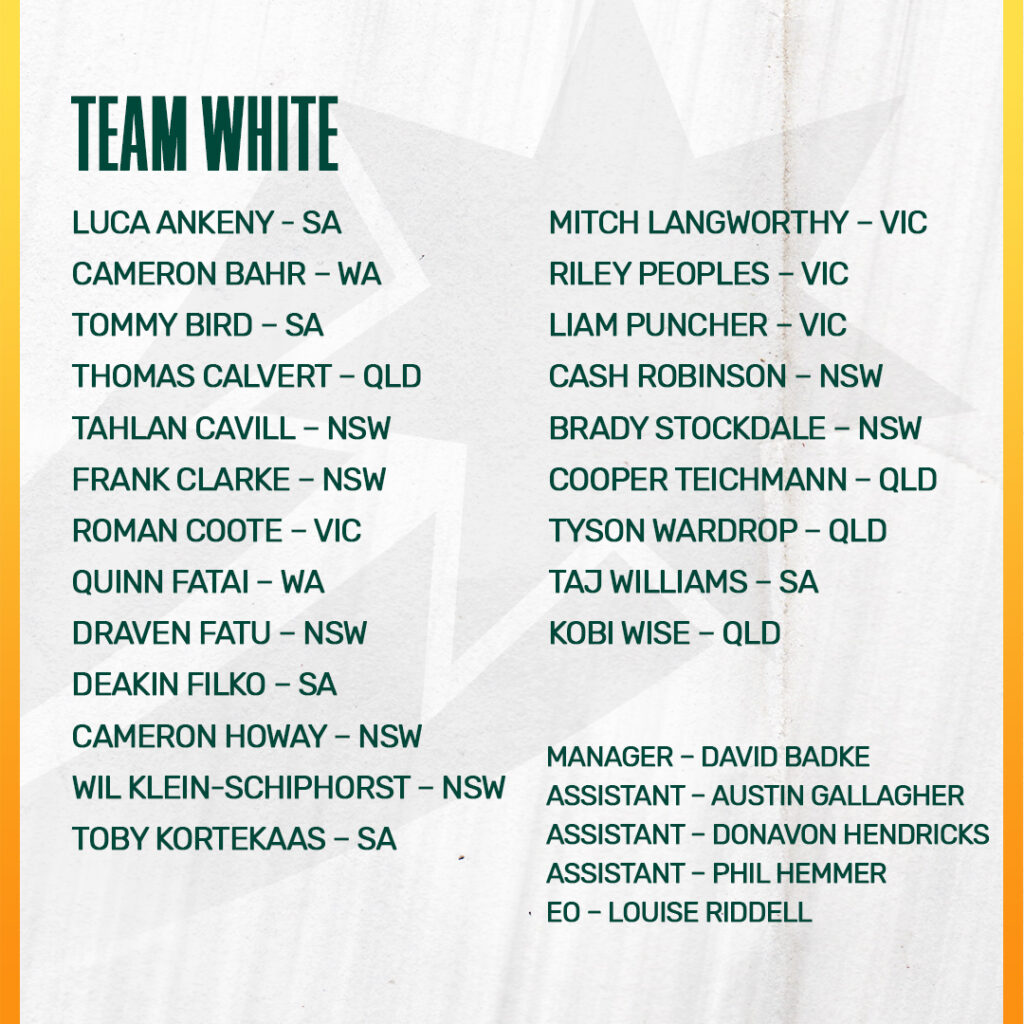
Rosters were split into two evenly balanced teams. You can find the breakdown below.

The 44 players were initially selected off their performances at Australian Youth Championships and through their work with their respective states Performance Pathway Programs.

In the five-game series, Team Green & Team White will each play two games vs the USA 15U national squad, alternating days of play. The roster for Day 5 will be be a combination of the two rosters.

You’ll be able to follow live stats on Gamechanger (search Australia White 16U or Australia Green 16U). Or, you can follow USA 15U for all the games.
The games will also be live streamed to the www.youtube.com/@USABaseball.

The rosters are below. The Perfect Game Event Hub, with broadcast links, scoring information and schedule (coming soon) can also be found below.

EVENT HUB: 2024 16U PG Fall World Series

Congrats to all named!

Make sure you follow @TeamAustraliaBaseball and @Baseball.com.au on relevant social medias for updates.

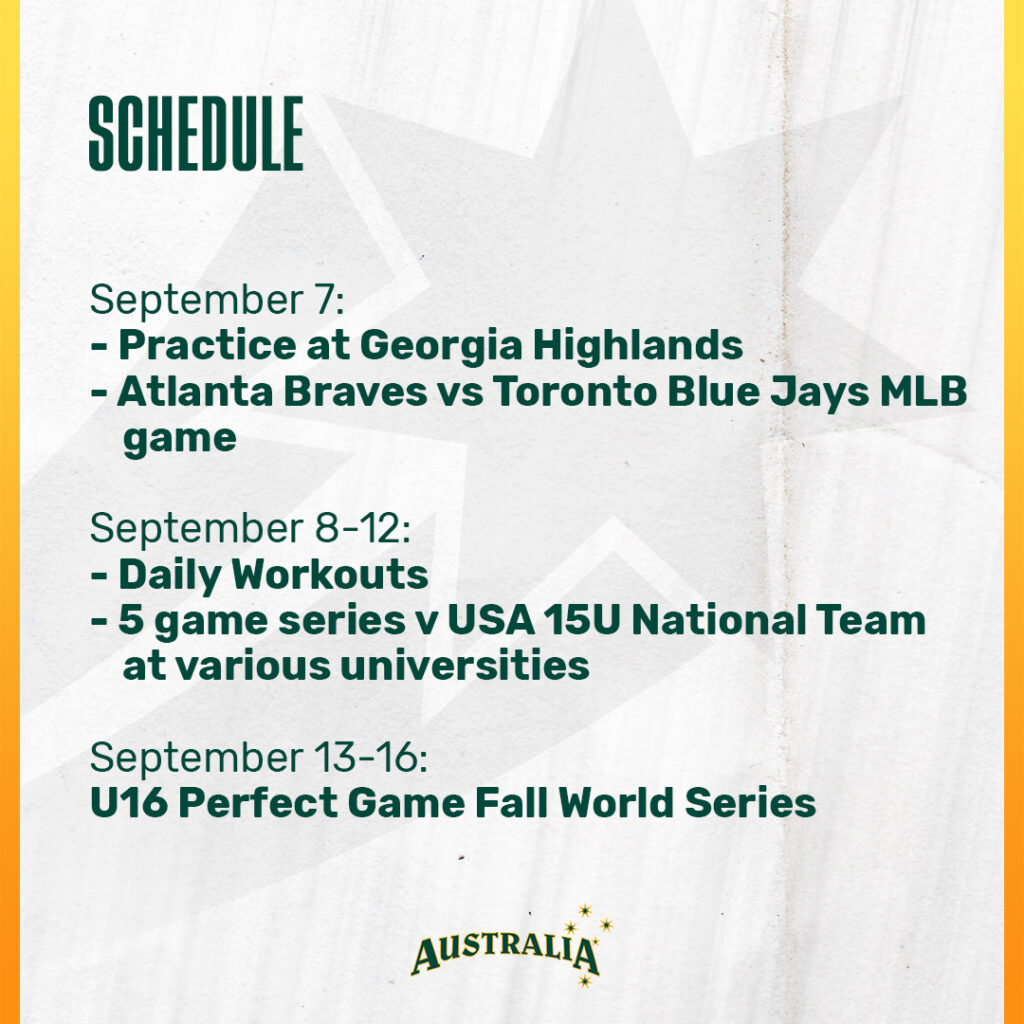
SCHEDULE / RESULTS

September 7
– Training at Georgia Highlands University
– MLB Game with Team USA 15U: Blue Jays @ Braves

September 8:
– USA 14 def Team Australia White 0 – BOX SCORE | VIDEO 
– Workouts for Team Green

September 9:
–
USA 13 def Team Australia Green 0 – BOX SCORE | VIDEO
– Workouts

September 10:
– Team Australia White U16 vs USA 15U – BOX SCORE | VIDEO 
– Workouts

September 11:
– Team Australia Green U16 vs USA 15U @ Georgia Gwinnett – BOX SCORE | VIDEO 
– Workouts

September 12:
– Team Australia Combined U16 vs USA 15U @ East Cobb Complex –  BOX SCORE | LIVE STREAM
– Workouts

September 13-16

– 2024 16U PG Fall World Series

September 14, 6:00AM AEST – Australia Green 11 def Slammers Bitzer 1
September 14, 6:00AM AEST – Soldier Spects 4 def Australia White 1

September 14, 10:00PM AEST – Canes International 8 def Australia White 2
September 15, 12:20AM AEST – Australia White 10 def East Cobb 0

September 15, 2:40AM AEST – East Cobb 14 def Australia Green 2
September 15, 5:00AM AEST – Australia Green 3 tie EBC Griggs 3

September 16 – Australia White 3 def Knights Baseball 1
September 16 – Dirtbags National 8 def Australia Green 2

FINAL RECORDS:
– Australia Green 1-2-1
– Australia White 2-2


Tag Cloud:
U16 Team Australia

13 September 2024 By Eric Balnar

By Eric Balnar

- Team Australia

Bullpen strong but Australia falls to Chinese Taipei in second U23 World Cup Placement Round game

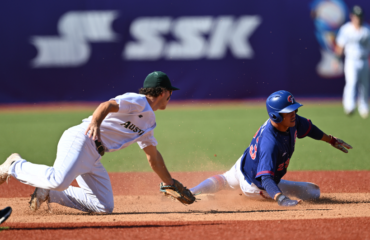
Some pretty defensive plays, excellent bullpen work, and a pair of homers wasn’t enough for Australia as Chinese Taipei took Friday’s Placement Round game.

The win drops Australia’s record to 2-2 in the Placement Round with one game to play vs South Africa. Chinese Taipei improves to 3-1.

Australia’s opponent did all their scoring in the second inning. They rattled off four runs and Australia was on the back foot early.

Zak Skinner’s third inning solo shot and Solomon Maguire’s two-run bomb in the fifth accounted for Australia’s scoring. But that’s all she wrote for Australia, who out hit the Taiwanese by 6-5.

There were numerous nice defensive plays in the field, including Maguire throwing a runner out at home and some smooth infield work by BJay Cooke & Jo Stevens.

Australia’s bullpen of Stuart Tharle, Will Sherriff, Josh Beezley, and Lachlan Brook combined to toss 5.1 relief innings, allowing three hits, no walks and and seven strikeouts.

Chinese Taipei starting pitcher Jia-Hue Zeng turned in an almighty effort. He allowed just two hits in 4.0 innings and the lone run.

It’s the second one run loss in as many days for Australia, who fell 3-2 to Netherlands yesterday.

Australia will look to finish strong with a game vs South Africa tomorrow at 12:00PM AEST>

BOX SCORE: Stats, scores & play-by-play
U23 WORLD CUP HUB: All your Team Australia news
WBSC PAGE: Official WBSC U23 World Cup Page

Other Placement Round Scores
Day 7: Colombia 12 def South Africa 3….Great Britain 2 def Netherlands 1

PLACEMENT ROUND STANDINGS

7. Netherlands 3-1
8. Chinese Taipei 3-1
9. Australia 2-2
10. Colombia 2-2
11. South Africa 1-3
12. Great Britain 1-3

Game Recap – As It Happened


Taiwan scored first.

They put up a crooked number in the second, scoring four runs. A pair of walks and a hit-by-pitch put runners on all the bases with no outs.

Australian starter Ali Tanner was able to strike out a couple batters, but Chinese Taipei scored thanks to singles from Heng-Yu Ho and Chun-Wei Liu.

Four runs crossed the plate in total. It spelled the end of the day for Tanner, with Stuart Tharle taking the reins.

Zak Skinner crunched a solo shot to start the second to try to ignite the Aussie offence, but it remained their only hit until….

Australia’s defense tried to hold them in it.

Solomon Maguire threw out a runner at home from centre to help Australia complete a double-play and escape the third without allowing a run.

In the fourth, Will Sherriff entered the game with two runners on and one-out. He worked a strike-out and a ground ball to escape with no damage.

He also pitched a clean fifth. Sherriff’s final line read: 1.2 innings, 0 hits, 1 walk and no runs.

Chinese Taipei starter Jia-Hue Zeng finished his afternoon pitching 4.0 innings allowing two hits, two walks and just the lone run.

Kuan-Ying Chen took the ball from there.

Australia wasted little time to strike back closer. Solomon Maguire crunched a two-run shot of Chen over the right-field wall to move the scoreline to 4-3.

Josh Beezley then entered the game as the fourth Australian reliever of the game. He manoeuvred through 1.1 innings, registering three strikeouts, one walk and no runs.

Lachlan Brook took the baton from there – recording two outs including a big strikeout in the seventh with a runner in scoring position.

Australia went down in order in the seventh.

Australia outhit Chinese Taipei 6-5.

FINAL SCORE: Chinese Taipei 4 – Australia 3

Tag Cloud:
2024 U23 World CupU23 Team Australia
Sponsored
  • - Aussies Abroad over 1 year ago The Alistair Tanner Story - How hard work led to a contract with the Detroit Tigers
  • Feature Stories over 1 year ago How Mackenzie Bourke became the first female clubhouse manager in Minor League Baseball history
  • Feature Stories over 1 year ago Baseball’s influence – and its untapped promise – in elevating Australian cricket
  • - Team Australia over 1 year ago U18 NATIONAL SQUAD SCHEDULE, ROSTER, INFORMATION | Details on Australia's U18 trip to Perfect Game World Series revealed
  • Baseball5 over 1 year ago Australia announces roster for 2024 Baseball5 World Cup in Hong Kong
  • Women's Baseball over 1 year ago How the new Darwin Women's Baseball League can make a difference in the NT
  • - Team Australia over 1 year ago Maguire's big day leads Australia to big win over South Africa to close out U23 World Cup
  • - Aussies Abroad over 1 year ago How baseball at home helped Michael Collins become one of the only Australians to coach in the Major Leagues
  • Local Baseball over 1 year ago Townsville Baseball – where you come for the sport and stay for the people
  • - Team Australia over 1 year ago U16 National Squad Schedule, Roster, Information | Details on Australia's U16 trip to the USA revealed
  • - Team Australia over 1 year ago Bullpen strong but Australia falls to Chinese Taipei in second U23 World Cup Placement Round game
Baseball.com.au Logo
  • Our Network
  • Baseball.com.au
  • ABL
  • Team Australia
  • Baseball Australia
  • More
  • Baseball+
  • Baseball Photos
  • Contact Us
  • Careers
  • Submit a Story Idea

Baseball.com.au is a division of The Australian Baseball Federation. The Australian Baseball Federation is the peak representative body for baseball in Australia. The Australian Baseball Federation has national and international regulatory and coordination responsibilities. In performing those functions, the Australian Baseball Federation uses the descriptor: "Baseball Australia". (0.0.0)

Subscribe to monthly newsletter
Baseball.com.au Shop
Play Baseball
© 2026 Baseball.com.au. All rights reserved. (0.0.0) Privacy Policy Terms & Conditions
Website design by Thirst Creative