17 February 2026
- Team Australia World Baseball Classic
From Dirt to Turf: Inside the near 1 Billion Japanese Yen Upgrade Preparing Australia for the World Baseball Classic
Written by Eric Balnar. Photos by Brad Rathbone and Scott Powick (Team Australia Media). Pre-tournament report thanks to Aces Sporting Clubs
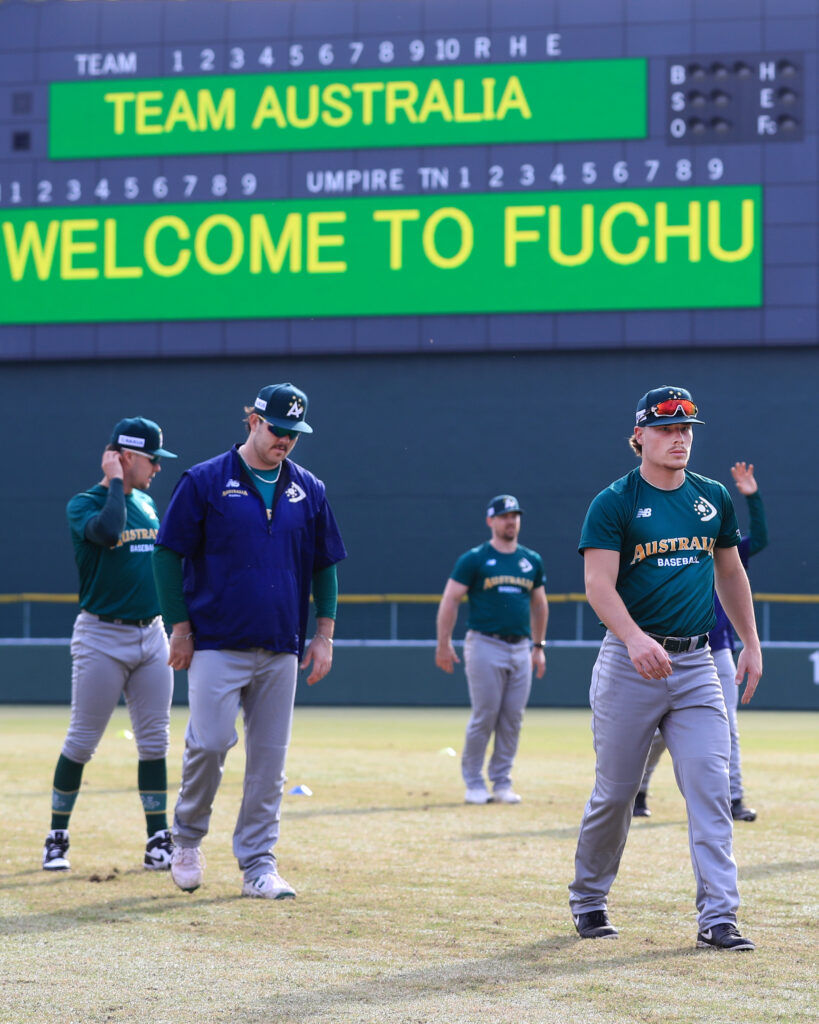
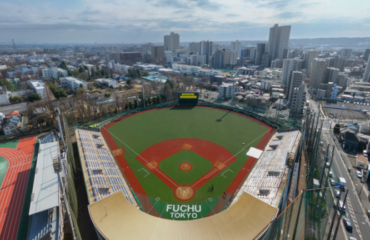
When Team Australia arrives in Fuchu this week for its pre-World Baseball Classic training camp, the players will step onto a brand-new synthetic baseball surface.
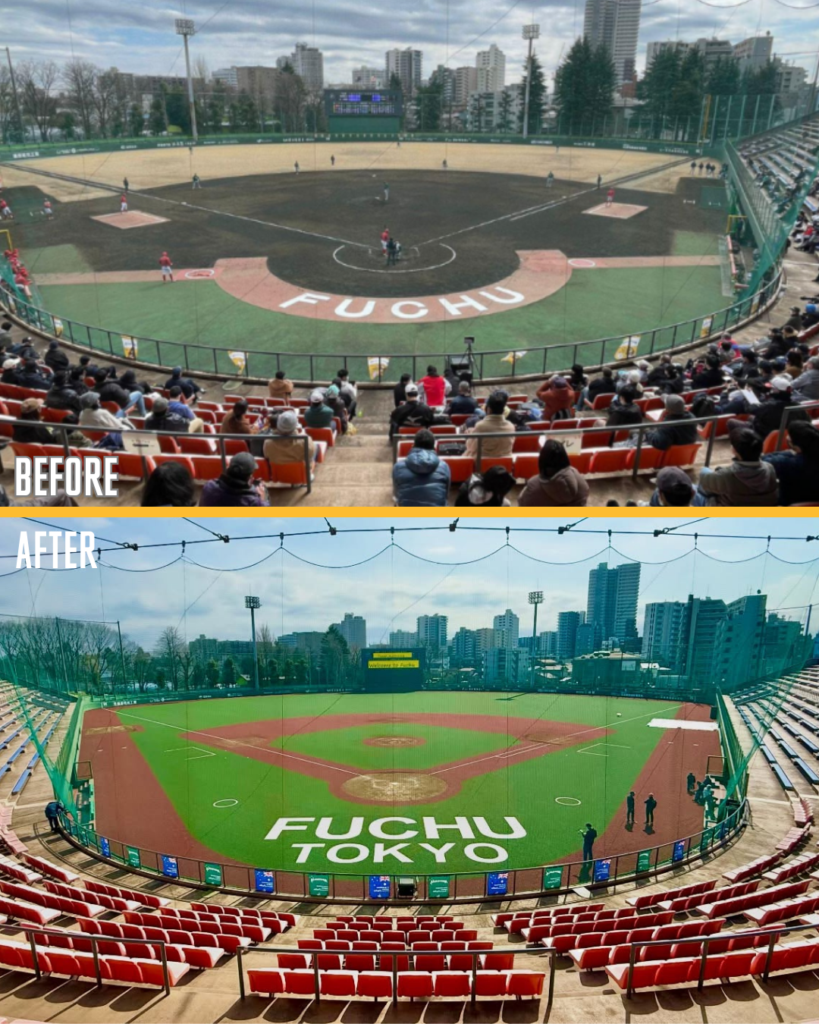
A fully turfed field now replaces the traditional dirt infield and grass outfield that stood here for decades.
The surface is modern. The facilities refreshed. The training areas upgraded.
It looks new. It feels new. But the stadium itself tells a much older story.
Within walls shaped by generations of local baseball and community pride, Fuchu Citizens Stadium has undergone upgrades worth over approximately approximately ¥1 billion (JPY) the last three years designed not to replace its history, but to strengthen it.
A significant investment – equivalent to about $9,000,000 Australian dollars – has transformed playing conditions while preserving one of the city’s most cherished sporting homes and important cultural centres.
A BIG, COMMUNITY MINDED, AND IMPORTANT INVESTMENT
Over the past three years, Fuchu City has invested heavily in the venue as part of a major redevelopment.
City officials say the goal was to create a stadium where people of all ages, from children to adults, can both watch and play baseball while strengthening community pride and local connection to the facility.
The project included the installation of a synthetic turf field, development of indoor training facilities, and renovation of the second-floor restrooms.
The field was closed from August 2025 until late January 2026, reopening roughly two weeks before Team Australia’s training camp scheduled for February 17 to 28.
The push for redevelopment had been building for several years.
Weather, combined with extremely high field usage, became a major concern, officials explained.
Local baseball organisations, including the Fuchu City Baseball Federation, had long requested a training environment less affected by weather conditions.
“In recent years, Fuchu Citizens Stadium has experienced extremely high usage, exceeding a 99 percent utilisation rate in 2023,” one stadium official said. “Maintaining a natural grass field required a seasonal closure from January to March each year for turf recovery. In addition, rainfall often led to poor field conditions, resulting in suspensions of use and long recovery times before play could resume.”
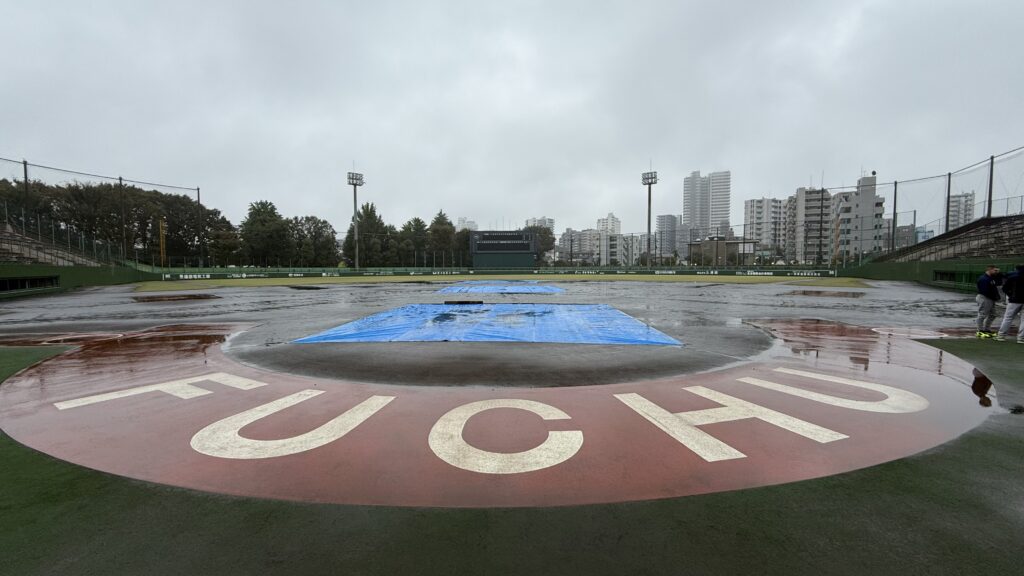
Above: Rain affected play during the 2024 Premier12 Training Camp. Photo: Scott Powick.
Requests for a synthetic surface were formally submitted in July 2023 by user groups including the Fuchu City Baseball Federation.
“To ensure more stable and continuous use of the stadium for a greater number of citizens, the decision was made to install a synthetic playing surface as part of this redevelopment,” the official added.
The indoor training facility was another major component designed to address both weather limitations and heavy demand.
“These requests intensified following the hosting of an Eastern League official game in 2024 and previous training camps by the Australian national team,” one official explained. “In response, space beneath the stadium stands, previously used for storage and work areas, was repurposed into a new indoor training facility. This allows for flexible training even during inclement weather, improves convenience for users, and makes more effective use of existing stadium space.”
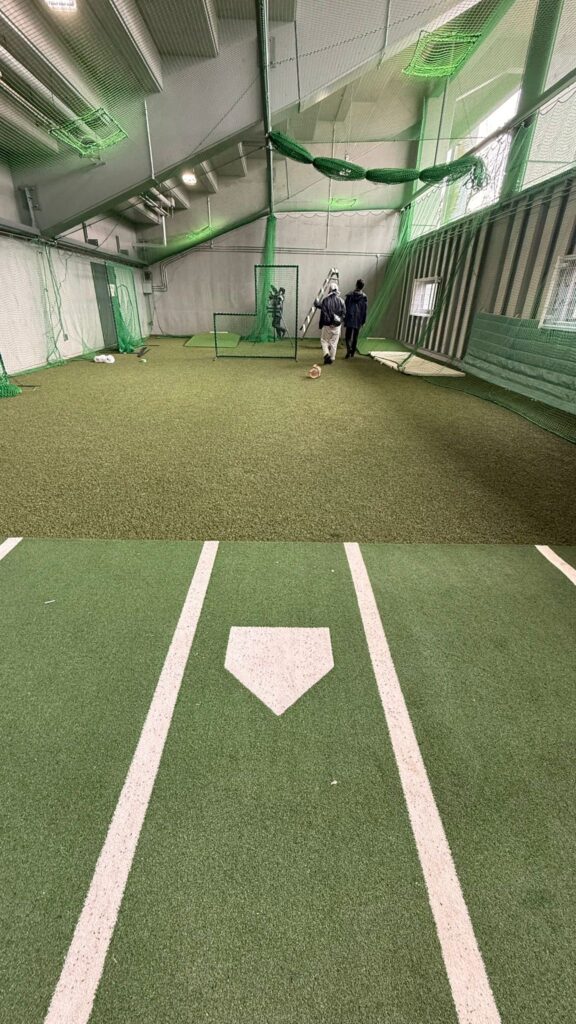
Above: various sections of the stadium now features batting cages and training facilities that remain unimpacted by weather. Photo: Scott Powick.
Funding for the project was approved by city council as part of Fuchu’s broader vision as a sporting hub.
The city of roughly 260,000 residents proudly brands itself a “Sports Town,” home to elite rugby clubs, a major racecourse, a strong baseball culture, and Olympic and Paralympic training activity.
As Mayor Takano wrote in the city’s official training camp guide:
“Athletes of sports teams based in our city and from our city are succeeding, not only within Japan but also in international events such as the Olympics, Paralympics and the Rugby World Cup. Many adults and children of the city also participate in a wide range of sports.”
At the centre of that sporting life sits Fuchu Citizens Stadium — a stadium owned not by a professional club, but by the community itself, and a home for Fuchu baseball since the 1950s.
“The main purpose of this stadium is to be a place where children can look up to baseball and dream about playing it,” said another stadium official.
There’s a reason it’s called a “Citizen’s Stadium” – it is literally owned by the people.
PERFECT FOR PREPARATION
For Team Australia staff, the new playing surface is more than just an aesthetic upgrade.
It is also a crucial part of tournament preparation, with World Baseball Classic games in Tokyo played on artificial turf.
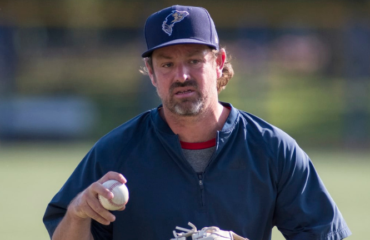
“The city has done an amazing job,” Australian coach Shayne Watson said. “The new surface will best prepare the guys and replicate what they will be playing on in the Tokyo Dome.”
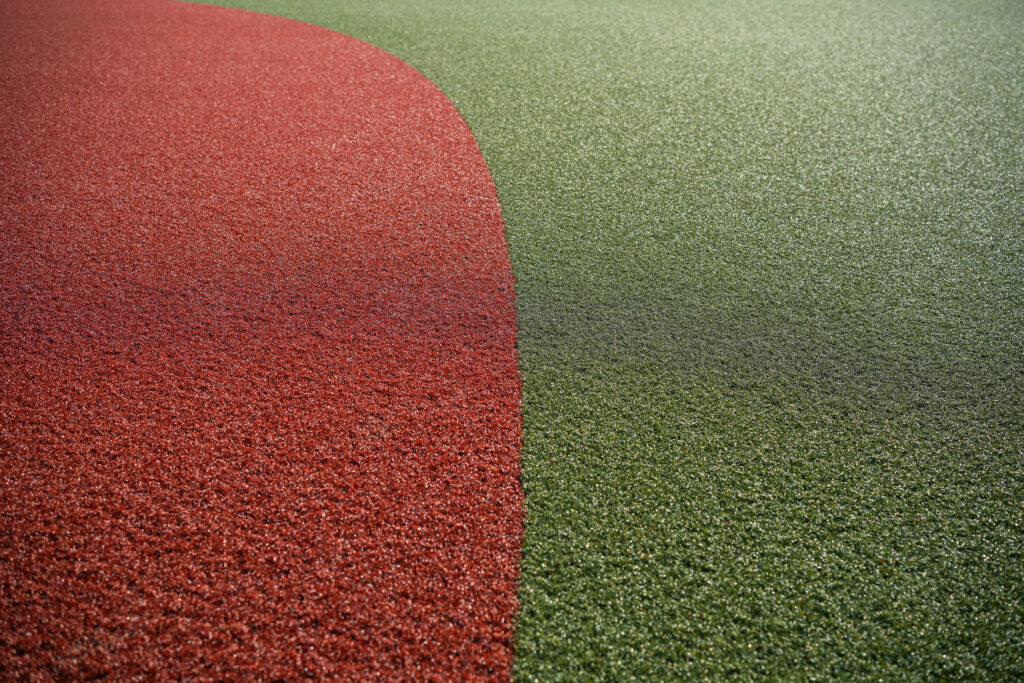
Above: Turf between the infield and the outfield is similar to turfed stadiums like the Tokyo Dome.
“The surface is clean, new, immaculate and fresh. I am expecting the guys to take advantage of the upgrades to best prepare themselves for the WBC.”
Australia has trained in Fuchu ahead of major tournaments since 2018, and this February marks the fifth official Team Australia camp in the city.
Baseball Australia CEO Glenn Williams says the relationship has become one of the program’s most important international partnerships.
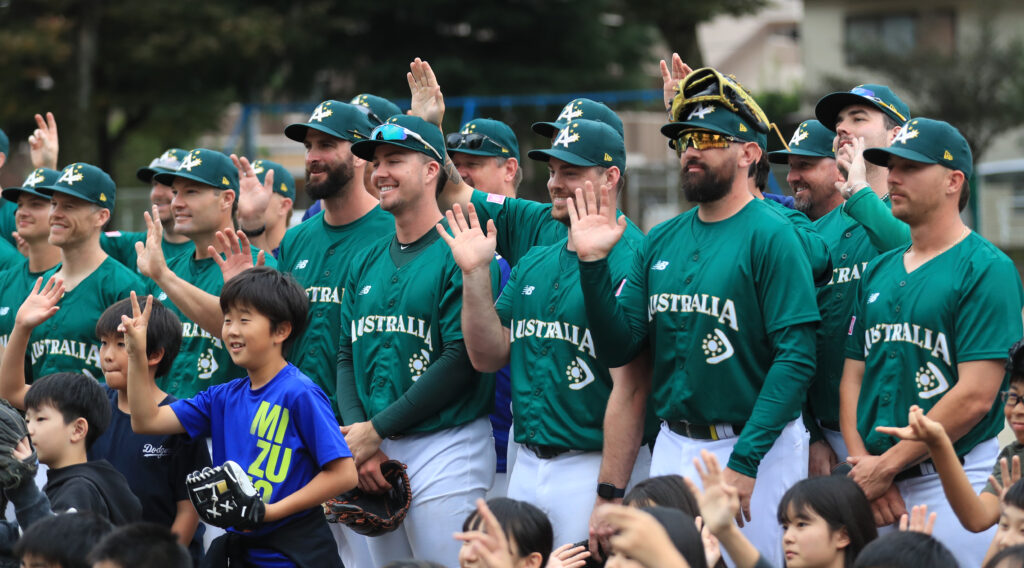
“This will be our fifth official Team Australia camp in Fuchu City. Mayor Takano and the City of Fuchu could not be more supportive of our team, and our players always feel genuinely welcome when they arrive,” Williams said.
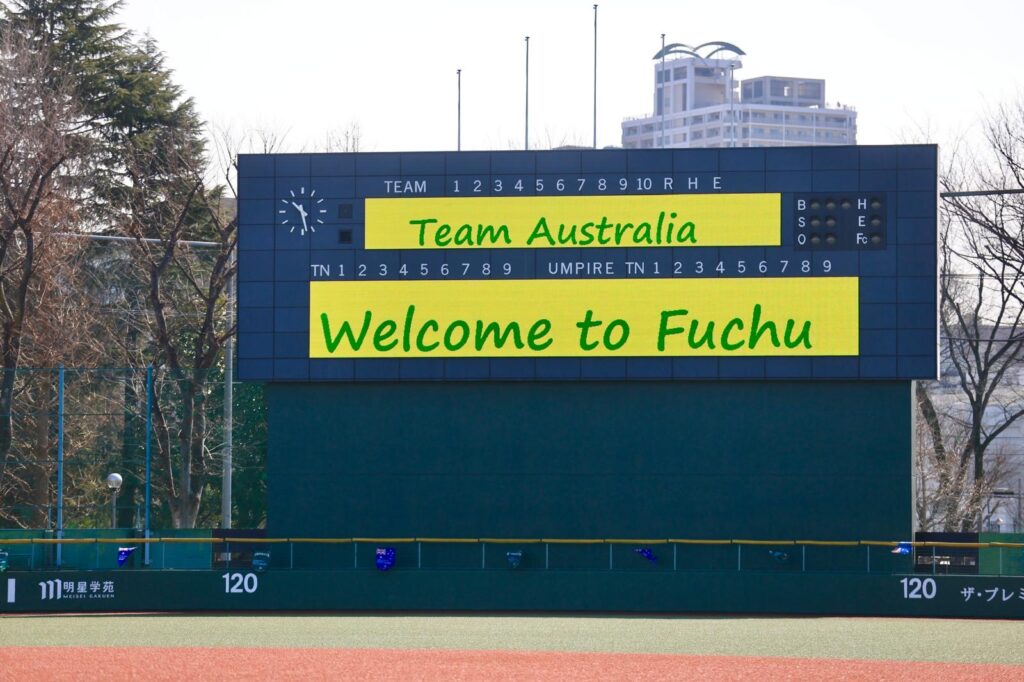
“The support from the local community is incredible, and we’re really looking forward to being in our home away from home.”
CULTURAL CONNECTION
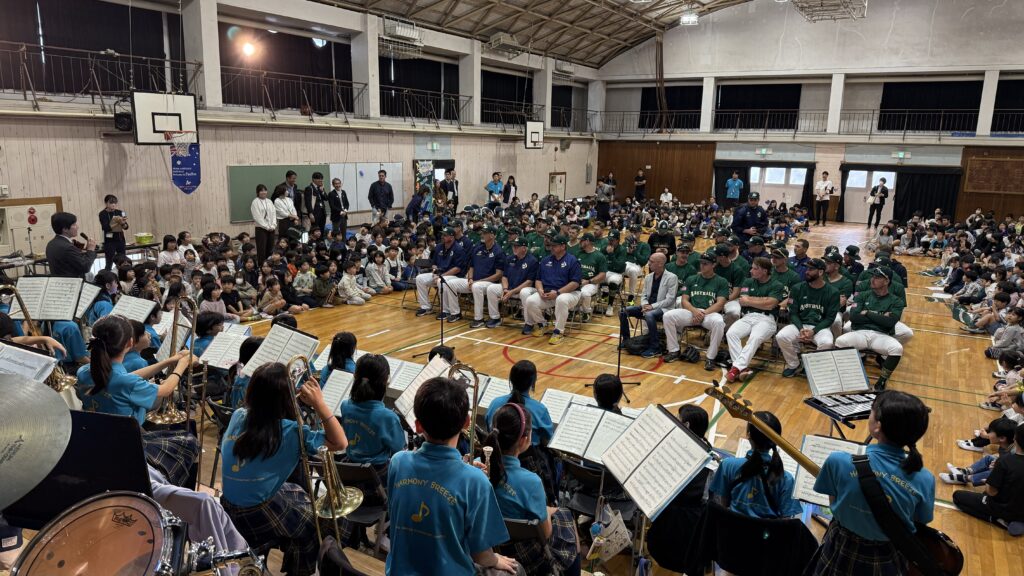
Each visit has strengthened the connection between the team and the city.
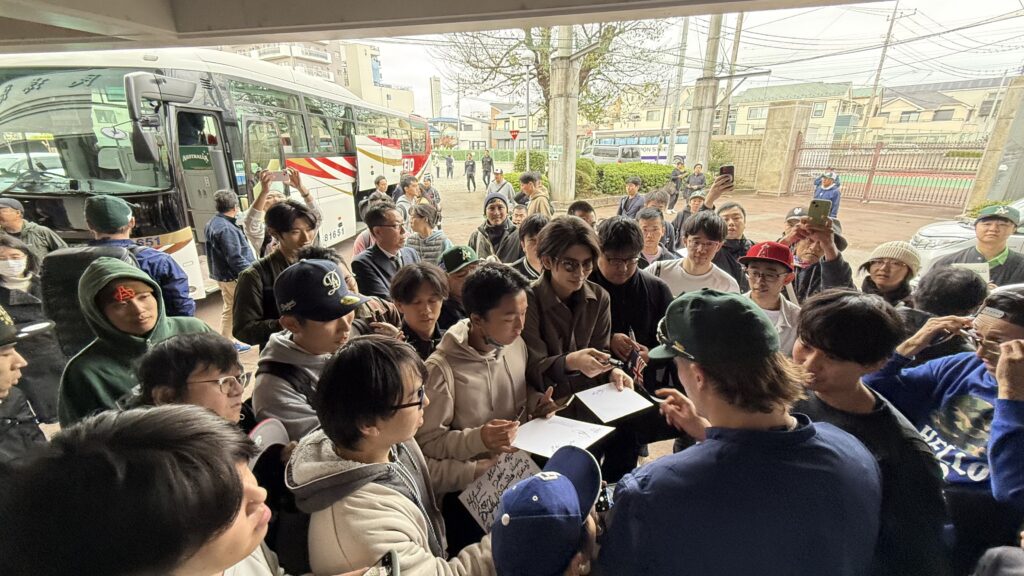
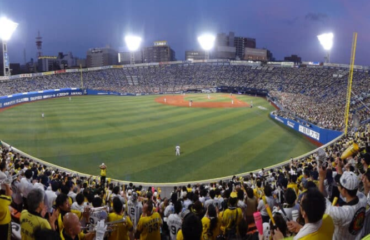
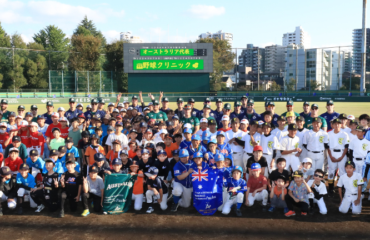
Streets are often lined with Australian colours and flags during the camp period, while locals attend open training sessions and exhibition events at the roughly 5,000-seat venue.
According to Shogo Mukoyama, chairman of the All Fuchu Baseball Club, the impact on the community — particularly young players — has been significant.
“By watching the game at Fuchu Field, fans become more familiar and more supportive of Team Australia,” Mukoyama said in an interview at the Premier12.
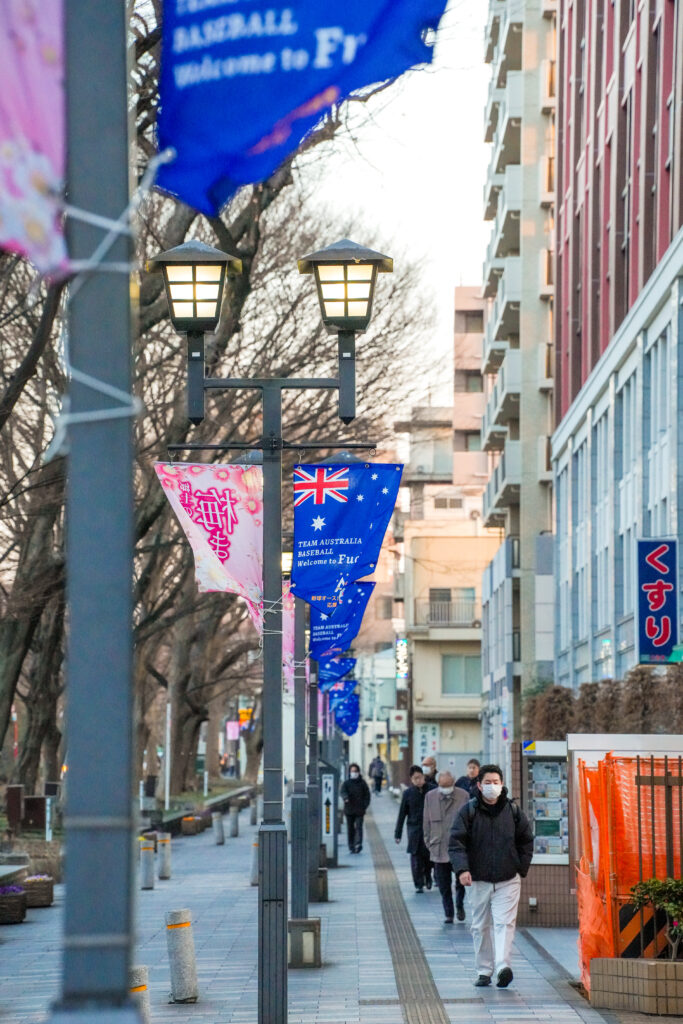
Photo: Brad Rathbone. One of the main streets of Fuchu.
“The most famous team for Fuchu kids is now Australia. We feel closest to them.”
For stadium management, the redevelopment was never just about international teams. It was about strengthening baseball’s place in the community.
“Baseball is one of the most popular sports in Japan,” explained a representative of Fuchu Citizens Stadium. “We have many lovers of the sport in Japan and of course in Fuchu. We need a place for our kids to develop their skills at.”
“But this field is for baseball around the world, other organisations and the community. It is a meeting place, it is a place for people to become more skilled, for them to be inspired.”
The ground hosts city teams, federation events, community competitions, the Tokyo Giants Women’s program and international camps, with the gates frequently open for fans to enjoy local baseball.
“By reforming the stadium, we were also aiming to have Fuchu citizens feel more attached to our land,” explained another official. “I hope that by doing so we can contribute to people feeling more proud about Fuchu. When Australian baseball is here, people feel more proud to be here too.”
Just minutes from the ballpark stands Okunitama-jinja Shrine, one of Japan’s oldest, with a history stretching back nearly 1,900 years.
The entrance to the city is lined with historic zelkova trees, said to have originated over 1,000 years ago. Around two hundred of those trees remain today, forming a scenic gateway into Fuchu and standing as one of the city’s most beloved natural symbols.
That connection between heritage, place and community is part of what defines the city today.
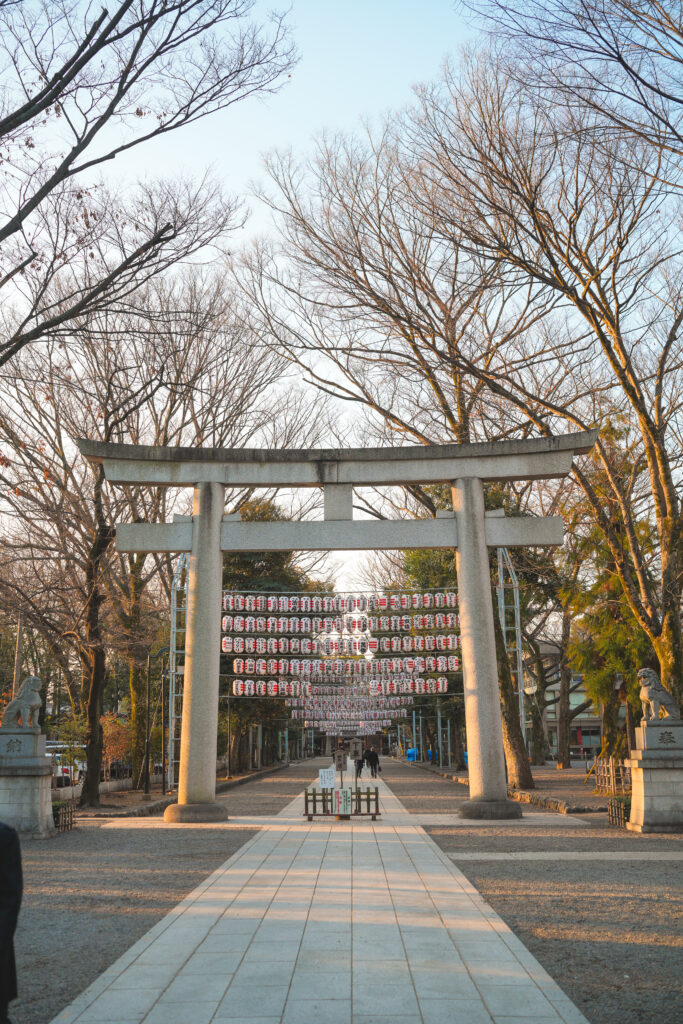
Photo: The entrance to a park home to Okunitama-jinja Shrine
Soon, Team Australia will step onto a fresh synthetic field in Fuchu, sharpening their preparation for the world stage in Tokyo.
But long before the first pitch of the World Baseball Classic is thrown, the message here is already clear.
This is more than a training venue, more than a stadium upgrade and more than a stop on the tournament schedule.
It is a place where a city has opened its gates, its community, and its pride to Australian baseball.
And in Fuchu, that welcome matters just as much as the field itself.
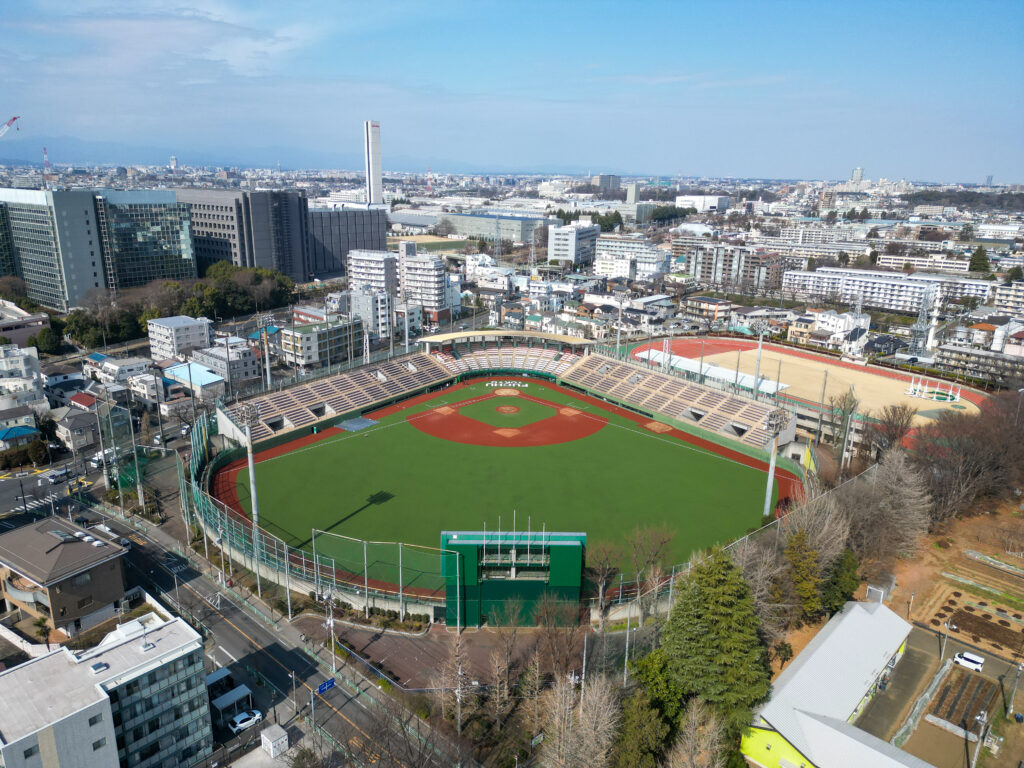
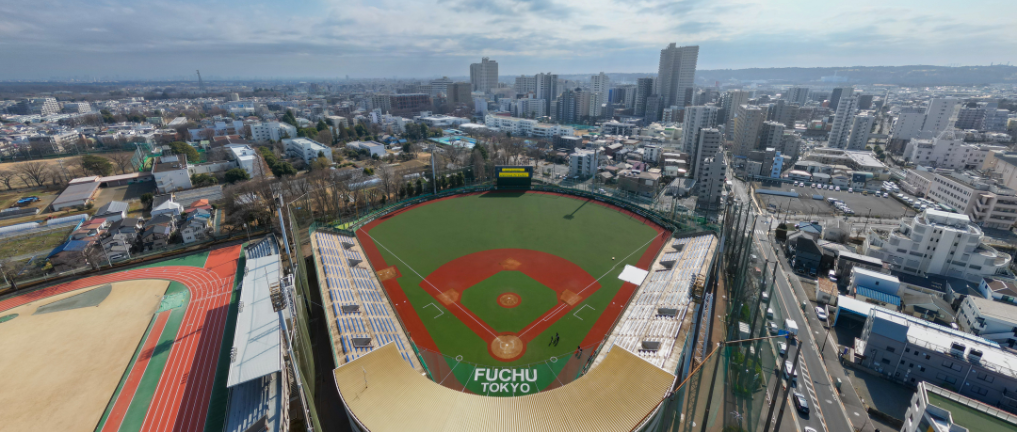
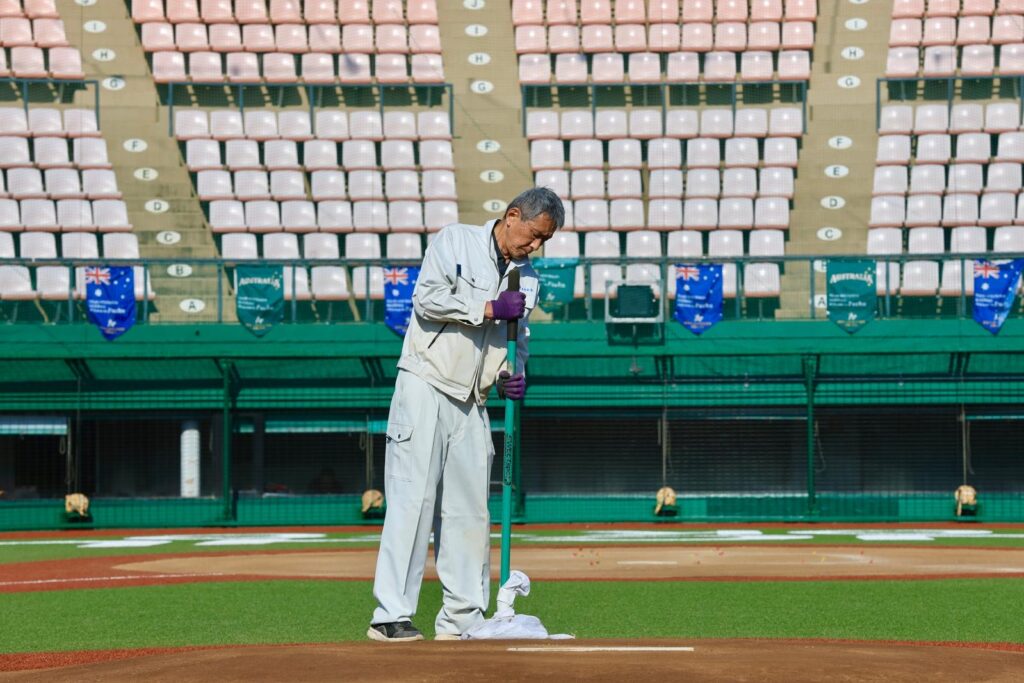
Above: Fuchu Citizens Stadium. Photo: Brad Rathbone.