24 February 2026
Team Australia World Baseball Classic
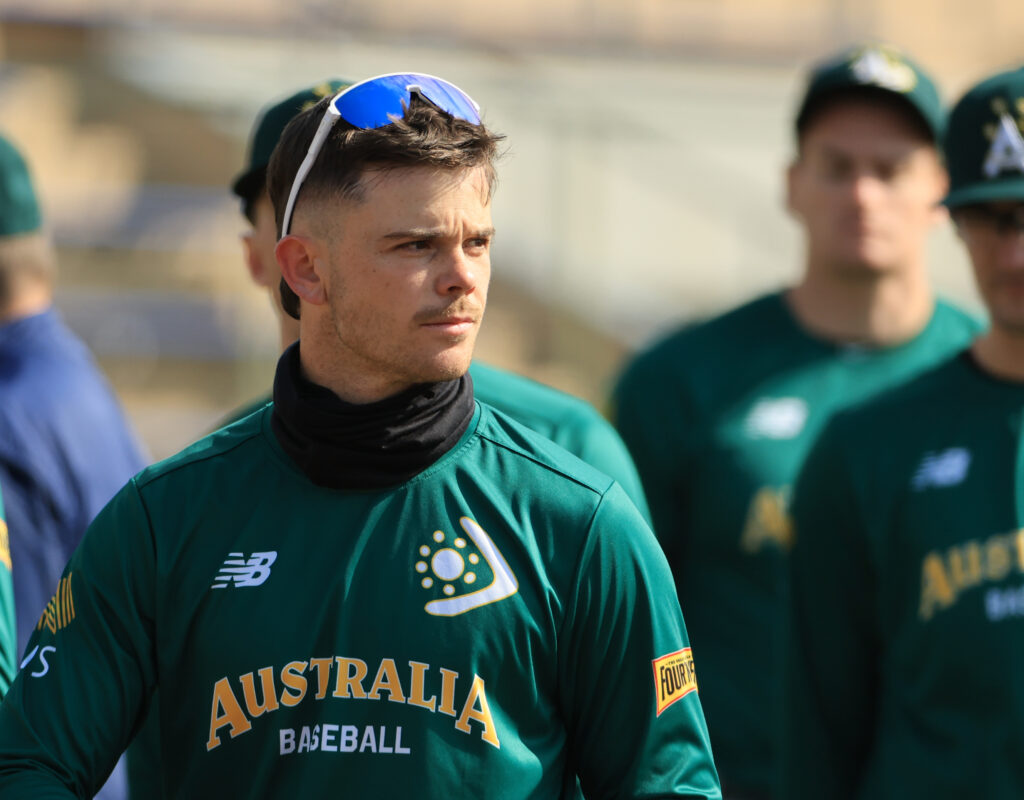
Competing at Everything: Inside Team Australia’s Relentless Fuchu Camp
by Eric Balnar, feature story thanks to Aces Sporting Club. Photos by Scott Powick.
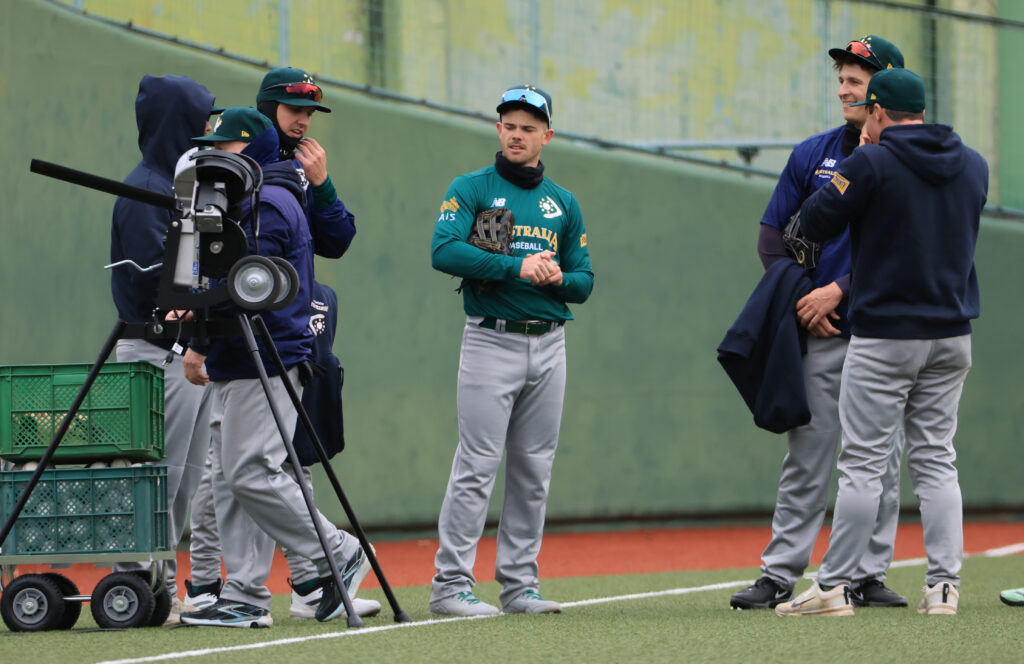
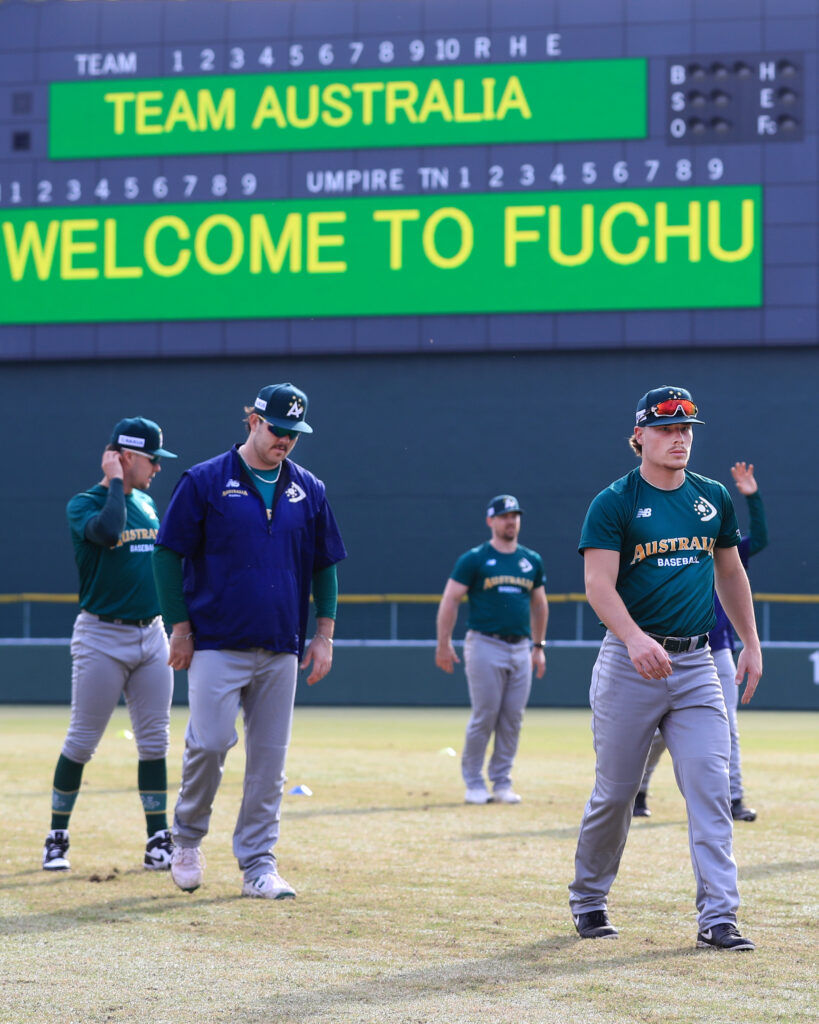
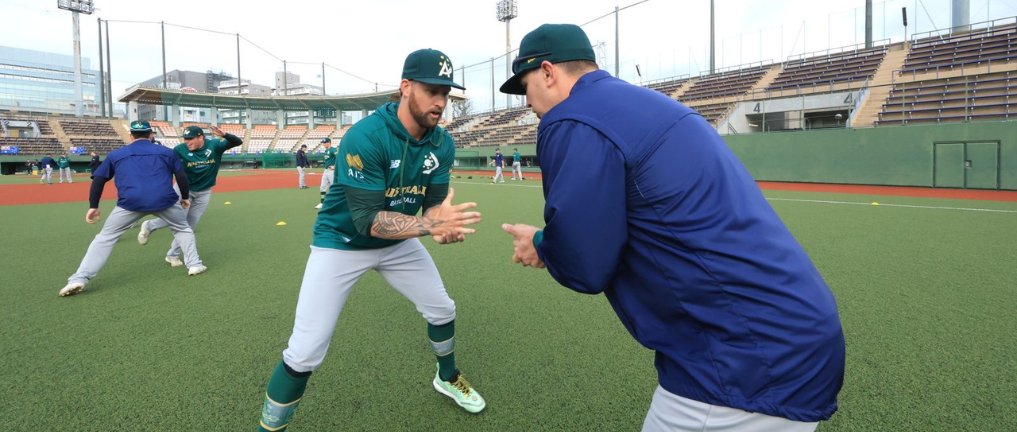
Spend five minutes around Team Australia’s clubhouse in Fuchu and one thing becomes obvious.
These guys compete at everything.
It’s not just when the uniform goes on. It’s not just when an opponent is standing across the diamond.
It’s at everything. Everything.
I noticed it almost immediately after arriving in camp. Sure, these are elite athletes preparing to face the best players in the world at the World Baseball Classic (WBC) – the kind of tournament where you might look up and see someone like Shohei Ohtani on the other side. Competing on the field is the job.
But what stood out here was what happens in the hours nobody sees.
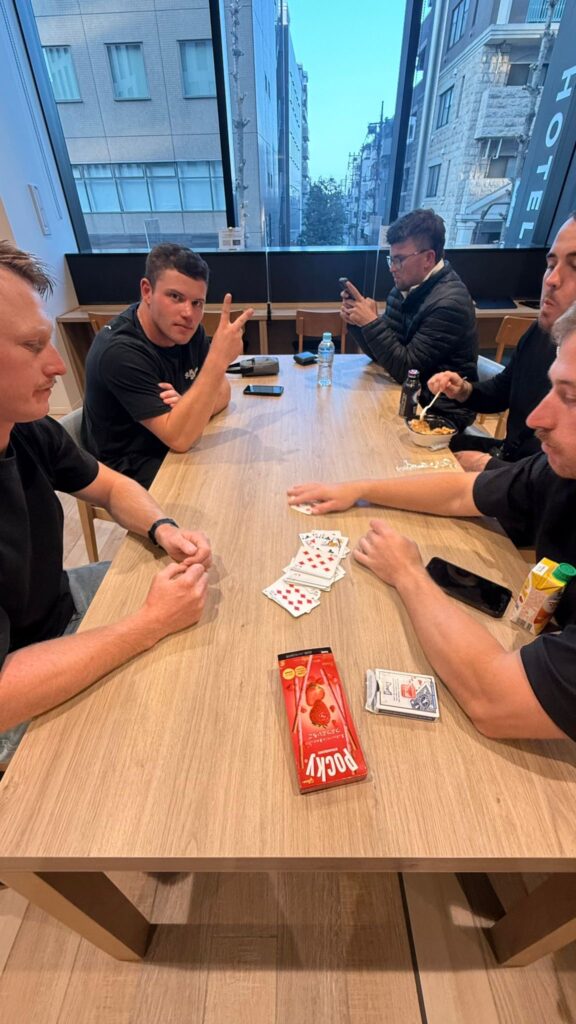
In training breaks, they’re playing a modified cricket game on the grass. In the locker room, it’s trivia battles. At the hotel, cards in the lobby. In the rooms, Mario Kart. Before practice? In testing metrics.
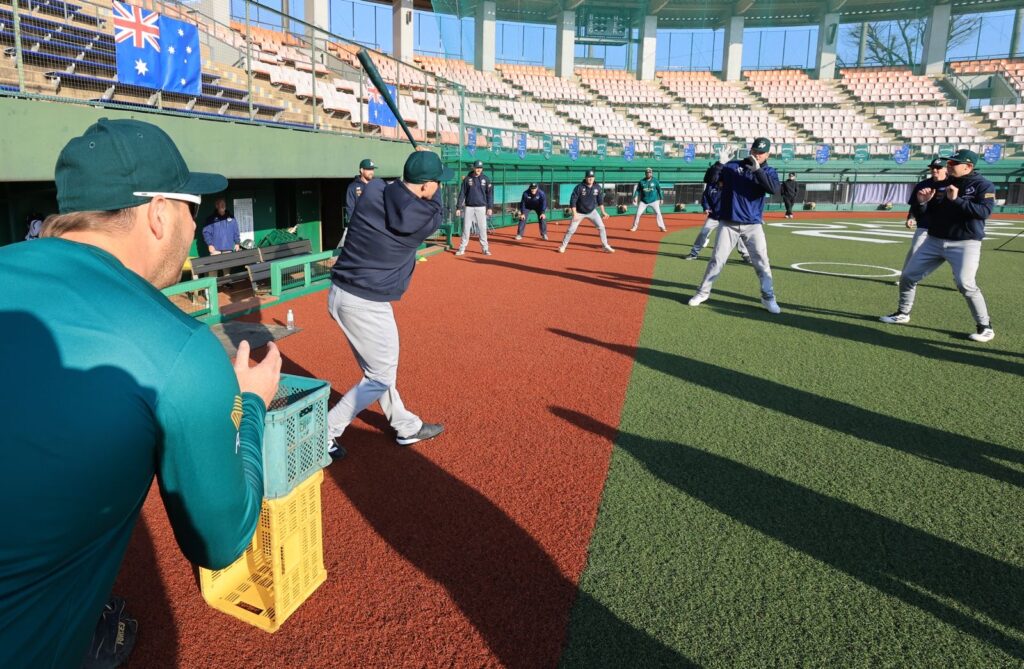
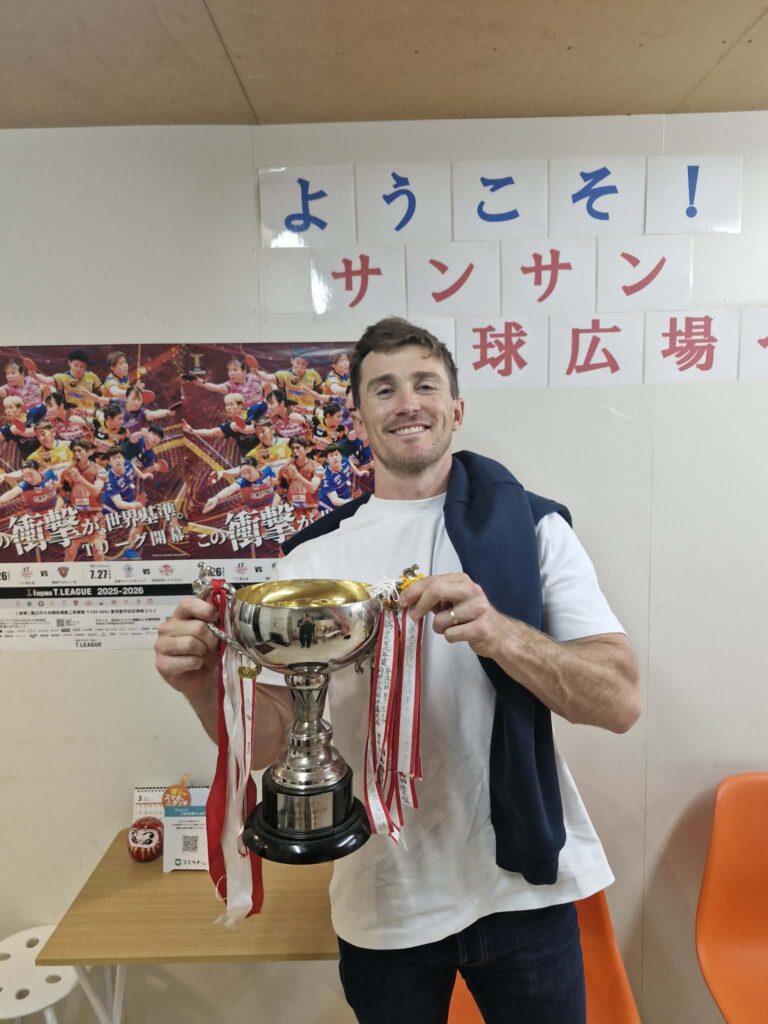
At one point, team physio Greg Castle even organised a full ping-pong tournament at a local venue. Logan Wade walked away as champion — a result that, judging by the reactions, remains a sensitive topic for a few teammates.
There’s even an infamous fantasy football league inside the squad. If you want to keep the peace, don’t ask Robbie Glendinning where he finished.
This is a group that simply doesn’t switch competition off.
The Race to Be the Most Competitive
Out of curiosity, I asked players and staff a simple question:
Who’s the most competitive person on this team? Three names kept coming back.
Tim Kennelly.
Robbie Glendinning.
Aaron Whitefield.
When I put the question to Glendinning, he didn’t hesitate.
“People aren’t saying Whitey and TK are they? Because I’m the most competitive.”
Even the debate about competitiveness turns into a competition.
Later, sitting with both Glendinning and Whitefield together, neither wanted to fully concede.
“Probably us two… maybe we’re tied,” Whitefield laughed. “But we definitely have a competitive rivalry going and it’s one of my daily highlights.”
Their rivalry doesn’t stop at the field — or even the same continent.
Glendinning explained that while playing in Kansas City and with Whitefield in Melbourne, the two still call each other constantly.
“It’s like, how fast did you sprint today? I can go faster. How did you golf today? I shot lower. It’s honestly a way to help hold each other accountable,” said Glendinning.
The Loud Competitors… and the Quiet Ones
Manager Dave Nilsson isn’t surprised by any of it.
“Well, they’re athletes, right? They grow up in this environment and they wouldn’t be here if they weren’t competitive,” he said.
But Nilsson points out something important — not all competitiveness looks the same.
“Sometimes the most competitive people aren’t necessarily the most outwardly competitive or vocal. It’s the quiet competitors who battle. Look at Connor MacDonald for instance. He won’t be loud about it but he’s ultra competitive and with himself,” he adds.
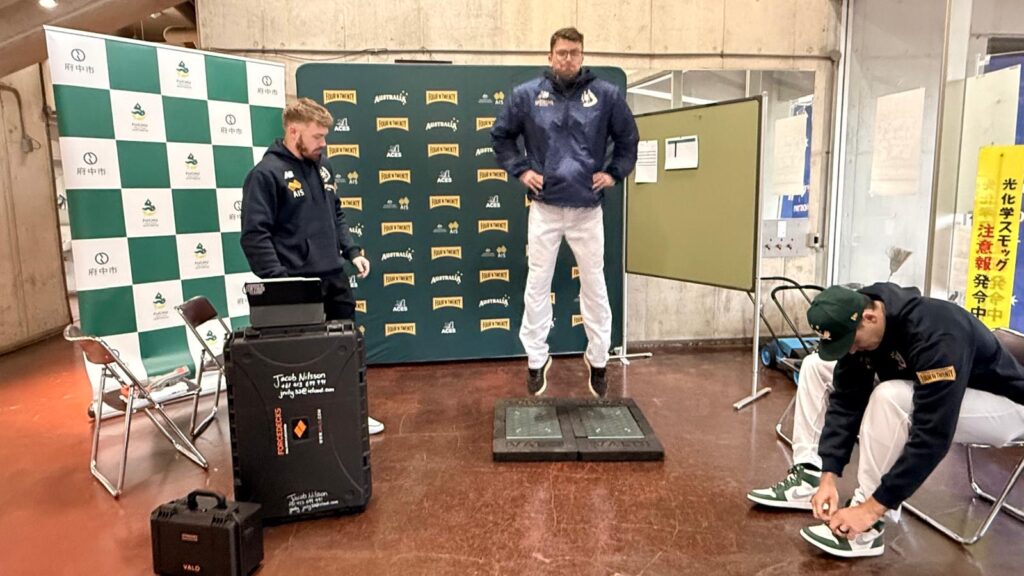
That internal competition shows up daily in the strength and conditioning testing run by Jacob Nilsson.
Players track vertical jumps. Power numbers. Speed results. Leaderboards form naturally.
“You see in their groups they are all competitive with each other,” Jacob said. “Everyone wants to climb a leaderboard in testing. Some are quiet, some are loud, but they’re all into it and they want to be the best they can be.”
And more than anything, he says the biggest battles happen away from the spotlight.
“I don’t think you make this team if you don’t have a deep desire to be better every day… the best battles happen against yourself,” he said.
Brothers Compete
For Whitefield, that mindset has existed since childhood.
“I grew up that way. I just wanted to be the best at every sport we did,” he said.
But within Team Australia, the competitiveness carries something deeper than ego.
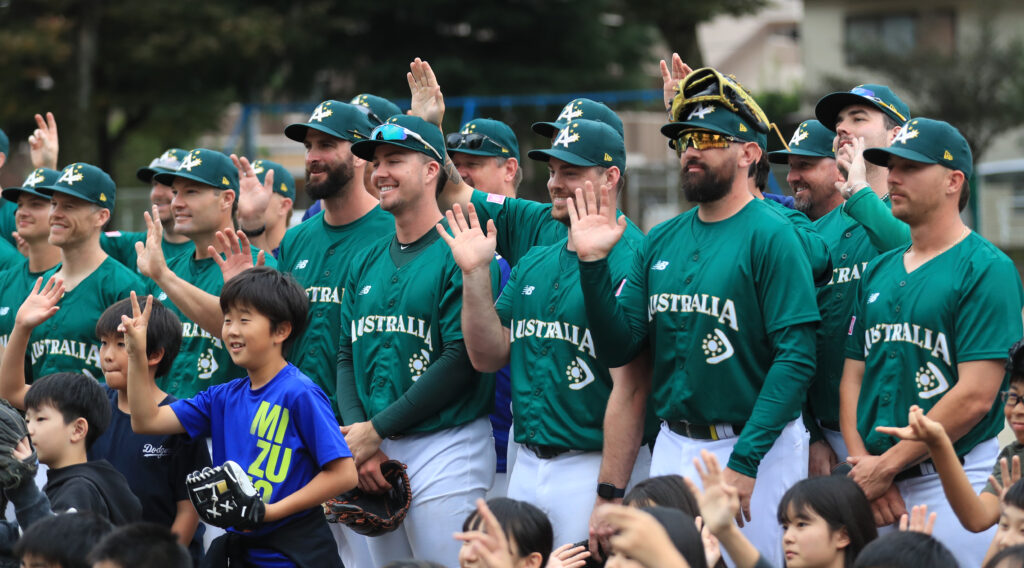
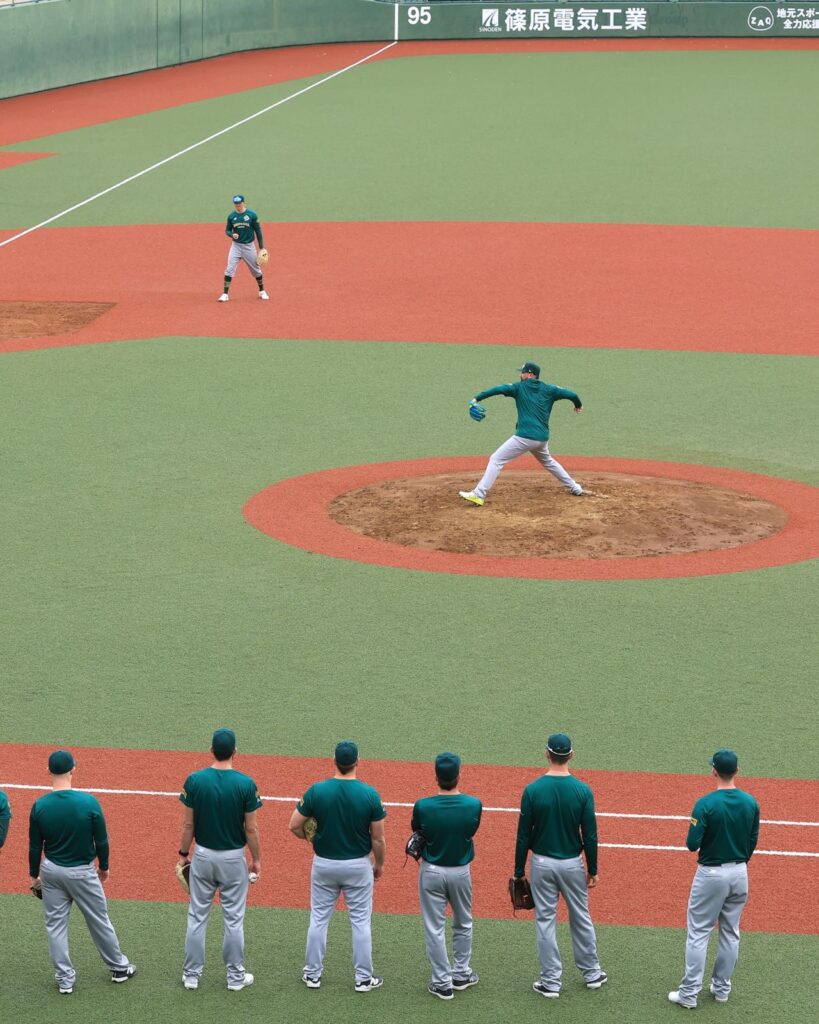
“We’re like brothers. And brothers get competitive,” said Whitefield. “It’s not a bad thing — we just want to compete and be better.”
Glendinning agrees the competitive energy actually strengthens the group.
“Because we are all close mates, when we get in this environment, we all want to one-up each other,” he said.
“I think the competitive nature helps bring people together too — it helps us unite off the field by playing games, but then it helps us win games because we always have that fight.”
Even the Veterans Are Still Competing
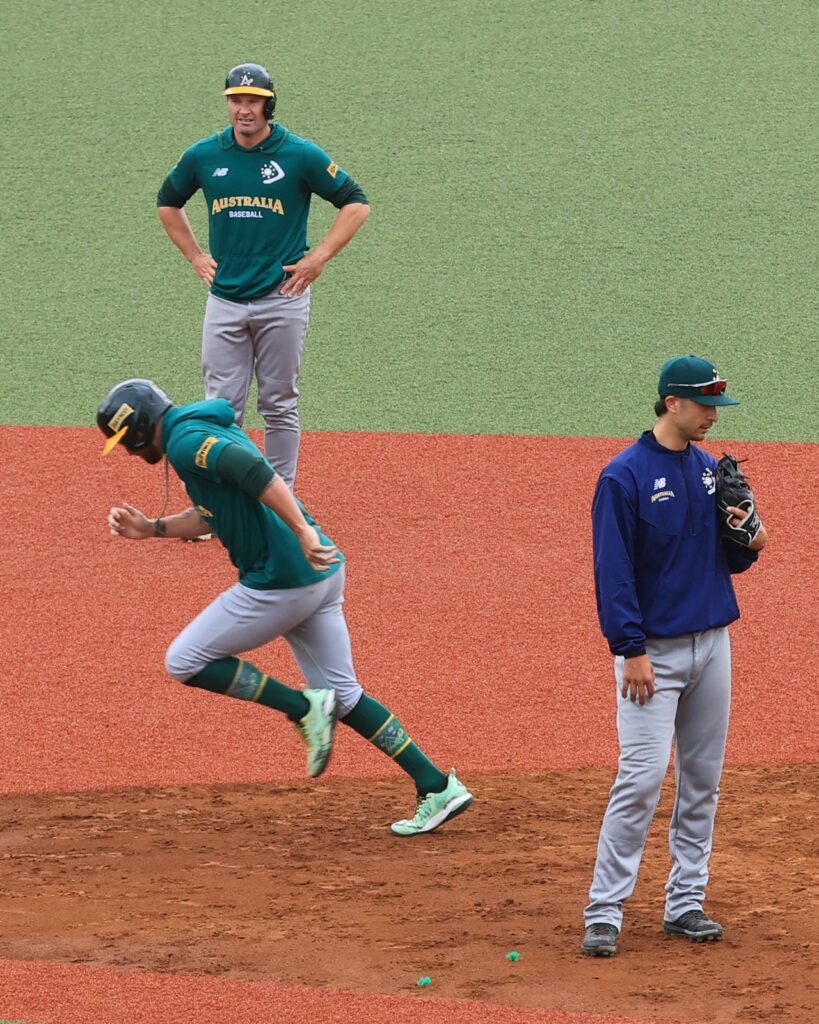
When catcher Robbie Perkins was asked who the most competitive teammate is, his answer came instantly.
“Tim Kennelly. For sure. TK wants to be the best at everything.”
Kennelly himself didn’t exactly argue.
“Oh, it’s me,” he said confidently when the question came up mid-conversation.
But his reasoning spoke to something bigger than personality.
“We’re a family and we will compete in anything. It brings us closer as a group but also shows how we play the game in all aspects. We’re always trying to find an edge.”
Why It Matters
Watching this camp unfold, the pattern becomes clear.
The games in the hotel lobby.
The testing leaderboards.
The sprint comparisons across continents.
The ping-pong grudges.
None of it is meaningless. It’s culture.
Because for this Team Australia group, competitiveness isn’t something they turn on for nine innings.
It’s something they live every day.
And in a tournament where the margin between winning and losing can be a single pitch, a single swing, or a single defensive play…
That mindset will be a pretty handy weapon.
MORE STORIES
Eric Balnar is writing features from Fuchu, thanks to Aces Sporting Club.
Here are some more:
– The shoe finally fits: Inside Josh Hendrickson’s Three Year Battle to Team Australia