Baseball.com.au Baseball.com.au
News
Hub: 2026 World Baseball Classic
Play Baseball
Find a ClubBaseball5™Sporting SchoolsMobile Coach AppCoachesUmpiresScorersCome and Try Days / EventsAussies Abroad
Events
Hub: 2026 U18 and U16 NationalsHub: U18 World CupEventsEvents CalendarAustralia at World Series 2025National ChampionshipsLittle League
Media
WatchPro Aussies AbroadPodcastCommunityDocumentaryJoin the Mailing List
Governing the Game
Baseball Australia WebsiteAbout Us and BoardStrategic PlanResourcesBaseball Information HubNational Integrity PlanCorporate ReachBaseball CalendarContact Us
Australian National Teams
Team Australia
Team Australia Event Archive
National Tournament Archive
...
Governing the GameAustralian National TeamsTeam Australia Event ArchiveNational Tournament Archive
En
Select a Language
  • News
  • Hub: 2026 World Baseball Classic
  • Play Baseball
    Back
    • Find a Club
    • Baseball5™
    • Sporting Schools
    • Mobile Coach App
    • Coaches
    • Umpires
    • Scorers
    • Come and Try Days / Events
    • Aussies Abroad
  • Events
    Back
    • Hub: 2026 U18 and U16 Nationals
    • Hub: U18 World Cup
    • Events
    • Events Calendar
    • Australia at World Series 2025
    • National Championships
    • Little League
  • Media
    Back
    • Watch
    • Pro Aussies Abroad
    • Podcast
    • Community
    • Documentary
    • Join the Mailing List
  • Governing the Game
    Back
    • Baseball Australia Website
    • About Us and Board
    • Strategic Plan
    • Resources
    • Baseball Information Hub
    • National Integrity Plan
    • Corporate Reach
    • Baseball Calendar
    • Contact Us
  • Australian National Teams
    Back
    • Team Australia
  • Team Australia Event Archive
  • National Tournament Archive

News

Select
  • All Categories
  • - Aussies Abroad
  • - Little League
  • - Team Australia
  • ABL
  • APBC
  • Aussies Sign Pro
  • Australian Youth Championships
  • Baseball5
  • College Baseball
  • Community
  • No elements found. Consider changing the search query.
  • List is empty.

06 March 2023 By Staff Writers

By Staff Writers

- Team Australia

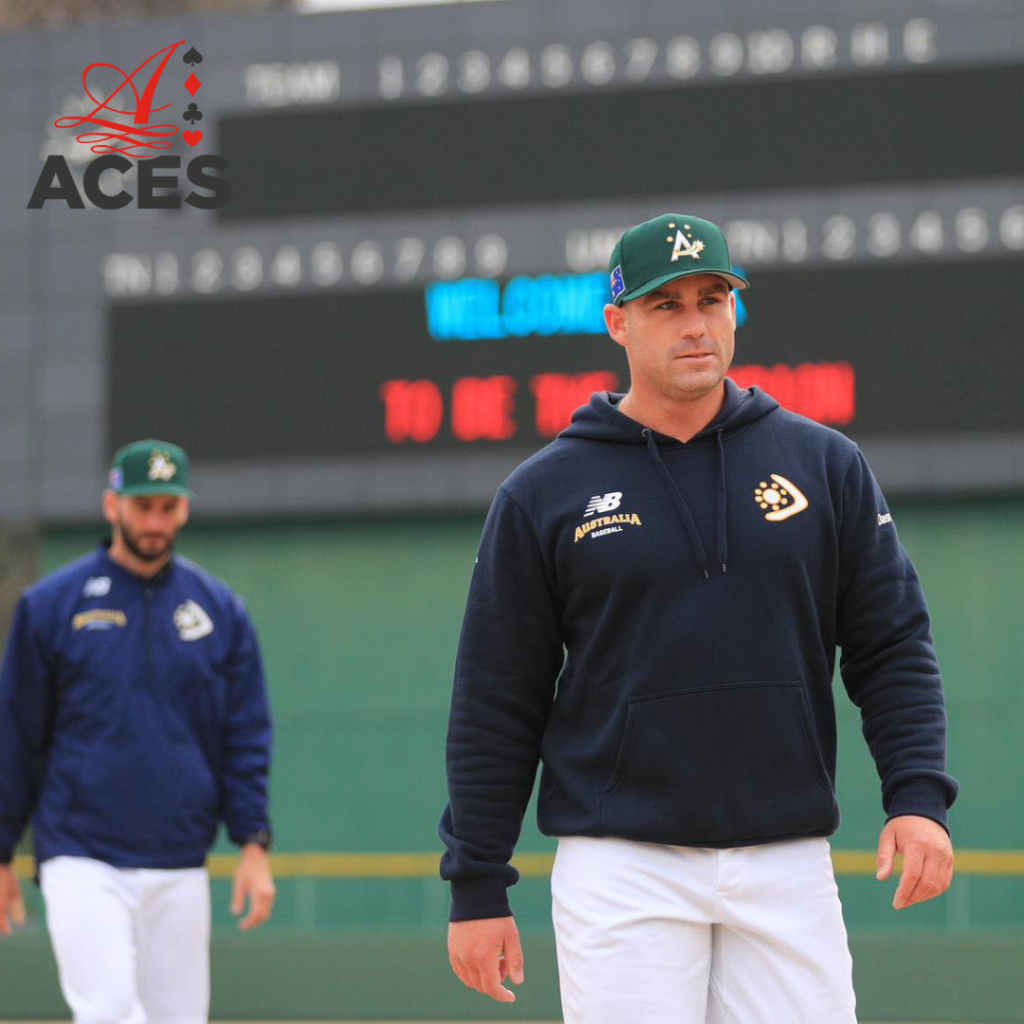
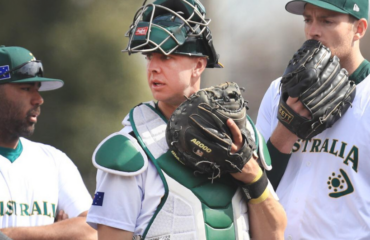
Australian coaches are like "baseball chefs" in preparing for opposition at World Baseball Classic

An Aces Sporting Club report by Eric Balnar in Miyazaki, Japan. Photos by SMP Images


When it comes to game specific preparation in the World Baseball Classic, Team Australia coaching staff have assumed the roles of restaurant chefs.

Their ingredients aren’t fresh produce you may find at a market, but it’s a collection of baseball data, tendencies and reports on the opposition.

05 March 2023 By Staff Writers

By Staff Writers

- Team Australia

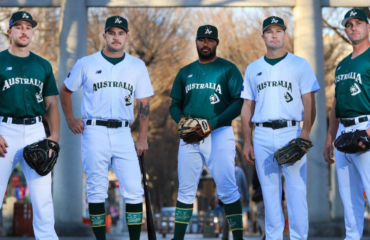
How the brotherhood of Australian baseball carries the national team

An Aces Sporting Club report by Eric Balnar, Fuchu City, Japan. Photos by SMP Images. Video by Hugh Whittle.


Liam and Josh Spence used to play catch in the backyard of their childhood home in Geelong.

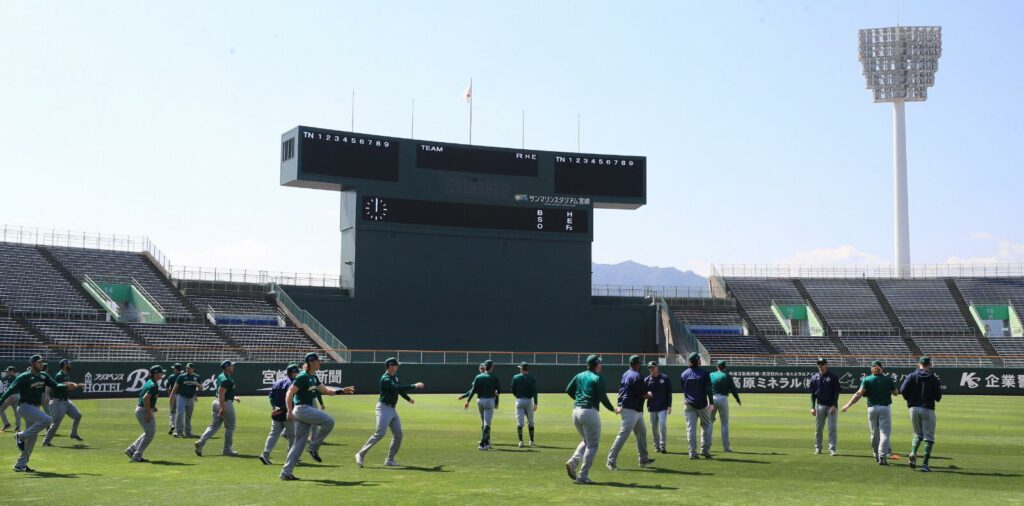
“I might have to grab a glove have to have a quick throw with him,” Josh Spence semi-jokes, looking out at Liam Spence running with Australian teammates on a sunny left field at a Miyazaki stadium. “That would be pretty special.”

It would be.

Liam Spence grew up idolising his two brothers Nick and Josh – two baseball playing boys eight and ten years his senior.

Nick played college baseball and still coaches in the USA. Josh went on to play MLB for the San Diego Padres and now coaches in the minor leagues.

Liam has forged his own outstanding baseball career. He is on the national team, after all. The kid from Geelong became the King of Tennessee university baseball when he led the NCAA’s powerhouse South East Conference (SEC) in hits in 2021. He was drafted by the Chicago Cubs in 2021, has already played Triple-A and just won a Claxton Shield.

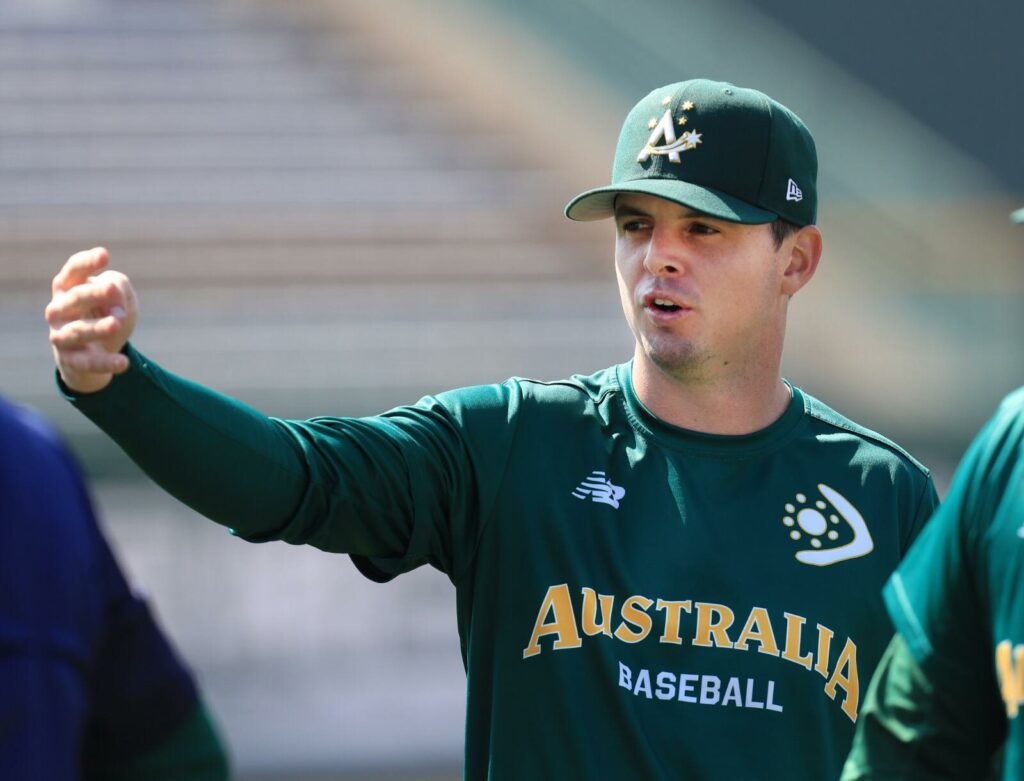
Liam Spence at Team Australia training in Miyazaki (PHOTO: Scott Powick / SMP Images)

But Liam and Josh have never been on the same team together. The closest they came was when a very young Liam Spence was the batboy for his older brothers at the family’s home club in Geelong, Victoria.

That all changed today as Team Australia’s preparation shifted to Miyazaki – a small surfing town in the South of Japan.

Josh Spence was one of nine new baseball bombshells who entered the Australian WBC villa.

“They’ve played the biggest of roles,” says Liam of his brothers. “My brothers are the reason I play the sport. To be here together is surreal.”

MISSED A STORY? CHECK OUT DAILY STORIES AND TOURNAMENT INFO AT THE WBC HUB. Click here.

Over the next three days in Miyazaki, Australia will train and play two exhibition games vs Japanese teams before the tournament starts for real on March 9.

Spence is one of six new staff members to join the team physically. He is working in analytics. Five Australian coaches from major league camps also joined the squad.

Three players – Robbie Glendinning, Kyle Glogoski and Aaron Whitefield – rounded out Team Australia’s roster after the trio left their respective MLB club’s spring training to join their baseball brothers in Japan.


“They know this is the group. There’s nobody else coming and we’re moving forward,” said manager Dave Nilsson. “Now it feels a bit more fun.”

While Josh and Liam are literal brothers re-united, the family feeling is powerful between Australian teammates here in Miyazaki.

They aren’t related by blood, but they may as well be. They are related by the blood, sweat, tears and the common experience of playing Australian baseball.

“Playing in the Big Leagues is one of the greatest things I’ve ever done but coming here it’s different,” says Whitefield, who’s appeared in MLB games with the Minnesota Twins and LA Angels.

Whitefield says the common roots between Australian teammates separates the experience of playing in a World Baseball Classic and in the Big Leagues.

“Here, you’re playing with guys who eat meat pies like you did, have ice coffees like you did,” he says. “It’s being able to relate to everything that you grew up to believe in, how you grew up, and then going out and shedding blood with your brothers – and that’s what they are.”

Whitefield grew up playing club baseball in Queensland. He busted into the Australian Baseball League as an 18-year-old and won an MVP nearly immediately. He joins teammates he played junior baseball with, club baseball for, and guys he played against in the ABL.


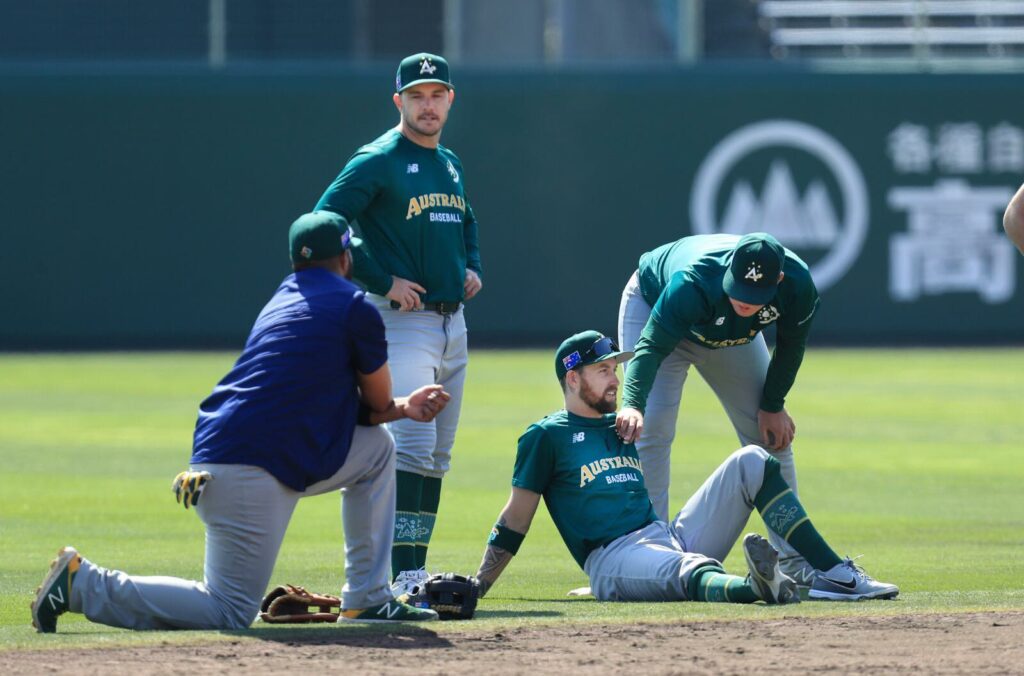
Aaron Whitfield (sitting) surrounded by his Australian teammates in Miyazaki (PHOTO: SMP Images)

He says it makes him feel part of something bigger.

“It’s something different than playing in the states where maybe it feels a little more selfish. We’re here and playing for each other. Playing for each other’s families and for the country we come from.”

Kyle Glogoski says joining the team was “revitalising.”

“Everyone is so helpful and wants what’s best for the team. The team camaraderie is like nothing I’ve been part of before,” says Glogoski.

Robbie Glendinning just came from MLB camp with the Kansas City Royals where he started his spring in hot form. He says he couldn’t wait to join his teammates in Japan.

“The baseball community in Australia is so small. We all band together and just love being around each other,” he says.

You could feel that rejuvenated energy at lunch after training. Team Australia gathered in a small cafeteria for really felt like a big family dinner. Green & Gold jerseys sprawled throughout the long tables surrounded by sounds of laughter and a feeling of excited anticipation.


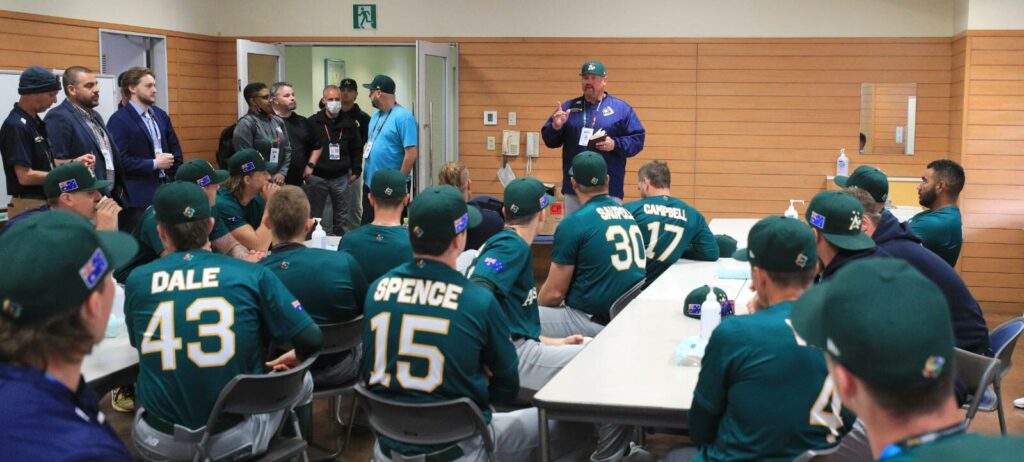
Dave Nilsson addresses the team before Miyazaki Camp (PHOTO: Scott Powick / SMP Images)

Aaron Whitefield, Jordan McArdle, Warwick Saupold and Jarryd Dale all sat together at the end of the tables. Four players – from four different Australian states – cracked jokes, shared stories and reminisced about old games.

Saupold, a former MLB pitcher himself, says the camaraderie of the national team is the difference between the WBC and the Big Leagues.

“We’re all mates, that’s more of it,” says Saupold. “You play in the States and you might know guys in the system and then you play in the Big Leagues with them. But it’s [not the same].”

“Here you grow up playing juniors with them, you go through the ranks with them, and then you get to the men’s team together and you know you’re here for a reason.”

Saupold – now 33 – has been on a long baseball journey with many of his teammates. One of them is Steve Kent.

The two of them went to an elite baseball academy together as teammates and are now about to pitch in their third World Baseball Classic as a pair.

“It’s just different when you go through the system with them all. It’s a different feeling because we’ve all been through such a similar experience,” he says.

Saupold played club ball for South Perth, battling in games on weekends vs the likes of Tim Kennelly over at the Melville Braves. He and Kennelly won ABL Championships together and are now on their third WBC roster.

Warwick Saupold at training (PHOTO: SMP Images)

“We’ve been around these guys our whole baseball career. You go through transitions, you see how guys evolve and you’re very much part of their story,” he says.

That brotherhood between players extends between newer members of the team and guys who have been there for over a decade.

Saupold says its as much about seizing the moment know as it is paving the way for the future.

He says he’s using his time on the World Baseball Classic roster to help pave the way for future players.

“You always root for other Aussie players. It doesn’t matter who it is. You want to see more Australians in the Big Leagues,” he says. “I think it’s a special thing being an Australian baseball player because you know the whole of Australia will be behind you. Hopefully some of the younger guys can use this tournament to take the next step in their careers.”

04 March 2023 By Staff Writers

By Staff Writers

- Team Australia

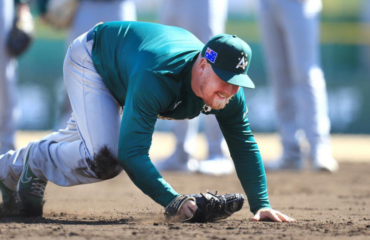
Three players from MLB camps join Team Australia as preparation shifts to new city

An Aces Sporting Club report by Eric Balnar


Australia’s full 30-man roster will finally be together as World Baseball Classic preparation shifts to a new Japanese city.

Aaron Whitefield (LA Angels), Robbie Glendinning (Kansas City Royals) and Kyle Glogoski (Cincinatti Reds) have all left their respective MLB Spring Training camps and will join their Australian teammates on Saturday

“They’ll bring a lot of energy, that’s forsure,” says manager Dave Nilsson. “They’ve been over there with major league teams. There’s no concern about them. They know the group, they know the drill, they’ve been here before.”

Whitefield was Australia’s starting centrefielder at the Premier-12 event in 2019. He appeared in the Big Leagues for Minnesota in 2020 and the Angels in 2022.

MISS A STORY? Catch up at our #WBC23 Hub. Click here.

Glendinning is coming off a full-season of Double-A baseball with the Kansas City Royals. Glogoski already has Triple-A experience and is on the Cincinatti Reds 40-man roster.

“It will be great to get that energy back with us,” says infielder Logan Wade. “We’ve actually been facetiming them throughout this camp. They’ll bring that Big League feel. We’re coming from an environment where everything is repetition and fast pace. I think when you combine it all together it’s the perfect recipe.”

The team will work out together as a group on March 5.

On the March 6 and 7, Australia will play two exhibition games vs Japanese teams from Ivy Stadium in Miyazaki in their final tune-up for the World Baseball Classic. The tournament starts with a blockbuster vs Korea on March 9 at the Tokyo Dome.

“The competition is about to get better, and then it will happen again when we get to Tokyo,” says Nilsson. “We’ll slowly start focusing on the opposition.”

Nilsson says he was happy with how his team focused on little things, and attention to detail, at the camp in Fuchu.

“We won’t really reference that anymore, hopefully that just happens naturally,” he says. “From a coaching standpoint we’re going to continue to turn up and come together as a team.”

Stay tuned to all Team Australia baseball channels for more updates throughout the day.

03 March 2023 By Staff Writers

By Staff Writers

- Team Australia

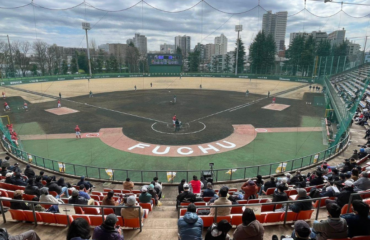
As Fuchu training camp ends, Australia hopes that from little things, big things grow at WBC

An Aces Sporting Club report by Eric Balnar, Fuchu City, Japan. Photos by SMP Images. Video by Hugh Whittle.


Third baseman Darryl George puts it in a way nearly every Australian can understand – through a lyric of one of the country’s most acclaimed musicians.

“I think you mean ‘From little things, big things grow,” George laughs, referencing the Paul Kelly classic from 1991. “But it’s true.”

Australia’s nine-day World Baseball Classic training camp in Fuchu City concluded on Friday afternoon after another fast-paced practice day.

The team hopes a large amount of time spent on the game’s smaller details will pay a pretty dividend on international baseball’s biggest stage.

“That’s the difference between a win and loss,” says manager Dave Nilsson of the ‘little things’.

MISS A STORY? Click here and head to the #WBC23 Hub for full Team Australia coverage.

The theory is simple: Practice the small, routine moments of a baseball game and it becomes second nature. If you practice the fundamentals hard, and at speed quicker than the game, you won’t have to think when your moment comes.

“When it speeds up and the game gets big and the lights are on, we will fall back on our training. I think we’ll be in a good position,” says George.

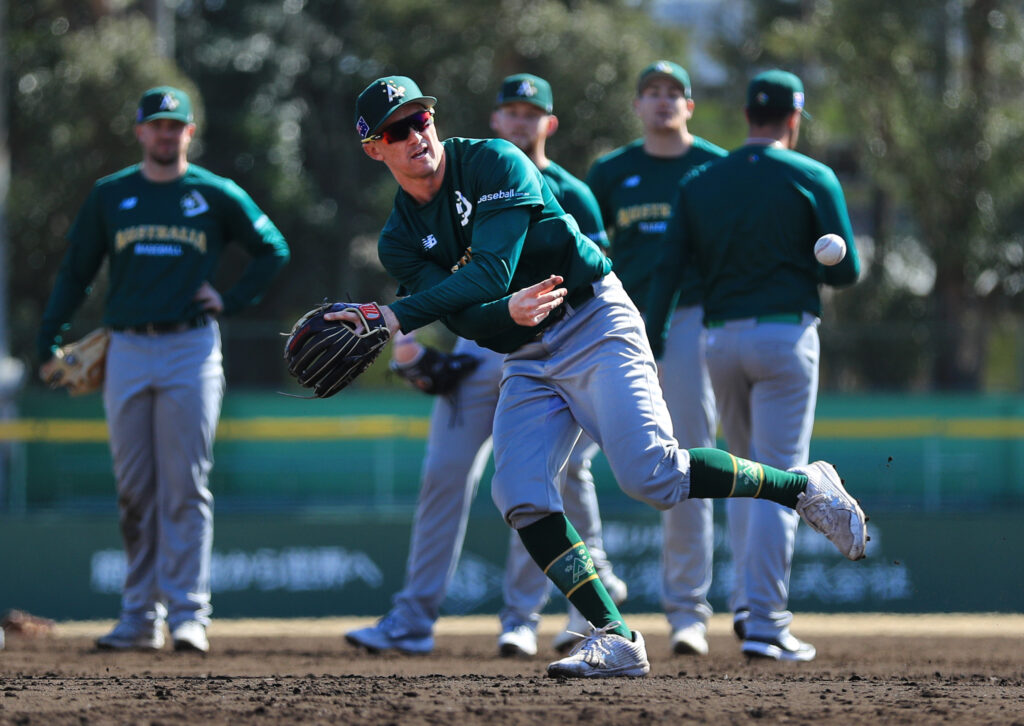
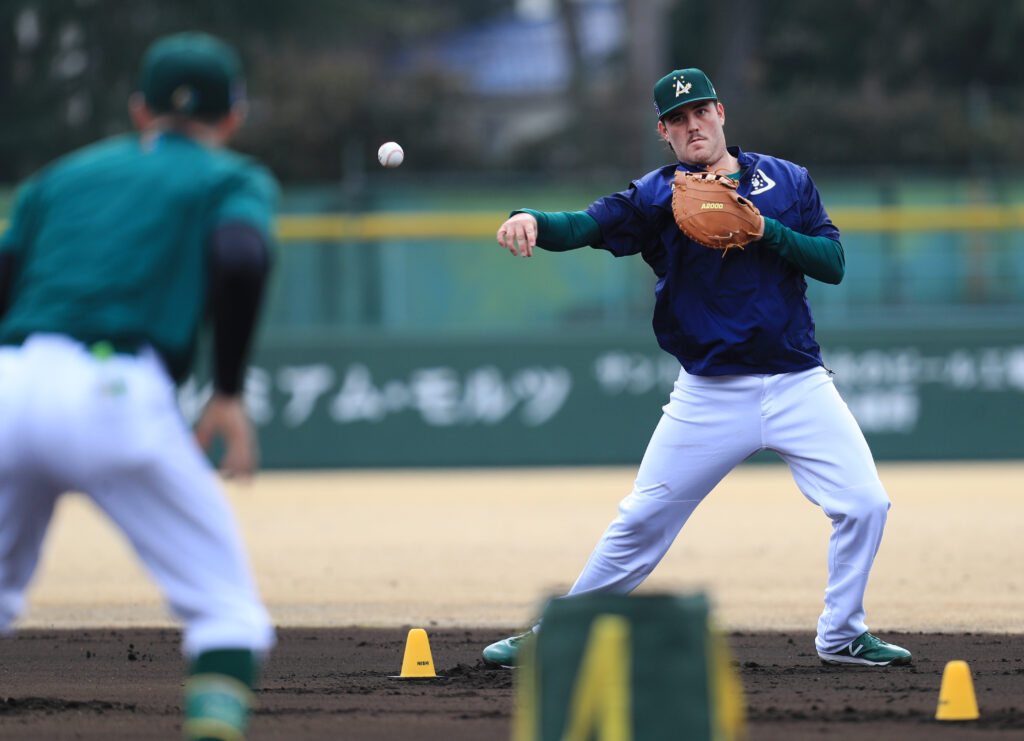
From the first minute of the Fuchu camp, everything was done with pace. There was a big focus on defense, bunt-plays, non-verbal communication, relays and tempo was evident. The message is clear – execute the little things well and the rest will take care of itself.

Pitcher Sam Holland spent part of Friday’s training at the edge of the infield taking in Australian infielders take ground balls and run through a wide range of scenarios. He would cheer loudly when a routine play was made.

Pitching coach Jim Bennett comes for a look too.

“You stay sharp, you have a shot,” he says. That’s the culture and attitude that has spread throughout Team Australia camp heading into this tournament.

“The plays that are hard to make need to become like a reaction play,” says infielder Logan Wade. “That’s why we are here. Just to do the fundamentals right and make great throws. When the big moment comes, we’ll be more relaxed for that.”

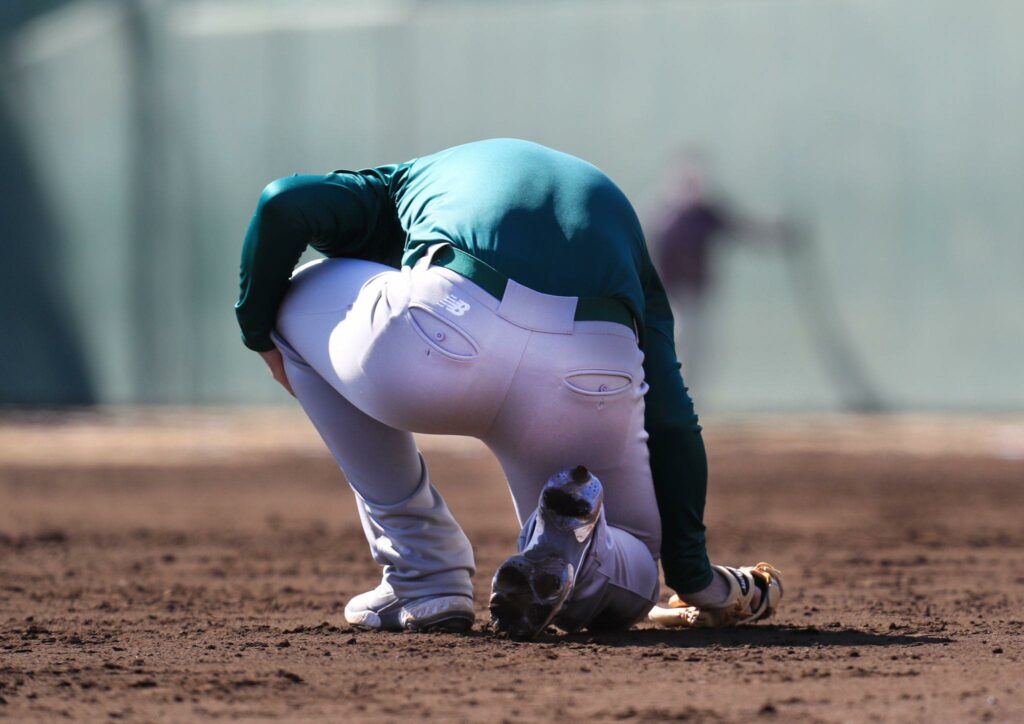
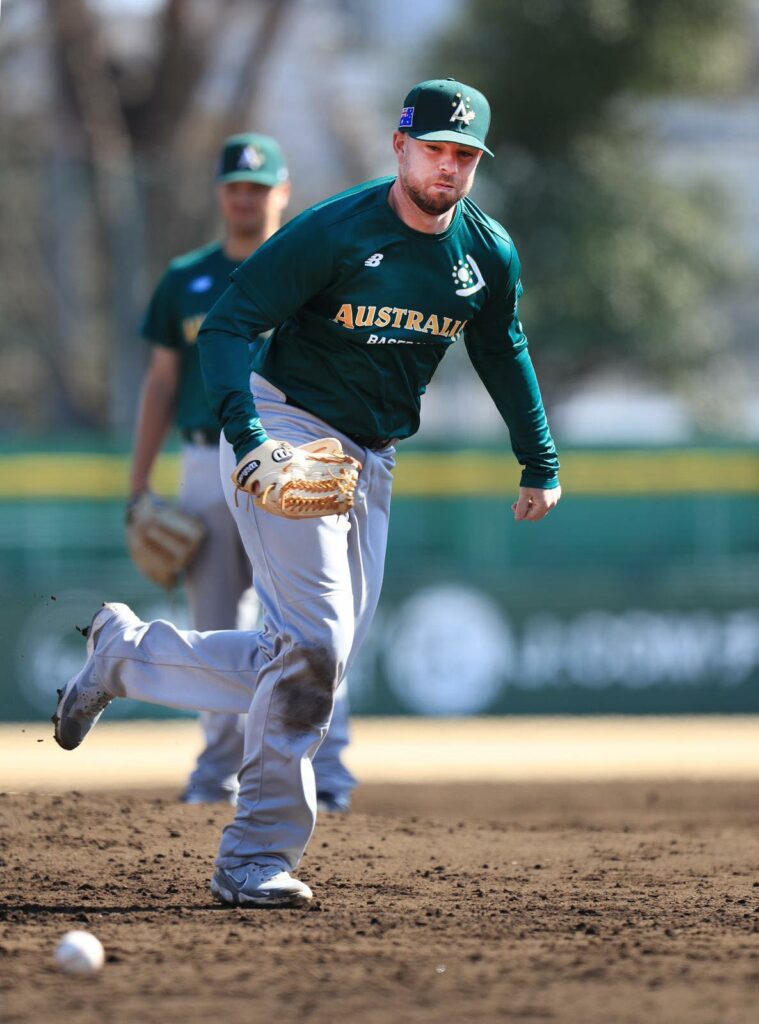
Logan Wade fields a ground ball at Training Camp (PHOTO: SMP Images)

The team even spent part of training with loud Japanese crown noise pumping through the stadium’s sound system. There have been team-building exercises – like veterans taking new players out for dinner – to help bring the group closer.

No detail is too small when it comes to preparing for the World Baseball Classic. Nor should it be. International baseball is decided by tiny moments that have a massive influence on the outcome of the game.

Take the 2019 Premier-12, for instance. Australia needed to beat Canada by two runs to advance to the Super Round. They used a flawless defensive effort, lockdown pitching and a crucial bases clearing triple from infielder Logan Wade in the eighth inning to win 3-1. It was a focus on the fundamentals that carried them through.

“Well, a baseball game is made up nine innings and there’s 27 outs. Then there’s how many pitches in an inning,” says Darryl George. “You just gotta break it down and win the battle pitch-by-pitch and then that adds up. If you can execute on the smaller things it should translate to the bigger picture of the game.”

Darryl George prepares to take a ball in training (PHOTO: SMP Images)

Australia has been on the wrong end of tiny moments, too.

In that same Premier-12, Australia was narrowly leading Japan 2-1 in the seventh inning of a Super Round game. With two outs and a runner on third, Japan laid down a bunt that froze the Australian defense and scored the tying run. Then, in the eighth, Japan put pressure on Australia with two outs and nobody on. They went double, intentional walk and walk to load the bases. Then, Australia walked in the winning run.

Japan won the small moments and eventually the game by a score of 3-2.

That’s why this camp matters. George says he’s hoping extra time spent together focusing on the details will help flip the script in close games.

“It’s a lot of stuff, I think, maybe in the past we haven’t been able to focus on because purely we haven’t been able to get together,” says George.

Those small details of focus aren’t just left on the field either. What happens off the field at these camps are just as important, says Logan Wade.

For years, Wade has been scooping up balls at shortstop and firing them across to first to the glove Donald Sutherland – a long time national squad member and Logan’s teammate with the Bandits.

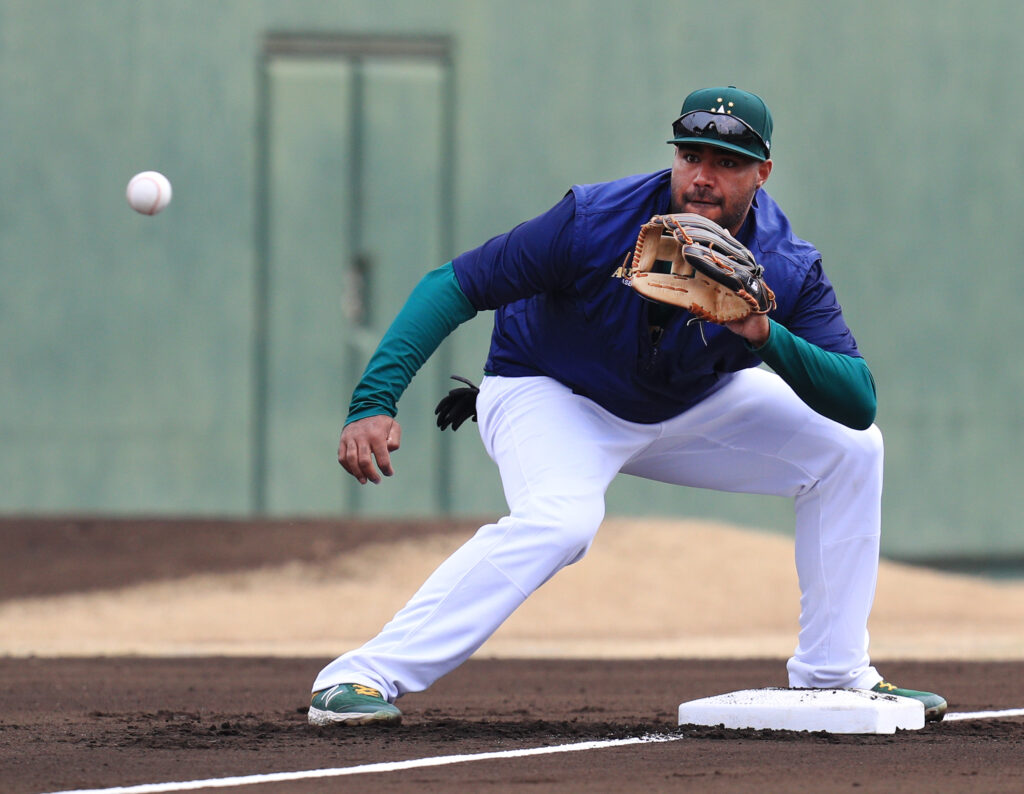
Now, there are three new faces on the senior national team receiving his throws – Perth breakout player Jake Bowey, Phillies prospect Rixon Wingrove, and ABL Championship Series MVP Jordan McArdle. Wade says he’s spent time getting comfortable with how each of the first basemen play and what they’re like off the field.

“When I field a ground ball, I look up and the first person I see is the first baseman,” he says. “I have to feel comfortable. From comfort builds confidence.”

Rixon Wingrove is one of the new players on the team that will play a big role in Australia’s execution (PHOTO: SMP Images)

Wade says he’s feeling good about the way the team has been assembled, and confidence is there already between players.

Nilsson can see it too. The Australian coach says he’s been happy with the way the playing group has battled through an intensive camp.

“Mentally, the guys are really locked in. They’re a lot more comfortable working at the speed we pushed them too,” he says. “Now it’s more natural.”

Now, the focus shifts to getting ready for the tournament opener on March 9 vs South Korea. They have five more days to prepare.

They’ll spend March 4-7 in Miyazaki – an island town in Japan’s south – for an MLB-coordinated training camp.

Centrefielder Aaron Whitefield (LA Angels), infielder Robbie Glendinning (Kansas City Royals) and pitcher Kyle Glogoski (Cincinatti Reds) will meet the team in Miyazaki. Each of those players have been at MLB Spring Training with their respective clubs and are in game-ready condition.

Warwick Saupold, who pitched three seasons in the MLB and in two previous World Baseball Classics, says he’s really pleased with the tempo the trainings. have been in. He says guys have embraced the culture of going hard.

“If you do things fast, it slows down when the pressure is on,” he says. “We’ll be ready.”

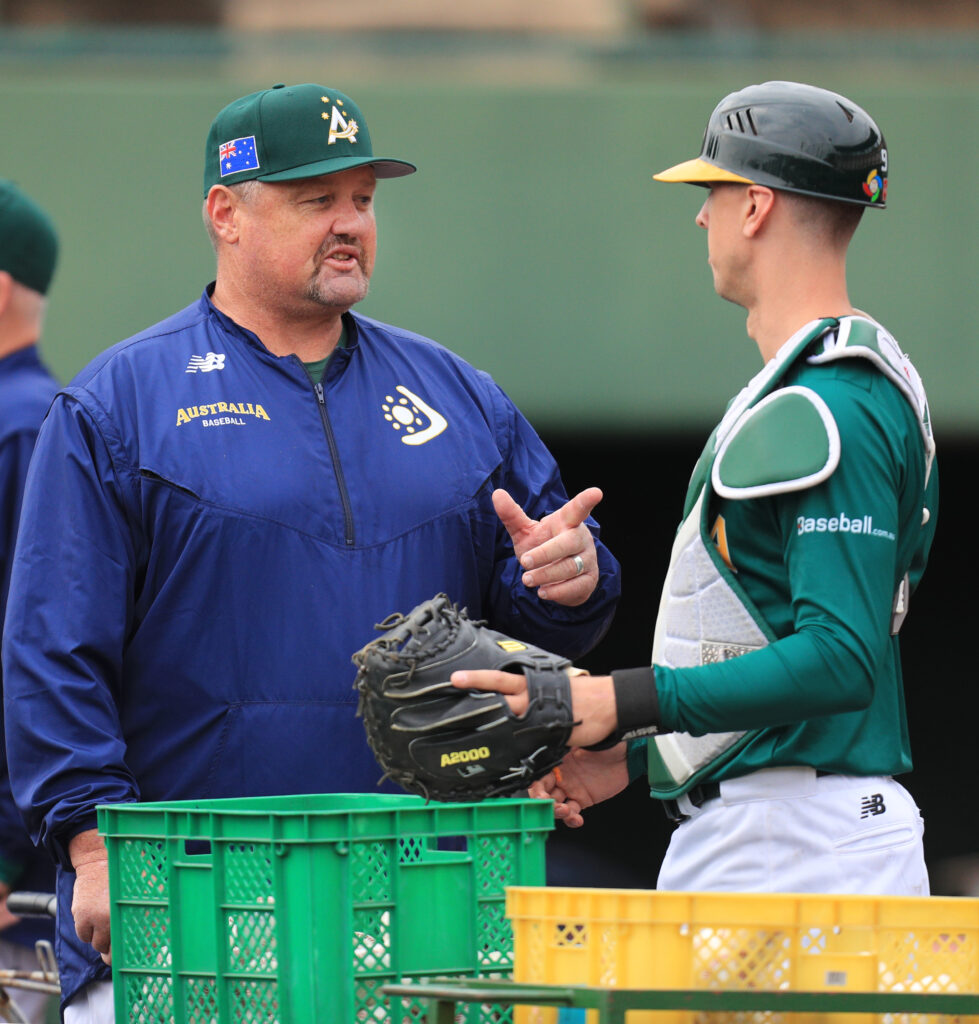
Dave Nilsson (left) talks with catcher Robbie Perkins during training (PHOTO: SMP Images)


03 March 2023 By

By

Corporate News

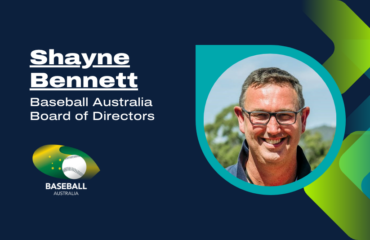
SHAYNE BENNETT JOINS THE BASEBALL AUSTRALIA BOARD

Former MLB player, business owner and long-time contributor to baseball, Shayne Bennett has been appointed to the Baseball Australia Board of Directors.

The South Australian native made his major league debut with the Montreal Expos in 1997, becoming the seventh Australian to play in the Major Leagues. Bennett was also a member of the Australian team that competed at the Sydney Olympic Games in 2000.

His post playing career has seen a successful business career in the building industry in multiple roles, prior to becoming a director and business owner almost a decade ago.

Contributions on multiple baseball boards including the Adelaide Bite advisory board, Baseball Australia technical committee and the Baseball SA board have been a staple of his contributions to baseball in his post playing career. He had a major impact as President of Baseball SA and was a key driver of the development of the West Beach complex.

Baseball Australia President, David Hynes said – “Shayne comes to the BA board with a wealth of baseball and business experience. As a former State President, he brings multiple perspectives on how baseball is operated across every level of the sport.”

“We are thrilled to add Shayne to the board and excited to see the impact he can have both through his baseball and business experience”

Shayne Bennett said – “To have an opportunity to assist in providing opportunities to our current and future female and male players is an opportunity that I couldn’t pass on”.

Tag Cloud:
Baseball Australia Board

01 March 2023 By Staff Writers

By Staff Writers

- Team Australia

Why Team Australia catchers are prioritising relationships at World Baseball Classic training camp

An Aces Sporting Club report by Eric Balnar, Fuchu City, Japan. Photos by SMP Images. Video by Hugh Whittle.


On one of the first days of Team Australia’s Fuchu City training camp, each veteran took a newer player on the team out to dinner.

It was an intentional exercise aimed at getting familiar with teammates who all come from different ages, states, teams, backgrounds and family situations.

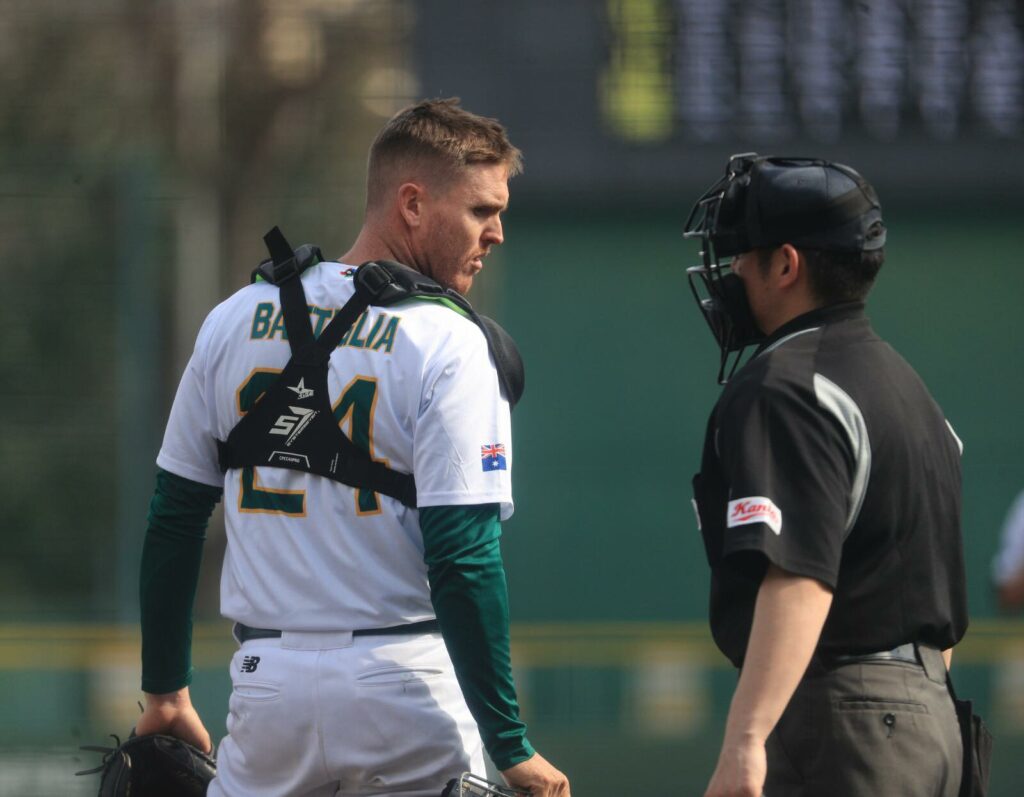
“If you don’t know [your teammates], you’re not comfortable with them,” says catcher Ryan Battaglia. “You need to be on the same page because you don’t want to be on a different one on the big stage.”

Trust is paramount for all teammates on Australia’s World Baseball Classic roster. It’s a whole other level for Australia’s pitchers and catchers.

Australia’s catching trio of Ryan Battaglia, Robbie Perkins and Alex Hall have a big job at hand.

Luckily, they all come with experience.

Robbie Perkins is entering his second World Baseball Classic. At 28, he’s already played over 300 Australian Baseball League games, a World Baseball Classic, a Premier-12, a Claxton Shield and reached as high as Triple-A in the minors.

At 30, Ryan Battaglia was a key part of four straight Claxton Shield winning teams with the Brisbane Bandits. He caught the game where Australia defeated the USA at the Premier-12. He’s been there in huge moments and pressure situations for the national program.

Then there’s Alex Hall. The 22-year-old is the rising catching star. Hall, a switch hitter, is the captain of Australia’s Under-23 team, already received a brief call-up to the MLB, and just won the 2022-23 Australian Baseball League MVP after putting up video game numbers with the Perth Heat.

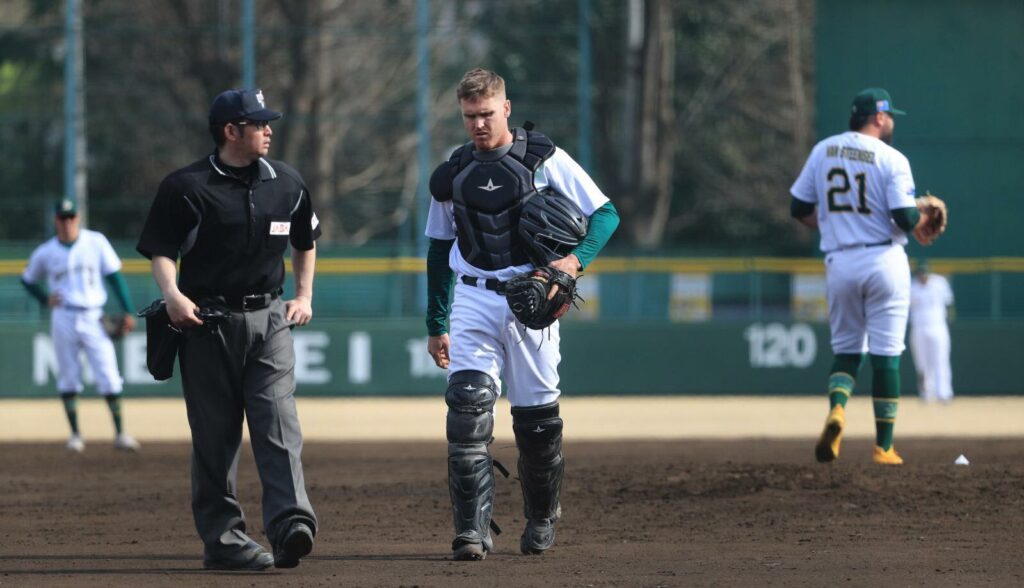
Catcher Ryan Battaglia during an exhibition game in Fuchu City (PHOTO: Scott Powick)

During the upcoming WBC, it’s one of those three behind the plate, calling, catching, leading and managing the balls and strikes delivered by any one of Australia’s fifteen rostered pitchers.

They need the pitchers to trust them, and they need to trust the pitchers.

“At the end of the day we are a battery out there,” says Perkins. “The pitcher is throwing to me and we need to execute to give everyone else a chance. It’s important we take time to get to know each other at this camp.”

The stakes are high. This is the World Baseball Classic – the biggest international tournament there is and it’s chalk full of pressure moments featuring with the best players the sport has to offer.

Australia plays four games in Group B vs South Korea, China, Japan and Czech Republic. They will play in front of a massive global TV audience and 55,000 people at the Tokyo Dome in baseball-crazed Japan. They will likely need to win at least three of them to get through.

This isn’t regular season baseball. It’s a sprint. Every little moment bares significant meaning.

“It’s polar opposite,” says Perkins. “In a tournament every pitch is just as important as the next. You come out with an intent to get a guy out every single at-bat. In the season, you have to think about the next day. Here, at the World Baseball Classic, every single game is a fight for our lives. You have think about now before you worry about tomorrow.”

Perkins says it’s important he knows what each pitcher’s best pitch is, what they feel comfortable with, and how they react to different situations just as a human being.

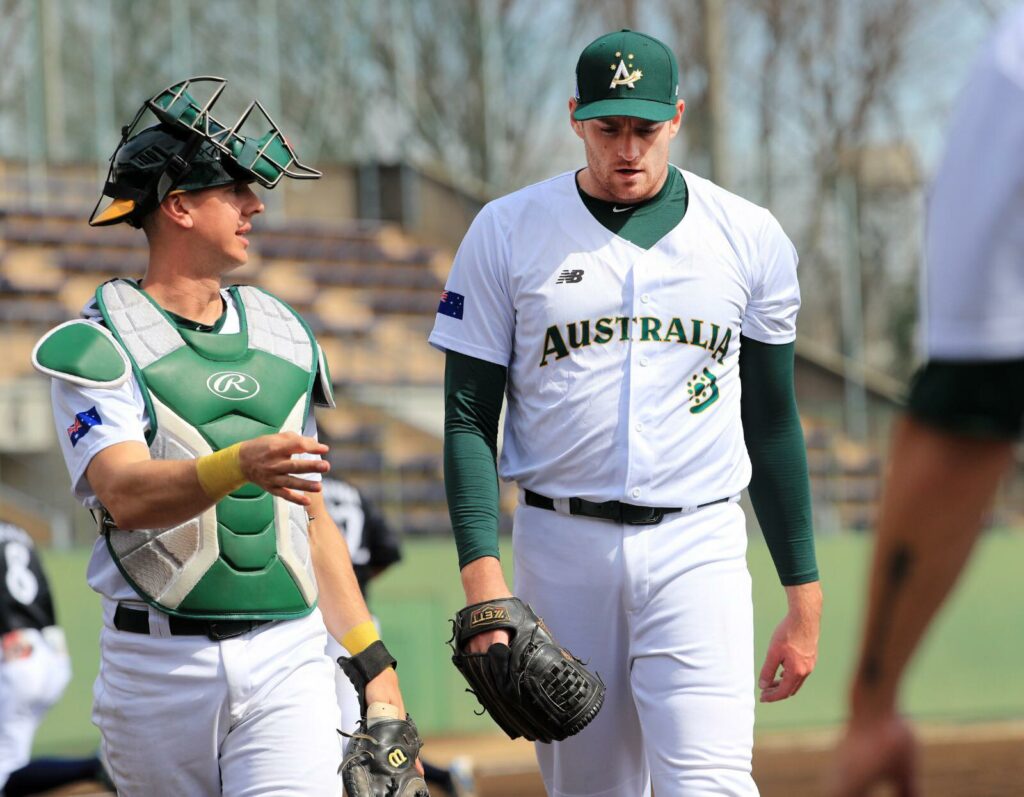
Robbie Perkins from Canberra, working with Jon Kennedy from Victoria (PHOTO: Wendy Powick / SMP Images)

He says he wants to know what to call and what the pitcher likes to rely on so when that big moment rears its head, they know what to do.

“There’s a massive mental edge we have to create,” says Perkins, a Canberra-native about to play in his second WBC. “We have to create a bond with every single pitcher and understand how their pitches move, how we need to work with them, what they execute well, what’s their go-to-pitch when it comes down to it. I think there’s a whole other aspect we need to factor into our preparation.”

Australia’s catchers have just two weeks to prepare. One of the reasons for this training camp in Fuchu City is to get used to each other and gain an understanding of who their teammates are.

Manager Dave Nilsson knows how important that pitcher-catcher relationship is. He was a catcher in the Big Leagues for nearly a decade, an MLB All-Star in 1999, and a catcher for Team Australia for a long time.

MISSED ANY OF THE STORIES? CHECK OUT ARTICLES AT THE #WBC23 HUB, THANKS TO ACES SPORTING CLUBS. Click here.

He says it’s all about developing good communication habits.

“For them it’s about developing good communication which then develops trust. That’s where all the effort goes into,” he says. “The catcher needs to be on point for this all to work. A big part of catching is mental.”

It’s important for the pitchers, too.

21-year-old Blake Townsend is entering his first World Baseball Classic. He’s from a different state than all three rostered catchers and hasn’t really worked at length with any of them.

Townsend says he appreciates how hard Australia’s catchers are working to get to know him not just as a pitcher, but as a person.

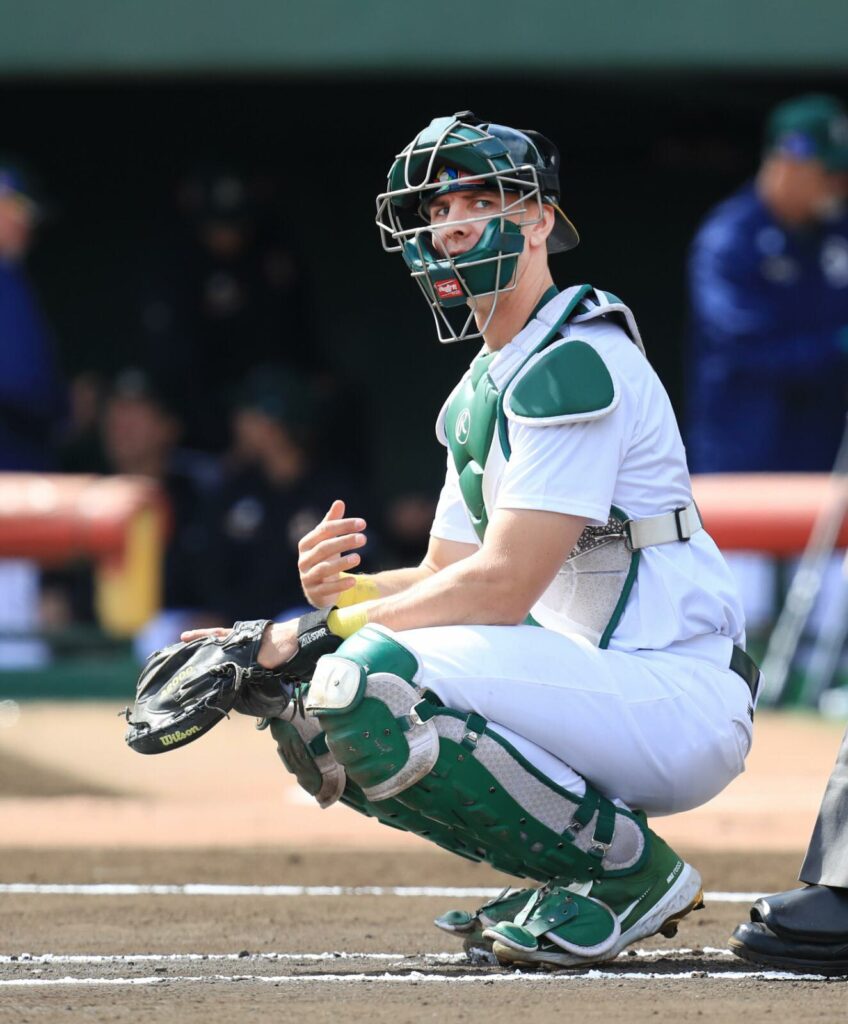
22-year-old Alex Hall is on his first World Baseball Classic roster (PHOTO: Scott Powick / SMP Images)

“The guys you trust the most are the ones that put in the effort off the field,” says 21-year-old Blake Townsend. “Those are the ones you feel a better energy with. You want to know you can have a positive discussion that’s built on trust.”

Veteran pitcher Sam Holland says it takes a different kind of person to be a catcher. He says he appreciates all they do.

“They have the hardest job, man. They have a huge role especially when it comes to the dynamic of a team,” he says. “From a pitcher’s perspective, It’s crucial that we get to know these guys on and off the field and get on the same game plan as them. We need to figure stuff out before we get on the field, which is what we’ve been doing these last few days.”

At 22-years-old, Alex Hall is embracing the challenge of getting to know his new teammates. He could be on this national team for a long time.

“I’m spending a lot of times with pitchers,” he says. “Asking a lot of questions, learning about them. It’s a great challenge and a lot of fun.”

It’s a lot of work, but its’ a roll that that all three of Australia’s catchers say they embrace.

Battaglia says it keeps him busy at the training camp and he wouldn’t have it any other way.

“We have a lot of guys to get to know. We’re busy. We’re going around, talking to pitchers, getting to know them,” he says. “It’s exciting to meet new guys, form new friendships.”

28 February 2023 By Eric Balnar

By Eric Balnar

- Team Australia

What the Indigenous representation symbol on Team Australia's World Baseball Classic jersey represents

An Aces Sporting Club report by Eric Balnar, Fuchu City, Japan. Photos by SMP Images. Video by Hugh Whittle.


Tim Atherton has worn many versions of a Team Australia jersey over his decade-long journey with the national baseball team.

He says he is extremely proud to wear this particular design.

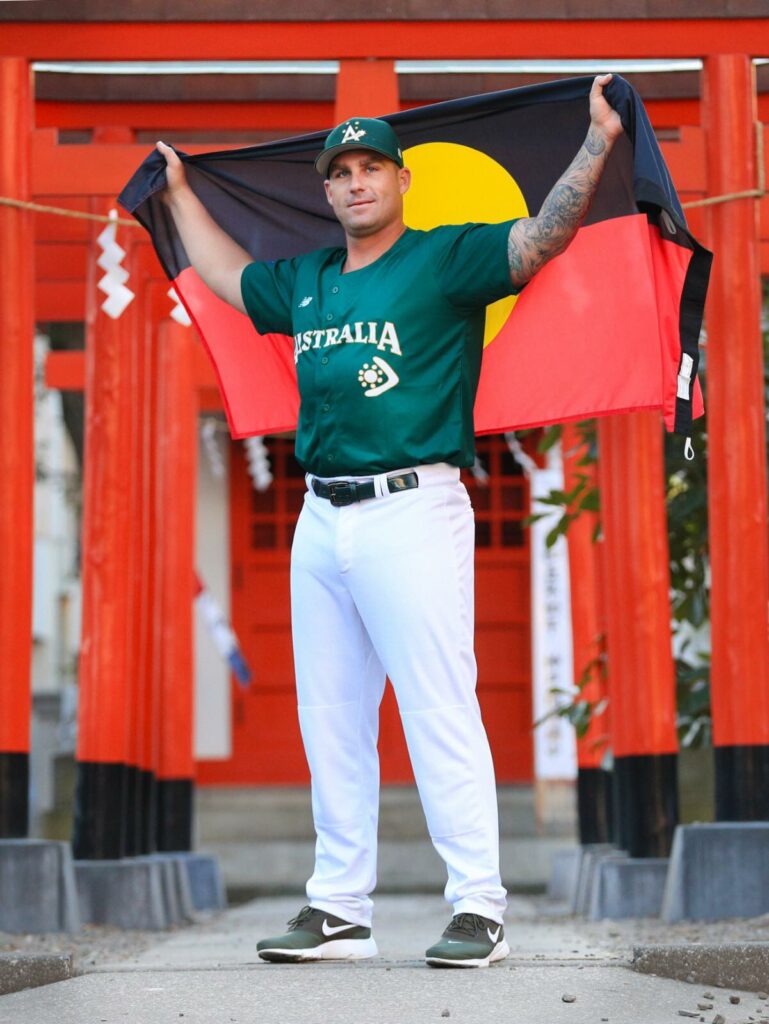
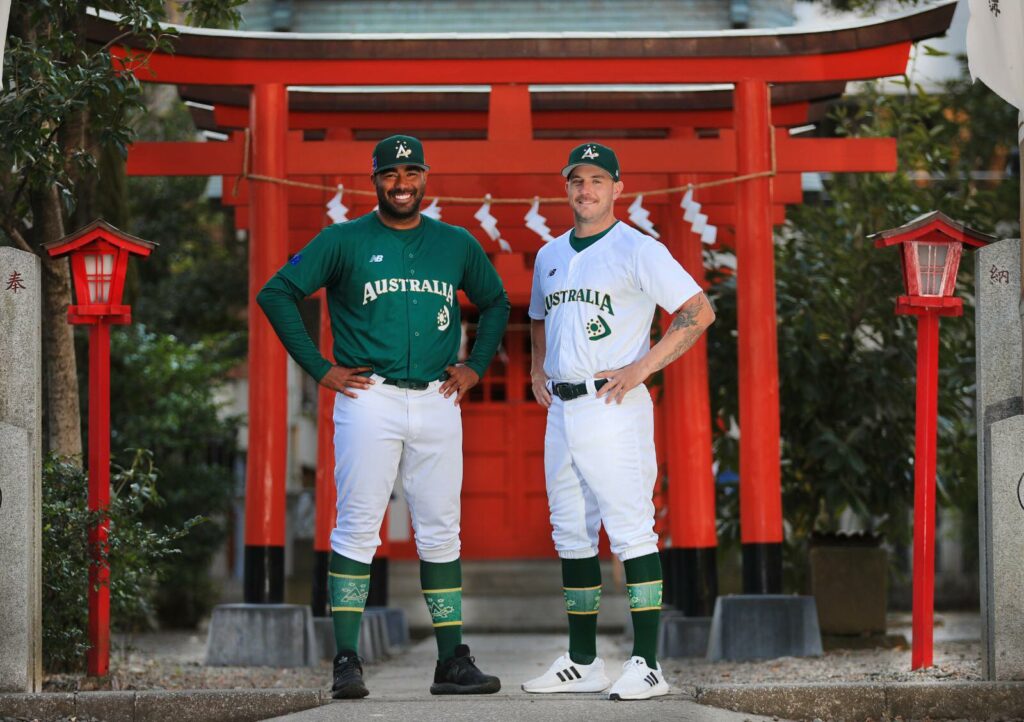
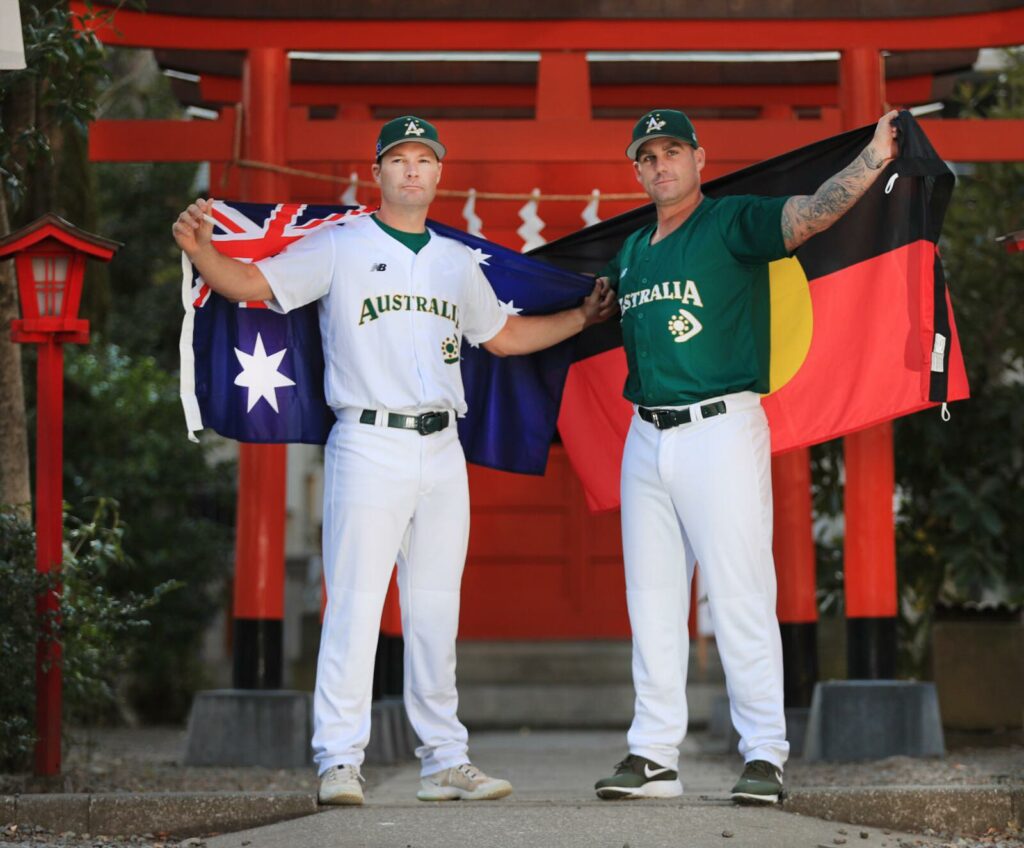
Atherton, Australia’s co-captain and a Gundangara man, proudly points to an Indigenous recognition symbol on the chest of his official World Baseball Classic jersey.

“This has representation, this has meaning. It gives an identity that is true to Australia in recognising First Nations people,” he says. “It is country encompassing in the Indigenous form and it’s country encompassing Team Australia.”

Tim Atherton sporting the WBC jersey (Photo: SMP Images / Scott Powick)

While this design has been used in international competition before, this is the first senior men’s tournament it will get a run in.

The jersey tells an excellent story. Now it gets to be shown to a massive international audience at the world’s biggest international baseball tournament.

The emblem acknowledges the rich history and culture of the country’s First Nations people through an Indigenous symbol designed by proud Whadjuk Noongar woman and Perth artist Jarni McGuire in 2021. It took 18-months to design.

McGuire says the symbol is a visual representation of the champions of Australian baseball.

“To the right, you’ll see a diamond shape which represents the pitch. The circles around the big circle is a symbol for a star. It represents the champions of baseball,” she says.

Atherton says he likes the fact that the meaning within the symbol is encompassing of past baseball players.

“That’s very important,” he says. “In terms of the Indigenous community, the teachings and learnings all are passed down from elders. I like the fact that the star in the middle partly represents the baseball stars we are following in the footsteps of by wearing this jersey.”

GET MORE STORIES AT OUR WBC HUB: Click here.

That sense of pride in Australian baseball is something instilled right away. On the first night of Team Australia’s 10-day training camp in Fuchu City, head coach Dave Nilsson suggested players reach out to people who came before them and those who helped them get to the national team to say thanks.

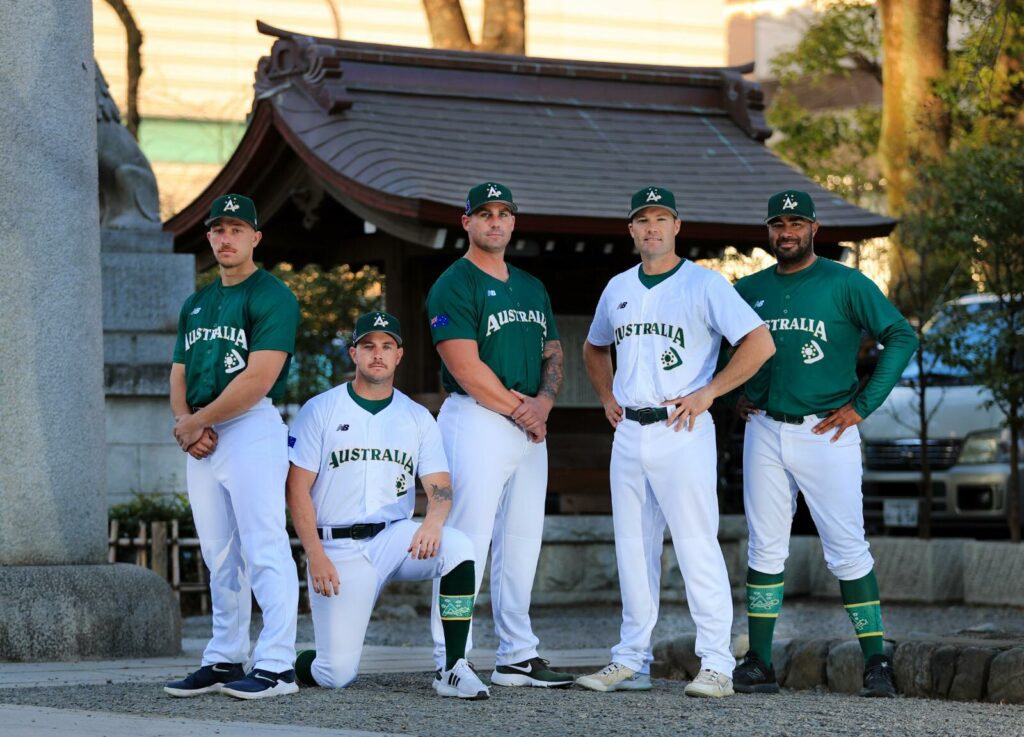
Left-to-right: Alex Hall, Andrew Campbell, Tim Atherton, Tim Kennelly and Darryl George (PHOTO: SMP Images)
Learning from the past, showing appreciation, sharing stories, and helping the future are all characteristics that co-captain Tim Kennelly says is evident in Australian baseball, especially on the national team.

“Anyone that’s worn this jersey and represented Australia has meaning to the team,” he says. “There’s been a few past players [who have helped me]. One in particular is Luke Hughes. He was on the national team a few years before I made it, and he made it easy. The information, the stories of the team, makes it easy to settle in.”

Darryl George and Robbie Perkins both say former Team Australia catcher Allan De San Miguel was that person who helped them transition into the national team.

“He is very encouraging. He always instils a lot of belief in us. He made sure we weren’t afraid to be ourselves” says George of De San Miguel. “That’s something we’re carrying on and passing to the next generation of players as well. I think the Indigenous symbol [on our chest] is a great representation of us.”

Atherton adds that it’s “highly important” that Australian national teams include culture of the First Nations people.

“I would be hard-pressed to find an [Australian national] team that doesn’t have an Indigenous player on their squad,” he says.

Atherton says he hopes he can continue to be a meaningful part of Australian baseball. He says the jersey perfectly encompasses everyone’s journey on this national team.

“It’s a flow of energies between players past, present and future,” says Atherton, the co-captain of Team Australia. “The representation of past, present and future right here, shows indigenous culture going back to the dreamtime, to the youth of today. As a player on this team for many years, I’ve been a learner and a listener and now I’m doing the teaching.”


27 February 2023 By Staff Writers

By Staff Writers

ABL

When it comes to the national team, it means a little extra for Australian players

An Aces Sporting Club report by Eric Balnar, Fuchu City, Japan. Photos by SMP Images. Video by Hugh Whittle.
—-

“No.”

Blake Townsend quickly cut off a question he knew was coming.

The talented 21-year-old Australian pitcher is a Seattle Mariners prospect who’s already seen time in Triple-A, the level below the Big Leagues.

It’s the end of February and MLB camps are firing up. Townsend is one of many members of Team Australia who could be in the USA at a minor league camp. He could be preparing for Spring Training right now, trying to showcase his stuff to MLB coaches and scouts, hoping to gain a more favourable position in the system.

Instead, he’s in Japan, with his country mates, in the freezing cold, preparing for the World Baseball Classic – the sport’s biggest international tournament.

The question to be asked was a simple: “Was there any consideration of staying in Arizona and fighting for your professional spot?” Townsend knew what was being asked and cut it off before the word ‘Arizona’.

“No,” he says. “When you’re 10-years-old in Australia and playing baseball, you have two dreams. One is to play in the World Baseball Classic, the other is to play in the big leagues. I was never missing this. There was no hesitation.”

There are ten others on the team with current MLB or MLB-affiliate deals. All of them will have to leave their professional camps at some point and put their Big League dreams on hold in pursuit of international success for their country.

Playing for Australia carries a lot of weight. It does in any sport. Baseball is no different.

“I wanted to be here,” Townsend says.

Playing in a World Baseball Classic – and representing a country at the highest possible level – is a big motivating factor for athletes to keep playing the game. It’s what they dream of. All the players give something up to make that dream a reality.

“When you talk about representing your country and your families, this is the truest form,” says manager David Nilsson, who first represented Australia in 1995. “They’re trying to achieve something special, just as people. It takes a special person to buy into this Australian culture.”

For some players, like 32-year-old pitcher Todd Van Steensel, the World Baseball Classic is a big motivating factor to keep playing baseball.

“You sacrifice a lot for this game and it’s the people at home support you so that’s why you can keep doing it,” he says. “I always said I would keep playing to be in another World Baseball Classic and anything that happens after that is just a bonus. Now I’m about to play in another World Baseball Classic.”

Van Steensel has spent every year since he was 18 playing professional baseball somewhere in the world. He was an All-Star in Double-A with the Minnesota Twins, he’s pitched in a World Baseball Classic, he’s played professionally in Mexico, Venezuela, Australia and France. The game has taken him to five different continents and he’s won championships across the globe.

But that amount of travel does have its downside.

“I have never been to any of my friends’ weddings. I’ve missed almost every birthday. I never get my mom’s cooking.” he says. “But I don’t regret it. This is what I love to do and everyone is really supportive of that. Older guys have told me to play this game for as long as you can, so that’s what I’m doing.”

For other players, it is time at home and moments with their kids and family that is missed. They have to juggle being a high-level baseball player and family man.

Steve Kent could be on a family trip to watch one of his kids play sport. 26-year-old Jake Bowey has four kids at home, a full-time job, and balances being a dad and a professional baseball player for the Perth Heat.


He’s relying on a great network at home to let him live out his dream in Tokyo.

“My wife is supportive. We talked about this, I wasn’t going to miss it if I got the chance to go to Japan,” he says.

Bowey did everything he could to force his way on the team and guarantee his spot. He had career high numbers in the ABL and even mashed five homers in six post-season games for the Heat. Now that he’s here, he’s completely focused on baseball.

“It’s about working hard and giving it your all. We will run through a wall if we have to,” he says.

That “run through a wall” attitude was on display on Day 4 of the Fuchu Training Camp. Players were laying out for ground balls, diving at bunts, exerting themselves in simple run-down plays and working at a high tempo.

If you’re already sacrificing a lot to be here, you may as well make sure you’re sacrificing your body to go as hard as you can when you get here, says pitcher Dan McGrath.

“We have a big attention to detail on making everything game speed, going quicker, and getting ready for that,” says McGrath.

Tim Atherton has a lot of skin in the game, too. Australia’s co-captain will be relied on to pitch big innings for Australia, like he has in the past. He owns a mining business. He has kids. He still lives the life of a professional baseball player.

All of that is time consuming, but Atherton calls events like the World Baseball Classic “justification” for all the hard work he does to keep his baseball dreams alive.

“It’s an accumulation of sacrifice, time away, travel, time away, hard work, joy, sadness from the game, all the years in the gym, all the time throwing baseball up against the wall in the dark by myself, all the things – the parties, the birthdays,” he says.

“The thing about this all is you miss out on a lot of personal things in life…so this has to be really important to you. This has to mean something to you.”

“When you step out on that stage in front of 55 thousand people the greatest way to describe it, it’s justification of every single little thing you’ve done to get to this moment, justifies that.”

26 February 2023 By Eric Balnar

By Eric Balnar

- Team Australia

How Australia is approaching pitching in the World Baseball Classic

An Aces Sporting Club report by Eric Balnar, Fuchu City, Japan. Photos and video by Hugh Whittle.

—

The pitching rotation and schedule for Team Australia arms at the World Baseball Classic is easy to understand.

“Everybody needs to be ready to pitch in the first inning of the first game against Korea. Literally,” says Team Australia pitching coach Jim Bennett.

“It doesn’t matter what your role is in a normal season, any one of them could pitch at the beginning of the game. That is what they are preparing for: to be ready at all times.”

There are fifteen pitchers on Australia’s roster. Bennett says if he has to use all of them in the first game vs South Korea to get the win, he will. There’s no holding back in tournament baseball.

Of the rostered pitchers, five of them have pitched in a World Baseball Classic, the last one in 2017. All fifteen play professionally somewhere in the world. Twelve of them have played MLB-affiliated baseball, including four right now.

There are 21 Claxton Shields combined between the staff. Warwick Saupold has pitched in the Big Leagues for the Detroit Tigers. Tim Atherton has beat USA in an international game. Todd Van Steensel has won championships on nearly every continent.

There is plenty of experience and pedigree to draw from. There’s also a nice mix of young blood like recent college graduate Liam Doolan, or 20-year-old Will Sherriff, or 21-year-old Mariners’ prospect Blake Townsend.

“Every pitcher has a great strength,” said manager Dave Nilsson in a podcast yesterday. “We’ll be calling on all of them at some point.”

MISSED A STORY? Head to the #WBC23 Hub for stories, photos and daily recaps.

Former MLB pitcher Warwick Saupold deals at Fuchu training camp (PHOTO: Scott Powick / SMP Images)

This pitching group will have to navigate Team Australia through four group stage games vs South Korea, China, Japan and Czech Republic. Australia will likely need to win three of them to advance to the quarter finals.

It’s win at all costs and runs have to be held off the board – it’s an important tiebreaker in tournament baseball. There’s no holding back.

“We’re going to win [these games] collectively. It’s not going to be one guy,” say Bennett.

One of those guys trusted to get it done is Steve Kent – a 33-year-old veteran who has pitched professionally for a long time.

Kent has 14 seasons of professional baseball under his belt, reaching as high as Triple-A with the Atlanta Braves and winning a Claxton Shield with the Canberra Cavalry of the ABL. He’s pitched in big games before.

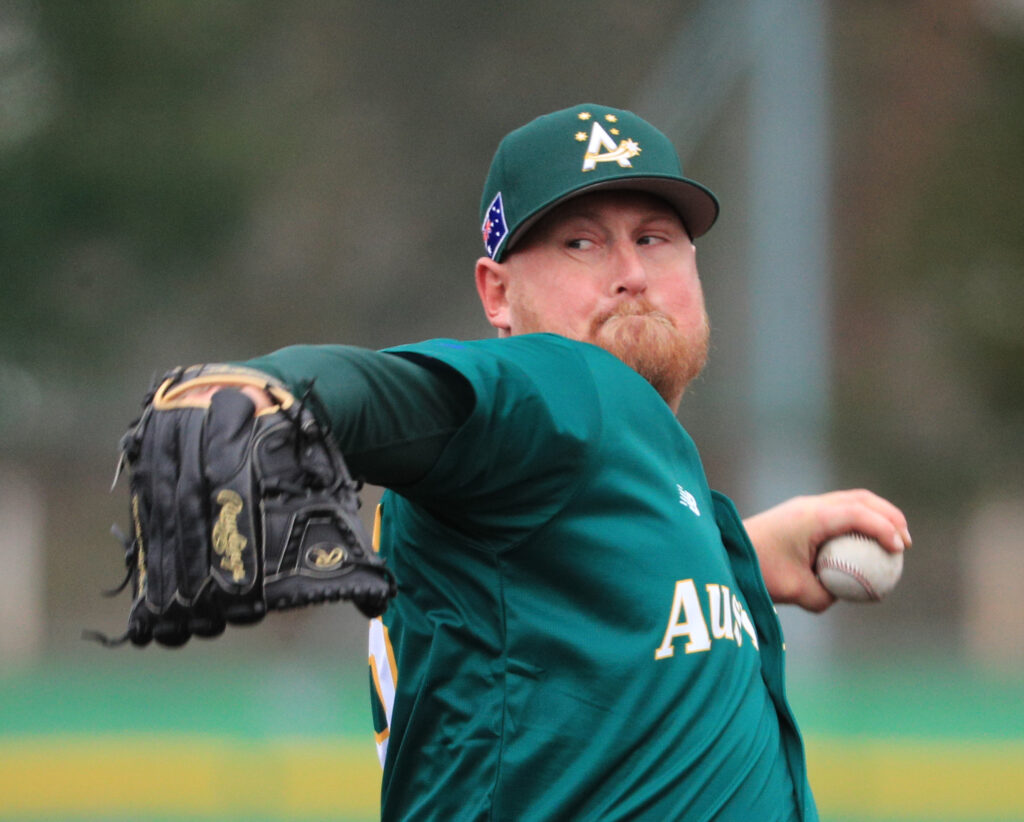
 Steve Kent in action in an exhibition game in Fuchu City, Japan. Photo: Scott Powick | SMP Images

He says “be ready” is the message he’s trying to reinforce in the dugout.

“My role is to be ready whenever my name is called. Whether that’s starting, the second, the eighth, the fifth. I am getting ready for any situation,” he says. “For a lot of guys that’s something different they are going to have to get used to. But part of this training camp is about doing something different and preparing that.”

Bennett agrees.

“It’s about being comfortable in an uncomfortable situation,” he says. “That’s what this camp is about. It’s putting guys out of their comfort zone.”

Australia is trying all the tricks in the book to push players out of their comfort zone.

A mid-camp hotel switch, simulated crowd noise, practicing game situations, training at a fast pace, short turnaround between activities, and even living in a foreign country for two weeks before Game 1 helps get the players ready for a truly different experience.

That experience? Playing in a game with huge TV audiences, in a stadium that fits 50,000+ people, in a short tournament, with it all on the line.

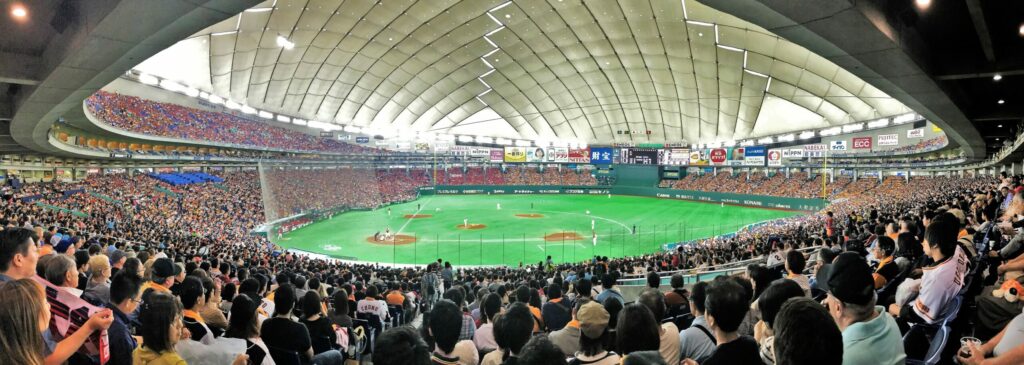
The WBC will be played at one of the most iconic baseball venues in the World.

Kent says the key is to not shy away from anything you feel.

“Don’t hide from it. You’re going to be there and you’re going to be nervous. You can’t escape it,” he says. “It’s about embracing it. Take in that moment, have a look around, don’t run away from it. You have to say: ‘This is what I fight my entire life to achieve. There’s nothing to lose. Do the best I can to help the team…and have faith that you can.”

For Bennett, it comes down to trust.

“Everybody is different and has completely different strengths and traits. You have to embrace who you are,” he says. “You have to know your best stuff and trust it. We’re going to win this thing by a collective, not because of an individual.”

NEWS AND NOTES


Giving back to Fuchu

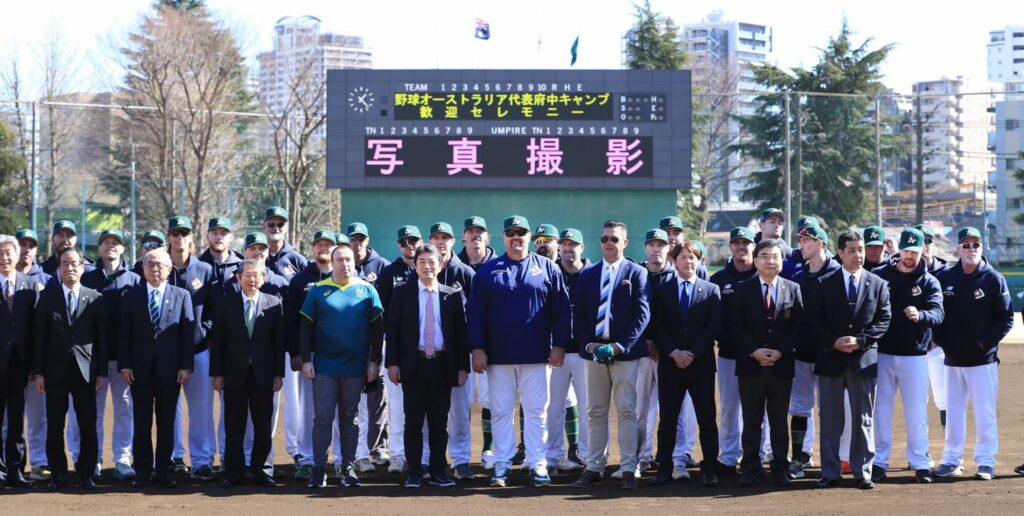
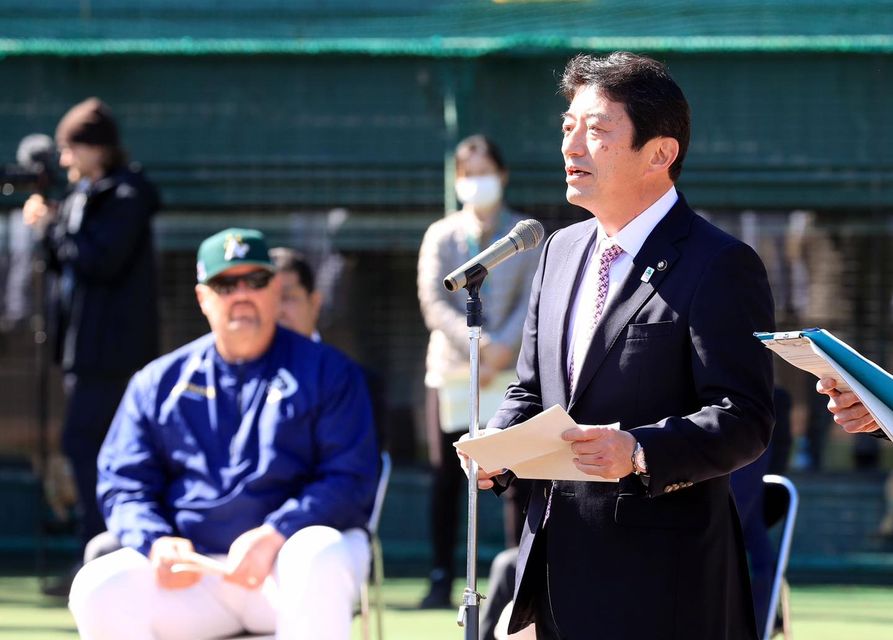
After a full morning of training – which consisted of a few live at-bats, a mini-scrimmage, fitness and batting practice – Team Australia was officially welcomed to Fuchu City.

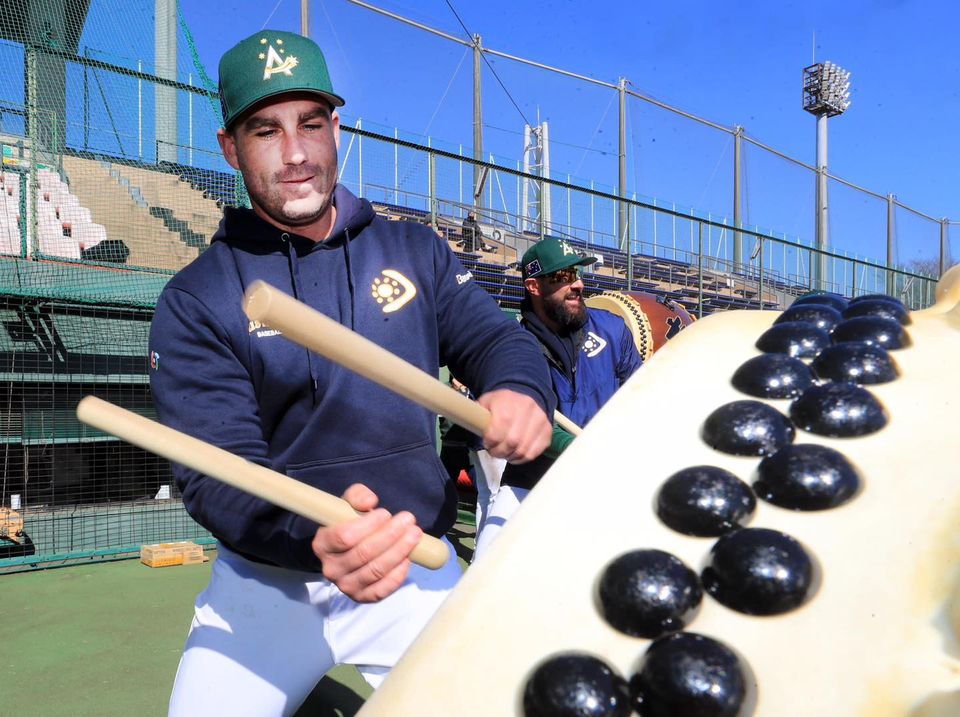
The mayor of Fuchu and many Japanese dignitaries were on hand for a half-hour ceremony that featured drum performances and speeches. Some of Australia’s players even tried the drums!

After the ceremony, the team ran a special baseball clinic for nearly 200 local kids.

“It’s an opportunity for us to give back,” said pitcher Luke Wilkins yesterday. “We look forward to stuff like this.”

Tomorrow – Practice + Shrine Visit

Team Australia have another big morning of training. In the evening, they’ll head to a visit to a local shrine.

Australia is in Fuchu City until March 4. They’ll then head to Miyazaki for exhibition games vs WBC teams.

First pitch of the World Baseball Classic is March 9.

25 February 2023 By Eric Balnar

By Eric Balnar

- Team Australia

How a Japanese town is helping Team Australia prepare for baseball's biggest tournament

An Aces Sporting Club report by Eric Balnar, Fuchu City, Japan. Photos and video by Hugh Whittle.

“I have to show you this little ramen spot,” says pitcher Luke Wilkins. “I can’t tell you what it’s called, but I know where it is but I can show you on a map. It’s really simple. It’s so good…all the food is here really.”

The ramen spot he refers to is a big hit among the Australian camp. It’s small – as many little Japanese restaurants are – and outside a major train station. Nobody speaks English and the menu – which doesn’t have a bad item on it – are completely in Japanese. The staff is overly friendly, the food is delicious and they love having the Australian national team around.

In a completely foreign environment, having a “spot” – or a place that feels at least a little familiar – can be a big thing for a person preparing for the biggest tournament of their life.

Team Australia is less than two weeks from their first World Baseball Classic game vs South Korea and preparation is key. They’re about to play in front of a sold-out Tokyo Dome against baseball’s best. Everything around is just a little different – the food, the language, the transport, the culture.

That’s why having a home base is so important. Welcome to Fuchu City, a suburb on the outer edges of the Tokyo metro area. For the next week or so, it may as well officially be an Australian town.

“It’s our home outside Australia,” says Baseball Australia CEO Glenn Williams.

PODCAST: Listen to Dave Nilsson’s chat here (available across all podcast platforms)

It’s a town with a ‘metro-rural feel’ in a big city approaching the outskirts of Western Tokyo. There are lots of parks, sports stadiums, great food and friendly people. It’s a true “workers” city – there’s not much touristy about it.

There are big businesses like Toshiba, NEC and Bank of Japan who base themselves here. The people are sports mad. There is a major race course, the training grounds of various sporting teams, lots of baseball and lots of rugby.

The locals go out of their way to make Australia feel like home. Nothing is too much trouble – they even play Australian music at team lunches and batting practice to make them feel more comfortable.

Players and staff say they can feel the sense of community the town brings.

“I love it here [in Fuchu],” says Wilkins. “Everybody is so excited that you are here. They absolutely love baseball. You feel like celebrities and it really feels like home. It also is nice for the returning players to show new people some of their favourite things to do and see.”

Wilkins has already been to his “local” massage place in Fuchu and referred it to other players. He was rehabbing an elbow injury on his first trip to Fuchu in 2018 and he got some work done at a local shop. During his visit, the shop owner called his family and friends and Wilkins was signing autographs outside the store.

“When I returned this time, they all knew my name,” he says. “They can’t speak much English but it was all ‘Luke!’, ‘Wilko!’, ‘Wilkins!’. It’s really cool. Little things like that make a huge difference.”

Fuchu City has been a Japansese-base for Australian baseball training camps since 2018. It was first used as a training camp home for an international friendly between Japan and Australia. The relationship started with Baseball Australia via Mr. Takano, the mayor of Fuchu City.

The senior men’s team came here again before the Premier-12 tournament in 2019 and were scheduled to come here for Olympic qualifiers. Now, they are back for the World Baseball Classic – the biggest stage of international baseball.

There’s plans in the works for growth on the partnership, too.

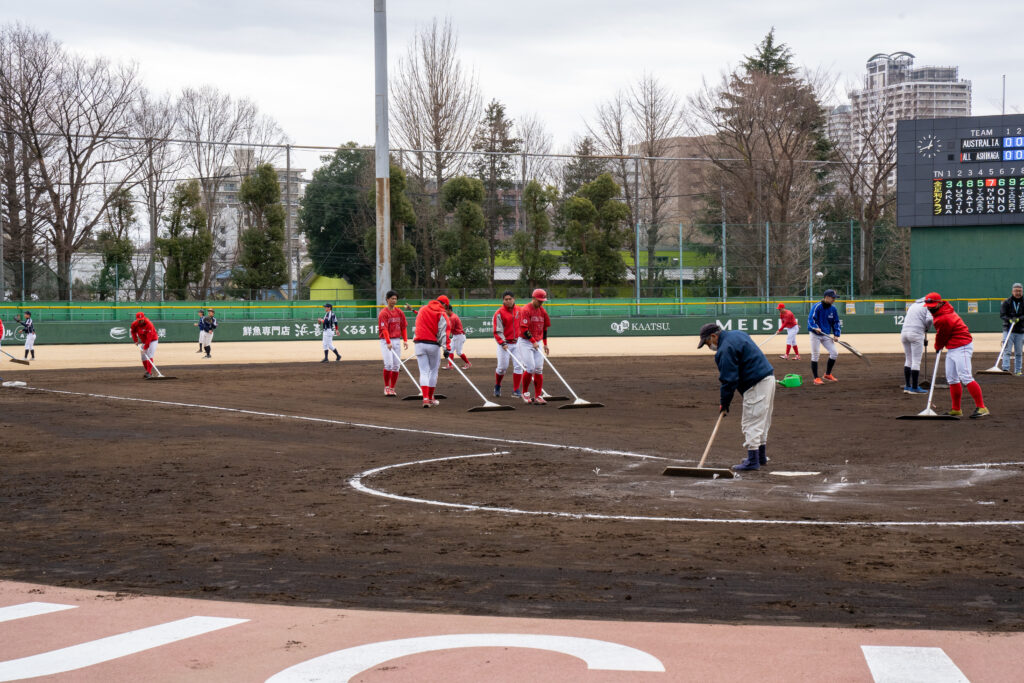
“Look – this is the reason why are here,” says Williams, looking out at the Fuchu City Field before a Team Australia practice match.

“There are 20-30 people out there, getting the field ready on a Saturday morning just so we can prepare to play baseball in the big tournament. They don’t have to do that.”

Their local council, staff and community do everything for Team Australia.

They provide access to facilities, a training field and coordination of many of the logistics. They assist in setting up the hotel, providing on-ground support staff and promotion of local events. Fuchu staff supplies food for games and trainings.

There are school visits, clinics and special events over the next nine days at Team Australia’s WBC training camp.

Coaches and management have rooms at the local stadium and hotel to do work, hold team meetings, and continue to plan Australia’s World Baseball Classic experience.

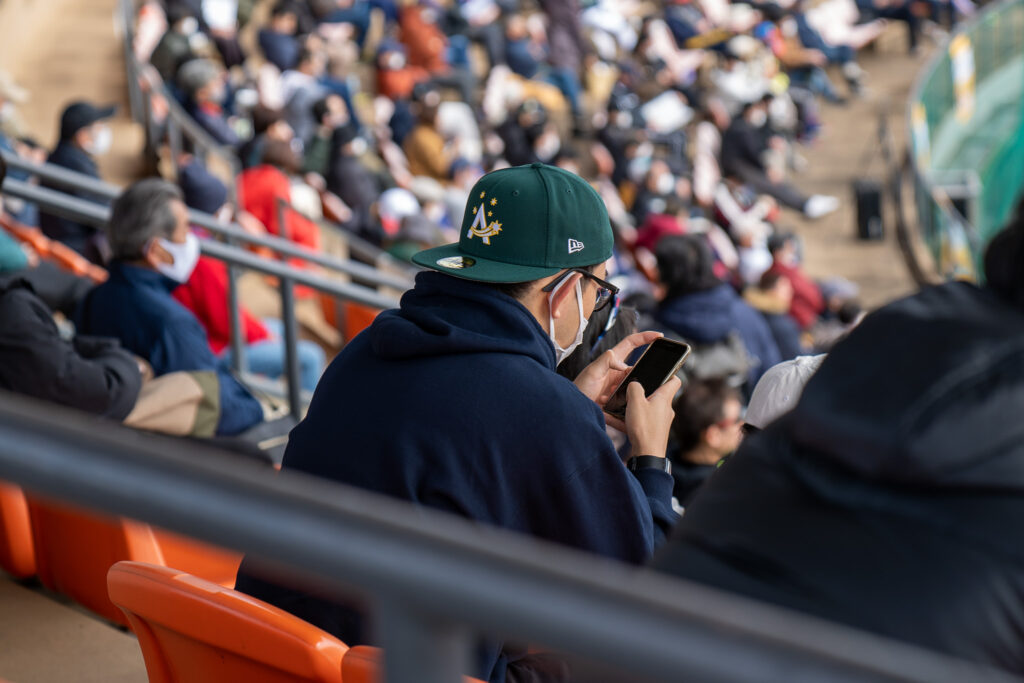
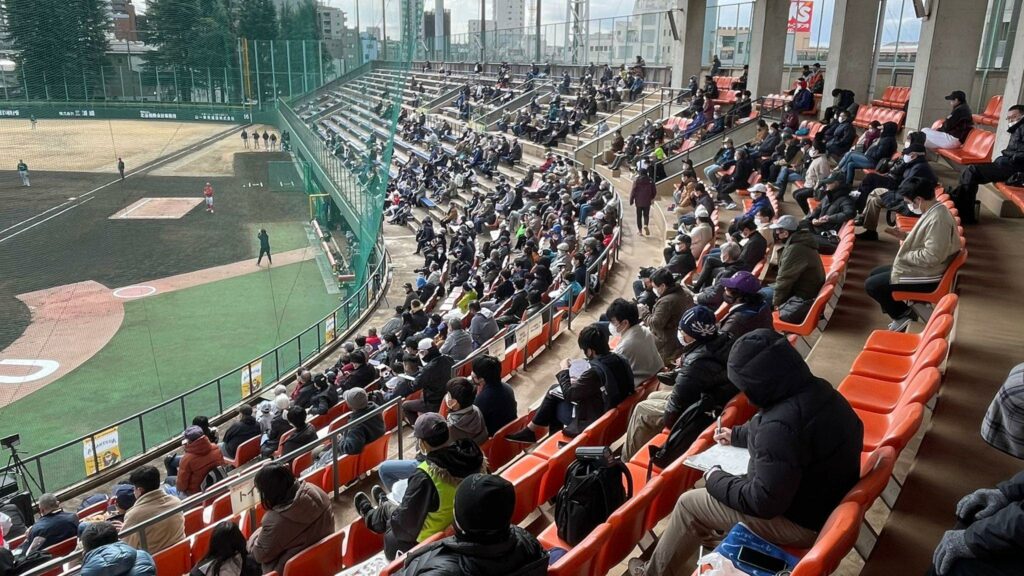
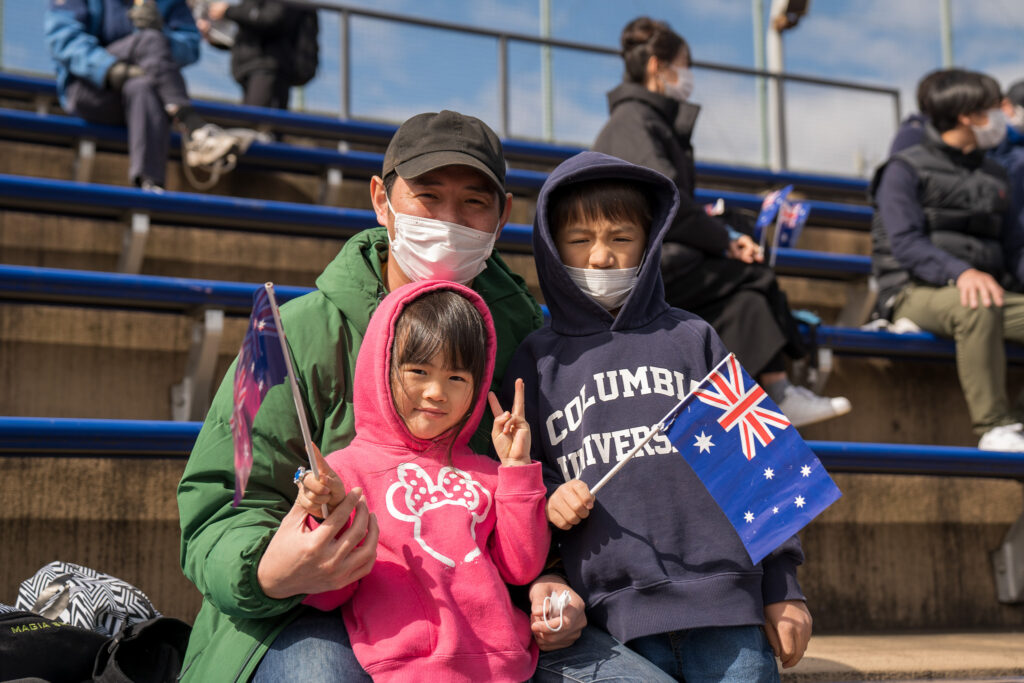
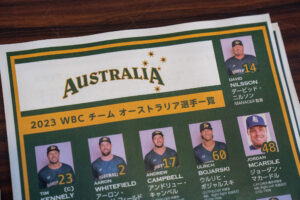
“Look around the stadium. People are waving flags, they have programs with player information, and people are wearing Team Australia hats and ABL jerseys,” says Williams “There’s little kids coming today to watch us play. It’s pretty cool.”

Fuchu City even organises exhibition games for Team Australia to play in. On Saturday 25 February, Australia is playing two seven-inning games vs All Fuchu Baseball Club – last year’s champions in the Adult Tokyo Baseball League.

They even set up local teams to play exhibition games against. The teams is made up of amateur players, independent baseballers, college guys and even one former NPB player (Nagano).

A bus of 200 supporters showed up to cheer on All Fuchu, while many residents of the local community churned out to support. There was a PA announcer, line-ups a program and a whole event.

“The local community is very excited to have Australia here,” says Daisuke Minagawa, a manager at of one of the local companies (Aida Chemical Industries), helping to coordinate Team Australia’s Fuchu experience. “Many people now cheer for Team Australia at the baseball. It feels like our team too.”

Minigawa says it is important for Fuchu City to support the world through sport. He says Fuchu is a great place to live. He says there are many parks, friendly people, and a big support for local sport.

“We love our sport. Baseball, rugby, cycling,” he says. “It is important for us to support sports teams.”

Throughout the crowd there are Australian flags, ABL jerseys, caps and merchandise.

“The people here know their stuff,” says Wilkins. “They know who we are and are just so excited to meet us.”

When Australia got a hit or a big out, the crowd erupted. It was a pro-Australia crowd.

Over the coming days, Australia will give back by participating in school visits and run clinics with local schools. They have a busy schedule of exhibition games, training and visits until the team departs for their WBC-run camp in Miyazaki.

“That’s how we help show our appreciation,” says Wilkins. “Stuff like that.”

Whatever happens in Australia’s baseball journey – the people of Fuchu have left their mark.

25 February 2023 By Staff Writers

By Staff Writers

- Team Australia

ACES SPORTING CLUB PARTNERS WITH TEAM AUSTRALIA AHEAD OF THE WORLD BASEBALL CLASSIC

Aces Sporting Club has partnered with Team Australia for the training camp leading into the World Baseball Classic.  

With the team now announced, the support from the Aces sporting club solidifies the plans for Team Australia ahead of the World Baseball Classic. 


“Aces Sporting club have been a long-time supporter of baseball in Australia. This latest support will give the team a massive boost as they prepare for the classic.” said Baseball Australia CEO Glenn Williams.

Team Australia arrived in Fuchu City, a suburb of Tokyo, for a nine-day training camp that started February 24. They will head to Miyazaki for four days before the World Baseball Classic starts on March 9.

“Although the ABL has provided the players with an opportunity to play baseball all summer long, a chance to spend an extended time together before official training camps starts is vital for the team’s preparation. Aces sporting club supporting this camp is a great outcome for Team Australia”. 

Keep up to date with Team Australia across @teamaustraliabaseball channels.

Aces Sporting Club, based in Melbourne, is not like many other venues. They believe in quality service across everything they do with the aim of bringing you an enjoyable golfing experience in Melbourne’s south-eastern suburbs.

Their Driving Range is the perfect place for a unique type of family activity or to have a bit of fun with your friends. For more information, visit www.acessportingclubs.com.au.

Sponsored
  • - Team Australia about 3 years ago Australian coaches are like "baseball chefs" in preparing for opposition at World Baseball Classic
  • - Team Australia about 3 years ago How the brotherhood of Australian baseball carries the national team
  • - Team Australia about 3 years ago Three players from MLB camps join Team Australia as preparation shifts to new city
  • - Team Australia about 3 years ago As Fuchu training camp ends, Australia hopes that from little things, big things grow at WBC
  • Corporate News about 3 years ago SHAYNE BENNETT JOINS THE BASEBALL AUSTRALIA BOARD
  • - Team Australia about 3 years ago Why Team Australia catchers are prioritising relationships at World Baseball Classic training camp
  • - Team Australia about 3 years ago What the Indigenous representation symbol on Team Australia's World Baseball Classic jersey represents
  • - Team Australia about 3 years ago When it comes to the national team, it means a little extra for Australian players
  • - Team Australia about 3 years ago How Australia is approaching pitching in the World Baseball Classic
  • - Team Australia about 3 years ago How a Japanese town is helping Team Australia prepare for baseball's biggest tournament
  • - Team Australia about 3 years ago ACES SPORTING CLUB PARTNERS WITH TEAM AUSTRALIA AHEAD OF THE WORLD BASEBALL CLASSIC
Baseball.com.au Logo
  • Our Network
  • Baseball.com.au
  • ABL
  • Team Australia
  • Baseball Australia
  • More
  • Baseball+
  • Baseball Photos
  • Contact Us
  • Careers
  • Submit a Story Idea

Baseball.com.au is a division of The Australian Baseball Federation. The Australian Baseball Federation is the peak representative body for baseball in Australia. The Australian Baseball Federation has national and international regulatory and coordination responsibilities. In performing those functions, the Australian Baseball Federation uses the descriptor: "Baseball Australia". (0.0.0)

Subscribe to monthly newsletter
Baseball.com.au Shop
Play Baseball
© 2026 Baseball.com.au. All rights reserved. (0.0.0) Privacy Policy Terms & Conditions
Website design by Thirst Creative