06 August 2024
Coach Talk: Jason Pospishil talks player development, and an elite group of young Australian athletes
Jason Pospishil had a front row seat to some special Australian talent.
The current Emeralds head coach working with Baseball New South Wales High Performance department from 2015-2020. He was tasked with aiding the development of some of the most talented baseball playing teenagers at the time.
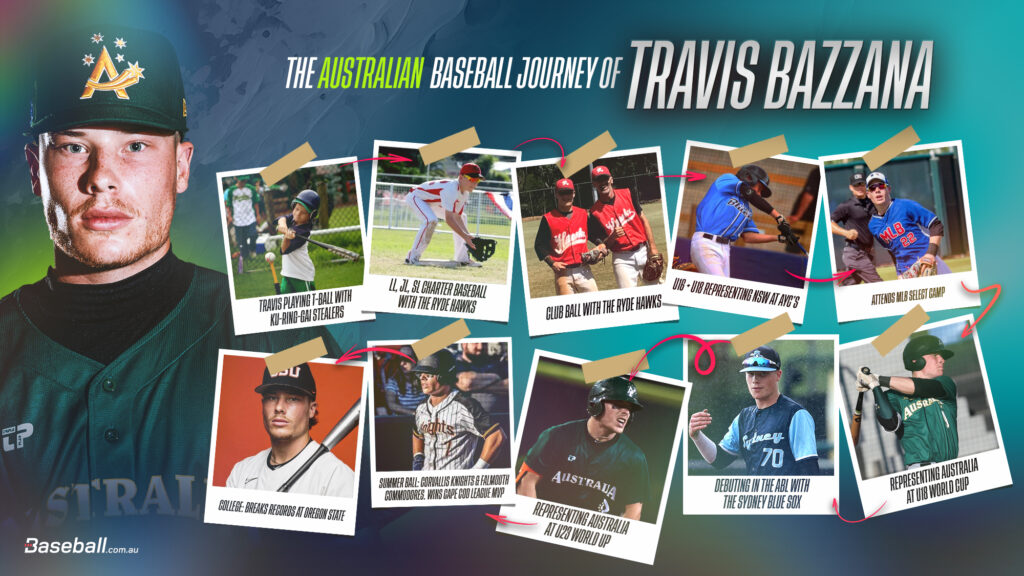
The players in question? Names like #1 overall pick Travis Bazzana, professionals like Clayton Campbell, Josh Gessner & Solomon Maguire, and Division I college athletes like Jimmy Nati and Brent Iredale to name a few.
These are names you hear on national teams, professional updates, and are rising the ranks.
Baseball in Australia beat reporter Eric Balnar caught up with the man they call Pops to find out what made these players tick, what advise he’d offer to coaches, and what really makes a player special.
Jason Pospishil is the current Australian Women’s Team national coach, a former Sydney Blue Sox manager, a former MLB scout and played minor league baseball in the Minnesota Twins organisation.

By the way, did you know there is a free-to-use app coaches can use in Australia? It has accreditation, information, lesson plans, pitch restrictions and more. It’s a great resource, that people like Pops are sure to use:
Let’s hear from Pops!
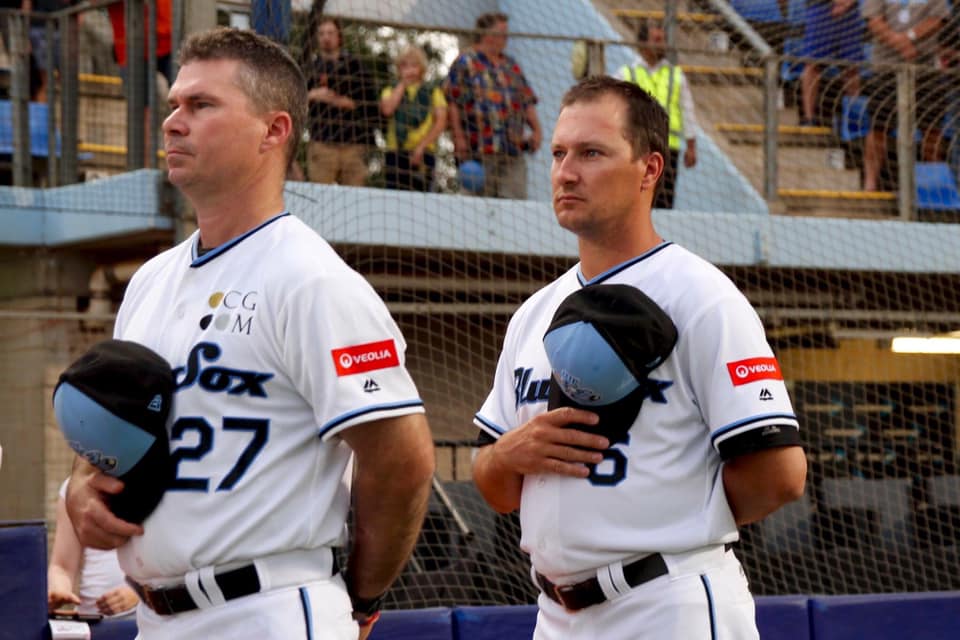
Eric Balnar, Baseball.com.au: Pops, thanks for joining me! Can you start by telling me a little bit about what exactly a High Performance – or Performance Pathways as we call them – program is and who some of the players (and their levels now) were when you were at the helm in New South Wales?
Pops: Thank you for having me Eric.
I was with Baseball NSW in the High-Performance space between 2015 and 2020. We were very fortunate to have a pipeline of players come through the program during that time that showed promise to move on to bigger and better things.
Essentially a High-Performance program is where the identified athletes within each state (and nationally) work with selected coaches to achieve performance outcomes set forth by the National Body, Baseball Australia. These programs are trying to develop players for future Junior and Senior National Team representation, but also for collegiate and professional baseball opportunities.
As a High-performance manager, it was my responsibility (along with the program coaches) to identify, manage and develop these players.
Some of the aspects that are included are: Strength and Conditioning, Speed Development, Arm Care and Position Specific Throwing programs, individual offence, individual defence and base running development.
The old memory isn’t as good as what it used to be, so I will probably forget some guys, but I will do my best!
– Travis Bazzana (Cleveland Guardians) – #1 MLB pick. I think we know this story!
– Brent Iredale (committed to SEC powerhouse Arkansas. #1 ranked JUCO position player in the country)
– Solomon Maguire (playing High-A with Pittsburgh Pirates)
– Clayton Campbell (playing A-ball with Detroit Tigers)
– Josh Gessner (signed with Phillies for 1.2 million. Traded to Pirates. Recently retired)
– Jake Burns (signed by St. Louis Cardinals)
– Jimmy Nati (currently at Stanford, Division I school)
– Jaylin Rae (recently returned from Div 1 school Western Kentucky, now with Blue Sox)
– Jo Stevens (just signed with Blue Sox after finishing college career at Purdue)
– Blake Cavill (currently at Western Kentucky in Division I)
– Liam McCallum (went to Gonzaga but transferred to Coppin State in the NEC)
– Ethan Stacy (Bushnell University)
– Luke Krkovski (Abilene Christian University)
– Cody Godbold (just returned from college career at University of Charleston)
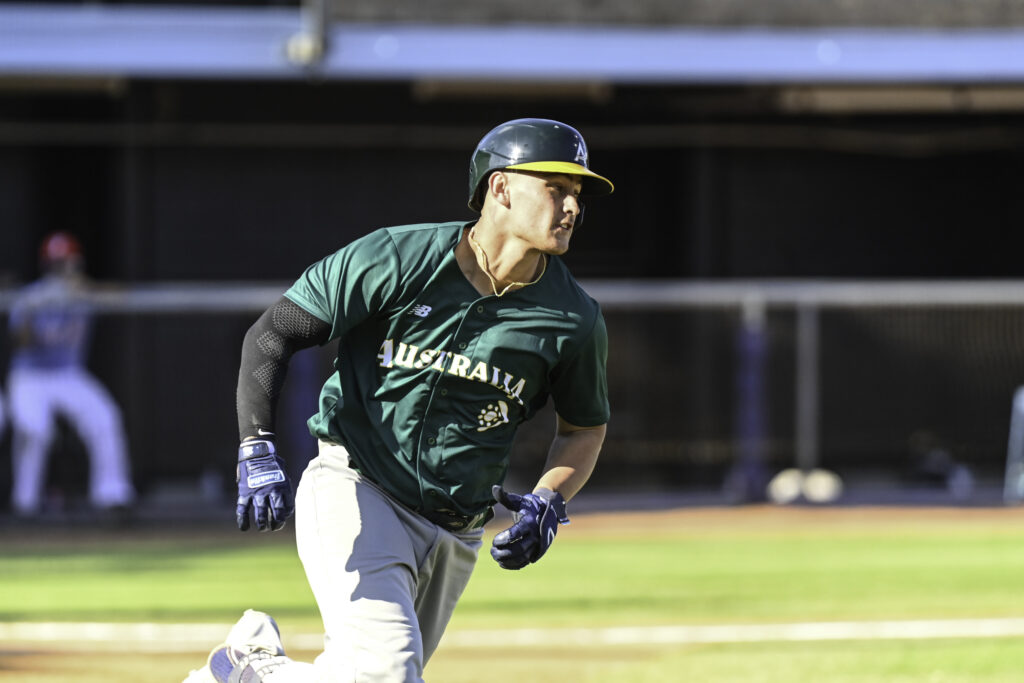
Below: Clayton Campbell has since signed with the Detroit Tigers and played for Australia. Photo: Mick Goddard.
Baseball.com.au: Okay, I’ll ask it. We’ve heard so much about Travis Bazzana lately. Were players like Travis Bazzana noticeably better than others?
Pops: There are certain players that showcase attributes that you can just see will allow them to perform at the higher levels of the game, but I think that we must keep in mind that players all develop at different stages and at different rates.
Some athletes physically develop earlier which gives them an advantage against their smaller counterparts, however, I have seen plenty of players with good baseball actions develop later physically and surpass those early developers.
There isn’t a right or wrong philosophy because there are so many different factors that come into play. Perspective for me is very important because some players are evaluated for “right now” such as making a national team, representative team etc. but the perspective from professional evaluators is seven years down the road and whether they think that player can play everyday in the major leagues.
It is the classic argument of actions vs tools. Tools get you noticed. Mixing the tools with actions is what gets you paid!
Baseball.com.au: So, what do you think separates the elite athletes?
Pops: I remember my minor league manager once telling us that the difference between Big Leaguers and minor leaguers is the six inches between their ears. He was right!
You see guys in the minor leagues do the same things as big leaguers every day, but the difference is that big leaguers do them more consistently. The players that commit themselves to a system are the ones that separate themselves because they have a trust that the system leads to results and consistency.
They also learn to overcome the boredom of repetition. Repetition leads to consistency! Any manager will tell you that the trait they want in all their players is consistency, so when they write that players name on the line-up card, they know what they are going to get!
In the modern game, I think an understanding of analytics is a must because that is what is in front of players everyday at both collegiate and professional level. Analytics can help you as a player so you better understand them.
Baseball.com.au: What did you learn as a coach from these players from your time working with them?
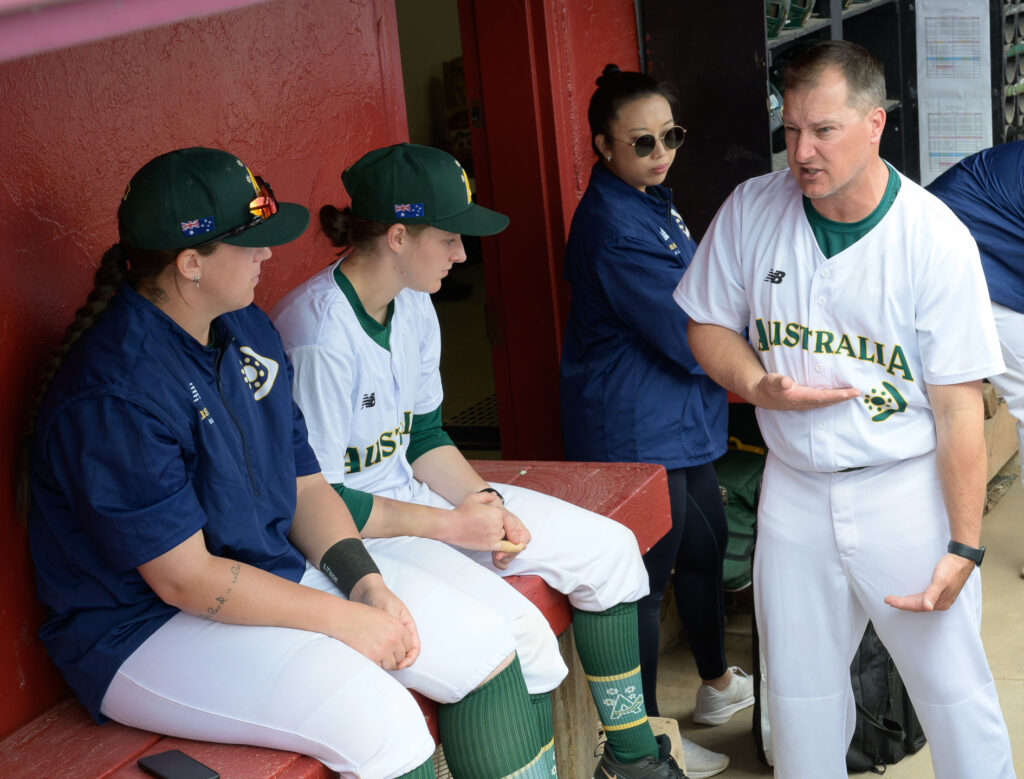
Pops: Firstly, they were all great kids! Point # 1 is always a good teammate!
I was hard on those kids during the program as my main goal was for them to have a perspective on what the next level entails and what they need to do to succeed and graduate at the next level. It was trying to build a foundation. Not all people will agree with my methods or philosophies, but I am confident that I had some impact on those kids careers and was able to set them ahead in the right direction.
The biggest learning experience for me with those guys was patience. You must be patient with younger players and allow them to fail.
I see it all the time. Kids that dominate at every level and they don’t understand how to deal with and handle failure. When you go up the ladder, trust me, you are going to fail at some stage.
Personally, that was my downfall as a player in professional baseball. The ones who figure out how to handle the failure are the ones that progress and have success. It again comes back to that element of consistency.
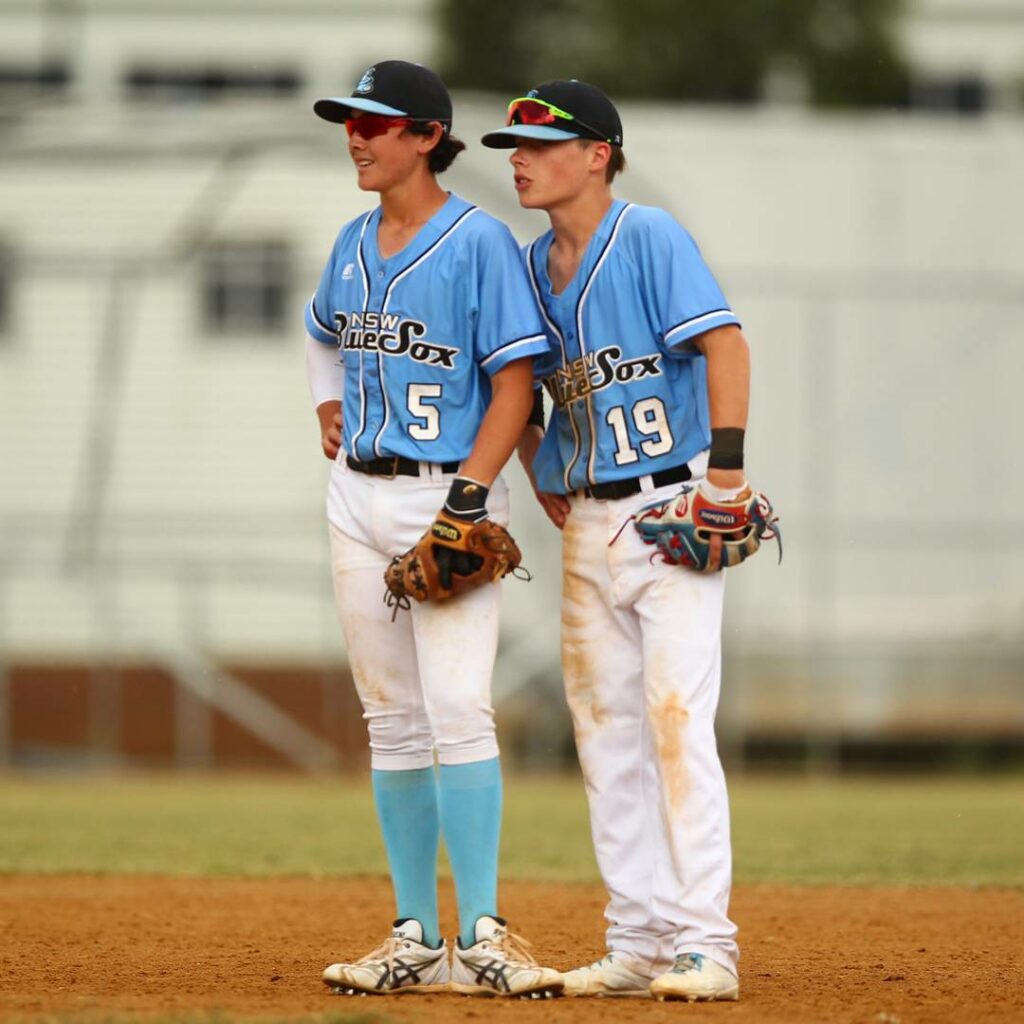
Below: Travis Bazzana (19) and Jo Stevens (5) at the U16 National Championships, at the time working with Pospishil in the Performance Pathways program
Baseball.com.au: What do you think other coaches can learn from this experience?
Pops: Let’s look at it this way…
- Understand what the finished product looks like so you can add the ingredients to the recipe as you go along. You can’t cook a good meal without the correct ingredients. If you can educate yourself on what player evaluators are looking for in certain players at certain positions, that will give you the blueprint to what skillset you need to develop within those athletes.
- Patience, patience, patience! A mentor of mine had a saying “how many more times do you need to tell them?” One more time! And that is so true. Your job is to teach them and educate them until they know. I like to get athletes to instruct me as if they are the coach and I am the player. That gives you a great idea of what they know and whether they listen or not ha ha!
Baseball.com.au: Let’s go to your scouting days… What intangibles are scouts actually looking for in Australian athletes?
Pops: This is just a personal opinion based on what I look for in player.
Position Player: Firstly, tools. Ability to hit, Ability to hit for power, run, throw and fielding ability then I will look for actions. Body shape and size is also an area of evaluation.
Pitchers: Body Shape and size. Arm Action. Quality of Delivery. Fastball Velocity. Quality of secondary pitches. Command. Do they compete?
This is just a very general overview of physical tools.
You then have to take into consideration work ethic and mental make-up. Some players are just not cut-out for professional baseball.
I always looked at what I called the sixth tool and that was aptitude.
Does the player have the aptitude to take on board information and put that into practice to help him develop as a player? My mindset was that if a player didn’t have the aptitude to put in place philosophies, say in the classroom, then what chance does he have as an athlete. I’m not saying that is 100% foolproof but that is just a mindset that I had as an evaluator.