13 August 2024
2004 Olympic Preview: Australia looks to draw on past success, prior mistakes ahead of Athens
by Robert Laidlaw
Note: This story is part of a collection in a series celebrating the 2004 Australian Olympic baseball team. Each day between August 15 and 25 we will recap Team Australia’s games, replaying the tournament in “real time” with stories from Robert Laidlaw.
Can Australia win a medal at the 2004 Olympic baseball tournament in Greece? That is the big question, as the Aussies look for some redemption after failing to win a medal in Sydney four years earlier.
Setting the stage: International promise
It was just five years ago Australia sat atop the international baseball world. They won a gold medal at the 1999 Intercontinental Cup, with a 4-3, 11-inning thrilling climax in Sydney against Cuba.
Medal hopes were high for the 2000 Olympic campaign but Australia came up short. A 2-5 win-loss record had the Australians finishing seventh.
Losing to Italy and the Netherlands put Australia out of contention for a medal at the Sydney games.
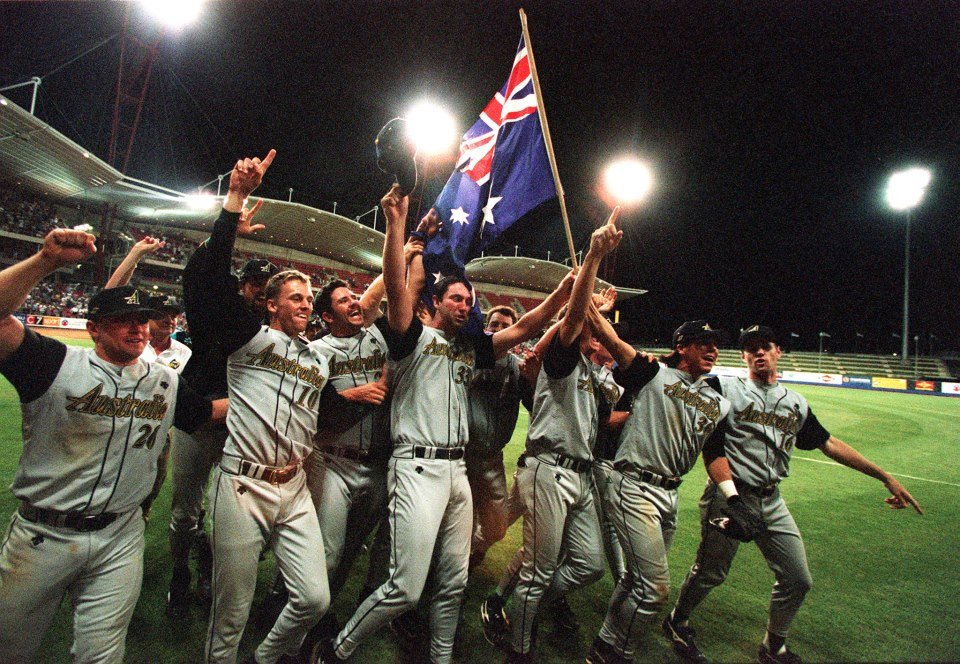
There was a new coach in 2000.
Former Australian coach Mike Young, who led Australia to its gold medal victory in 1999, was replaced by Jon Deeble – a great Australian national team mainstay transitioning out of his playing career.
The nucleus of the team remained in tact, including the leadership of Australia’s MLB All-Star David Nilsson.
MEET THE ROSTER: 2004 Athens Olympics Squad.
Nillson said the team could draw on memories from the 1999 campaign.
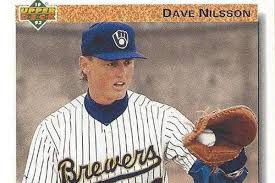 “In 1999 it worked well, as the tournament (Intercontinental Cup) was in November and I had finished my season with Milwaukee after breaking my thumb six weeks earlier,” Nilsson said.
“I had not played a tournament for Australia previously and I knew we were a chance to win a medal. Personally, it was nice to win a few awards (Nilsson was the MVP of the tournament), but winning a gold medal was special – Australia’s first in senior competition.”
There was a big team mentality of that 1999 bunch.
“Winning was so important, especially when Gary White came off the bench to drive in the winning run against Cuba in the final,” said Nilsson. “He was a veteran guy who had not played much in the tournament but was ready mentally and ready for any situation, and in extra innings with a guy on base, it was a good match-up.”
But things changed just a year later in front of Australian home fans in a Sydney Olympics.
“In 2000 (Olympics) we failed miserably,” stated Nilsson. “Between 1999 and 2000 we had a change of leadership – the whole DNA, the make-up changed, we were a different team. We were positioned to do something at home, but with the changes made we weren’t ready to play, and it showed in our performance.”
“Athens was absolutely about correcting the wrong.”
But this is a different beast. It’s tournament baseball. And, it’s the Olympics.
“The thing about Olympic baseball is that it is a 10-day tournament. In many of the other events, athletes compete for a few days then party and celebrate – we had to forget it was the Olympics and just treat it like a normal baseball tournament,” said Nilsson, then 34.
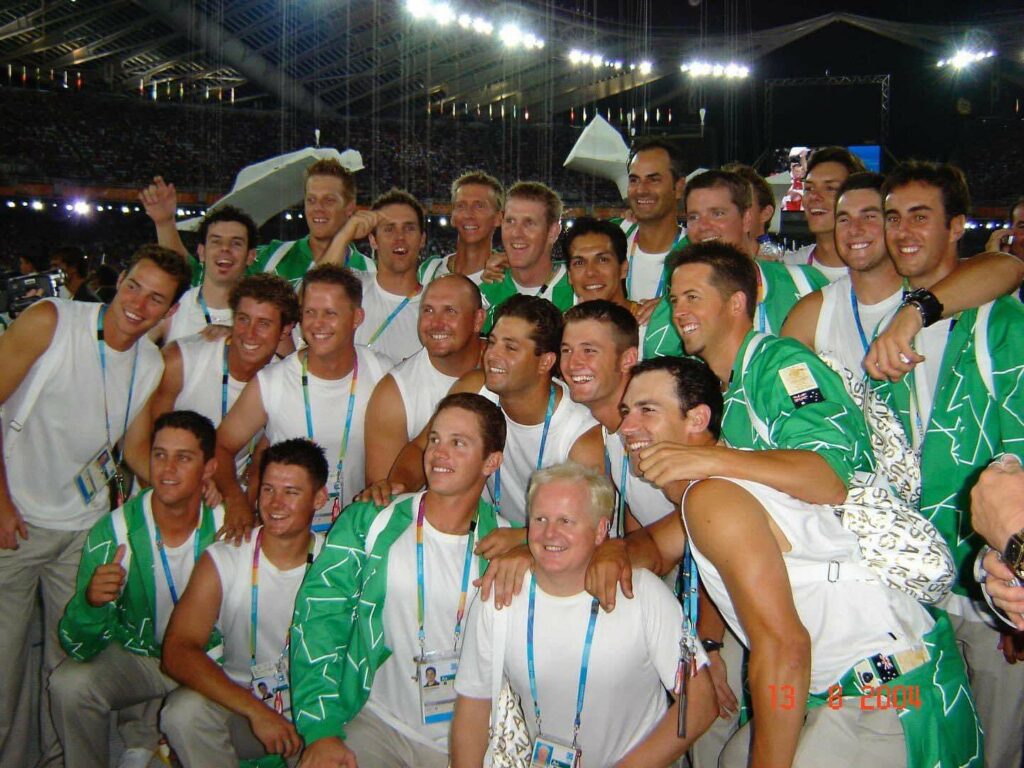
“The take away for us was that we had a bunch of young guys playing in a pretty big moment, which they had never experienced, so we needed to make sure we were prepared for Athens.”
Nilsson played for Milwaukee Brewers in MLB from 1992-99, batting .284 with 105 home runs and 470 RBIs. In his final MLB season he became the first Australian to play in the All-Star game.
In 2000 Nilsson signed with the Chunichi Dragons in Japan so he could play in the Olympics for Australia. Alhough it was an unsuccessful tournament for the team, he led the competition batting averages with a .565 mark.
A new coach
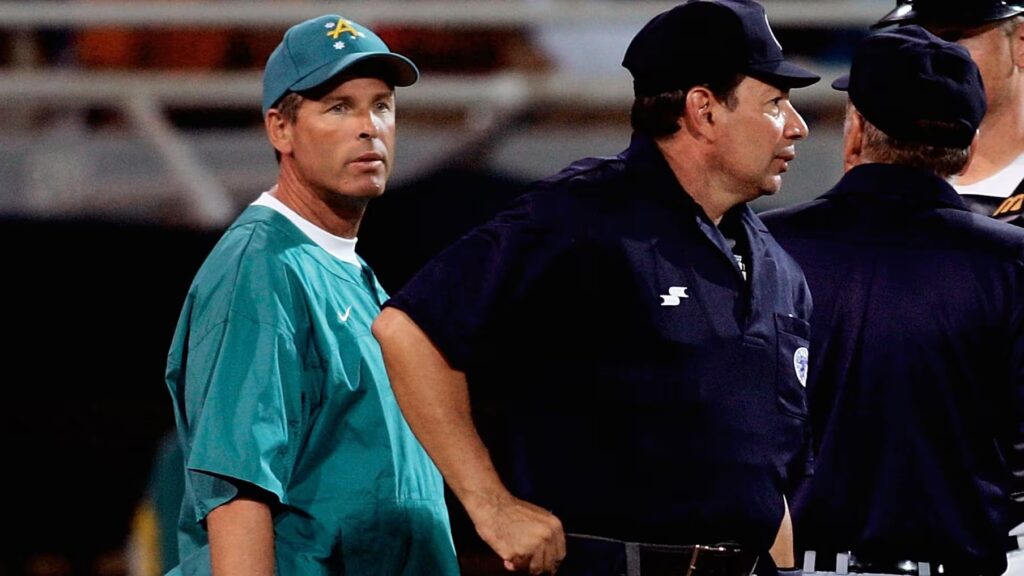
Jon Deeble played for Australia at the international level from 1983-95 as a pitcher, including the 1988 Olympics.
When Australia won the 1999 Intercontinental Cup, Deeble was a coach and in the turmoil of leadership changes, was appointed manager for the 2000 Olympics.
“That success in 1999 was fantastic,” Deeble said. “I was the bench coach and that team was pretty special.”
The 2000 Olympics didn’t go as planned for Deeble.
“As for the manager’s job for 2000, it was thrown on me late and I wasn’t ready, as the results indicated,” he said. “I put a lot on me but I wasn’t ready. It was just four years after I had played. But you don’t get anywhere without failures, so going into Athens there were lessons learned to fall back on.”
For the 2004 games, Deeble has enlisted some help from the outside.
“After 2000 I did a lot of work with performance psychologist Dr Phil Jauncey, who taught me so much – I spent hours on the phone or in person with him. He helped me and the coaching staff,” he said.
“Our mentality going into Athens was that it’s up to the players – let them play! We had experienced guys who had played professionally, like (David) Nilsson, (Chris) Oxspring, (Graeme) Lloyd, as well as some younger guys who had played at this level for several years.”
Roster & Qualification
The turnover of the roster from the 2000 Olympics to 2004 was amazingly high with just six players remaining in Nilsson, Rodney Van Buizen, Craig Anderson, Brett Roneberg, Paul Gonzalez and Glenn Williams.
To qualify for the Athens Olympics, Australia beat South Africa at Blacktown in Sydney. They won all three games – 8-1, 6-4 and 13-1.
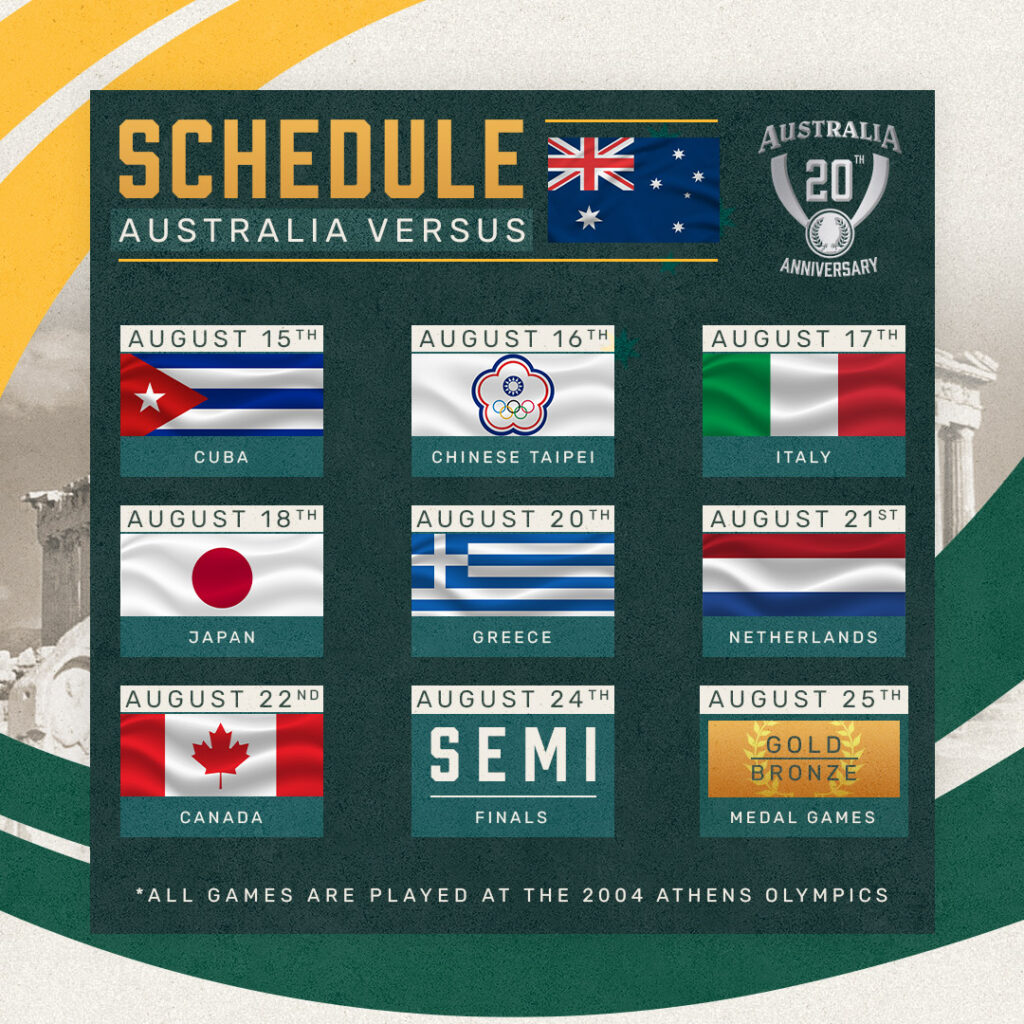
Australia’s program for the 2004 Olympics: August 15 v Cuba; August 16 v Chinese Taipei; August 17 v Italy; August 18 v Japan; August 20 v Greece; August 21 v Netherlands; August 22 v Canada.
Team Manager – Jon Deeble; Coaches – Tony Harris, Paul Elliott, Phil Dale.
Pitchers – Craig Anderson, Adrian Burnside, Graeme Lloyd, Wayne Ough, Chris Oxspring, Ryan Rowland-Smith, John Stephens, Phil Stockman, Rich Thompson, Jeff Williams
Hitters – Tom Brice, Gavin Fingleson, Paul Gonzalez, Nick Kimpton, Brendan Kingman, Craig Lewis, Dave Nilsson, Trent Oeltjen, Brett Roneberg, Brett Tamburrino, Andrew Utting, Rodney van Buizen, Ben Wigmore, Glenn Williams.